White House Backs Secure America Act for ICE, Border Patrol Funding
Synopsis
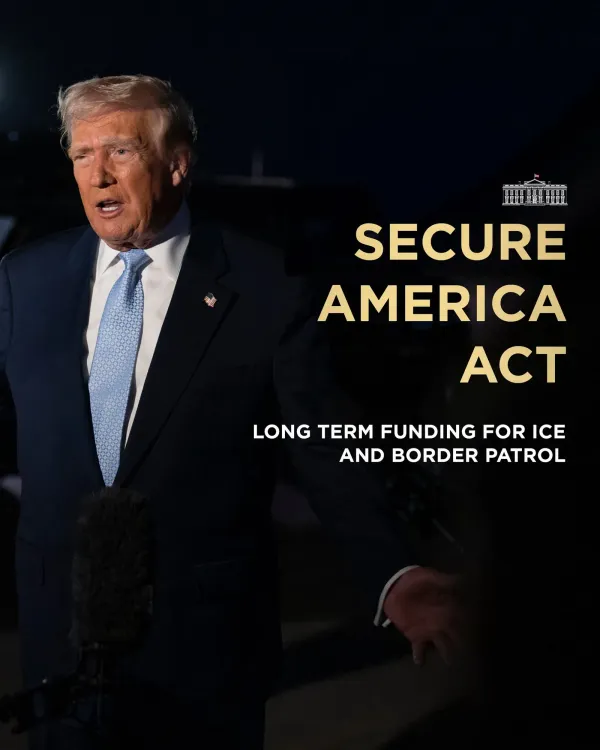
The White House on June 8, 2026, endorsed the Republican-backed Secure America Act, which seeks long-term dedicated funding for ICE and Border Patrol. The move signals a push to insulate border enforcement agencies from annual budget uncertainty and to codify strict immigration enforcement as standing federal policy.
Key Takeaways
The White House publicly backed the Secure America Act on June 8, 2026 .
The bill seeks long-term, stable federal funding for ICE and U.S.
Border Patrol , moving away from annual appropriations riders.
Republicans are the primary sponsors, framing the measure as essential to national safety and immigration law enforcement.
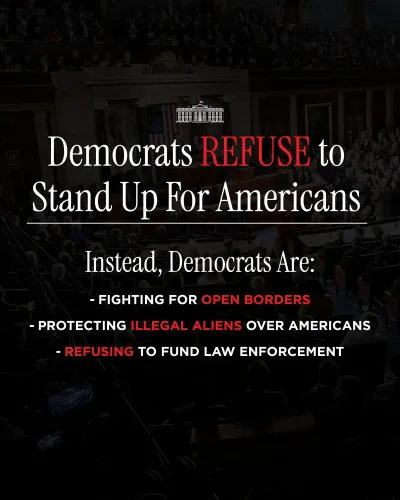
The proposal contrasts with Democratic approaches that have historically linked enforcement funding to legalisation or asylum reform provisions.
Key legislative milestones to watch include floor votes in Congress and the FY 2027 DHS budget request .
The bill has direct implications for Indian and South Asian nationals in the US affected by interior enforcement and visa overstay policies.
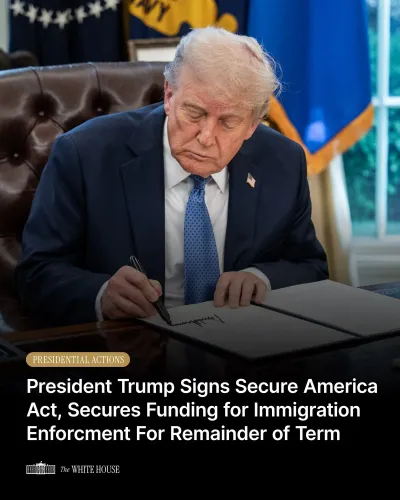
The White House on Monday, June 8, 2026, voiced support for the Secure America Act, a Republican-backed legislative effort aimed at securing long-term federal funding for U.S. Immigration and Customs Enforcement (ICE) and U.S. Border Patrol, framing the measure as essential to keeping the country safe and enforcing strict immigration laws.
Context
The White House post stated that 'Republicans are fighting to secure long-term funding for ICE and Border Patrol, working to keep America SAFE by ensuring the border remains secure and strict immigration laws are enforced.' The statement positions the Secure America Act as a central plank of the Republican legislative agenda on immigration enforcement heading into the latter half of 2026.
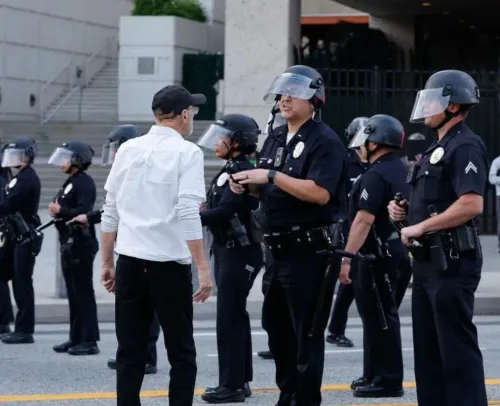
ICE is the Department of Homeland Security agency responsible for interior immigration enforcement, detention, and removal operations. U.S. Border Patrol, the uniformed enforcement arm of Customs and Border Protection, is tasked with securing borders between official ports of entry.
Policy Backdrop
Republican-led proposals have repeatedly sought multi-year authorisation language for border enforcement agencies, aiming to reduce the vulnerability of enforcement budgets to annual appropriations battles. Annual DHS spending bills since FY 2017 have included targeted increases for ICE detention capacity and Border Patrol agent hiring, but critics of the year-by-year approach argue it creates uncertainty in long-term operational planning.
This legislative push follows a long lineage of Republican border-security measures, including the Secure Fence Act of 2006, which authorised hundreds of miles of fencing and vehicle barriers along the U.S.-Mexico border, and the Intelligence Reform and Terrorism Prevention Act of 2004, which expanded Border Patrol hiring authorities in the aftermath of the September 11 attacks. The current effort reflects a continued preference for durable, authorisation-based funding structures over discretionary riders.
Democratic priorities have historically paired enforcement funding with legalisation pathways and asylum processing reforms, a contrast that has contributed to repeated government funding standoffs tied to border policy. The Secure America Act represents a direct challenge to that bipartisan bargaining dynamic by seeking standalone, long-term enforcement funding.
Stakeholders and Impact
The most immediate beneficiaries of the proposed legislation, if enacted, would be Border Patrol agents and ICE personnel, who have long advocated for stable, predictable funding to support staffing, technology deployment, and detention infrastructure. Advocacy groups on both sides of the immigration debate are expected to closely monitor floor action on the bill.
For Indian nationals and the broader South Asian diaspora in the United States — a significant portion of whom are on long-term employment-based visa backlogs — stricter interior enforcement and changes to immigration law carry direct implications for visa overstay enforcement and removal proceedings.
What's Next
Legislative observers will watch for floor action on the Secure America Act in the House and Senate, as well as the FY 2027 DHS budget request for enforcement accounts, which will signal whether the administration intends to back the measure with corresponding appropriations. The bill's path through a closely divided Congress will test whether Republicans can advance a standalone immigration enforcement package without the bipartisan trade-offs that have historically been required for major immigration legislation.
Point of View
The administration is elevating border security as a defining electoral contrast heading into the legislative calendar. This approach reflects a broader Republican pattern of seeking structural, not just budgetary, entrenchment of enforcement priorities. Whether it advances will depend on whether Senate arithmetic forces any compromise with Democratic demands for asylum or legalisation provisions.
NationPress
23 Oct 2026
Frequently Asked Questions
What is the Secure America Act?
The Secure America Act is a Republican-backed legislative proposal in the United States Congress aimed at securing long-term, dedicated federal funding for ICE and U.S. Border Patrol, reducing reliance on year-to-year appropriations bills for border enforcement budgets.
What does ICE do in the United States?
ICE, or U.S. Immigration and Customs Enforcement, is a Department of Homeland Security agency responsible for interior immigration enforcement, including detention and removal of individuals who violate U.S. immigration law.
Why does the White House support the Secure America Act?
The White House has stated that the act is necessary to keep America safe by ensuring the border remains secure and that strict immigration laws are enforced, framing long-term funding as essential to stable enforcement operations.
How does this bill affect Indians in the United States?
For Indian nationals on long-term visa backlogs or employment-based visas, stricter interior enforcement under a funded ICE could mean heightened scrutiny of visa overstays and faster removal proceedings, making the bill directly relevant to the South Asian diaspora.
What is the difference between ICE and Border Patrol?
U.S. Border Patrol, under Customs and Border Protection, secures borders between official ports of entry, while ICE handles interior enforcement — detaining and removing people already inside the country who are in violation of immigration law.