US House passes $70 billion Secure America Act, Trump border bill signed
Synopsis
The US House passed a nearly $70 billion immigration enforcement bill 214-212 — one of the largest such appropriations in recent history. With ICE and CBP funded through the end of the Trump administration, border czar Tom Homan has already signalled that arrests and targeting will rise sharply. Democrats and advocacy groups warn of unchecked enforcement powers, setting up a prolonged legal and political battle.
Key Takeaways
The US House of Representatives passed the Secure America Act on 10 June by 214-212 , largely along party lines.
The bill allocates nearly $70 billion to fund ICE and CBP for the next three years .
Republicans used the budget reconciliation process to bypass Democratic opposition after a four-month standoff.
Border czar Tom Homan said arrests and targeting will increase once funding is in place.
Democrats and groups including FWD.us and CAPAC condemned the bill, citing lack of oversight and accountability.
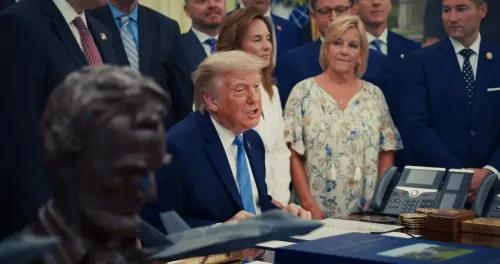
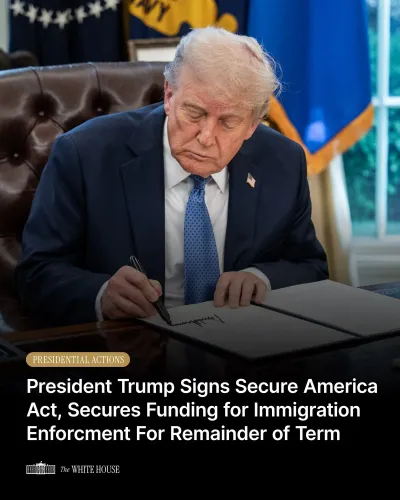
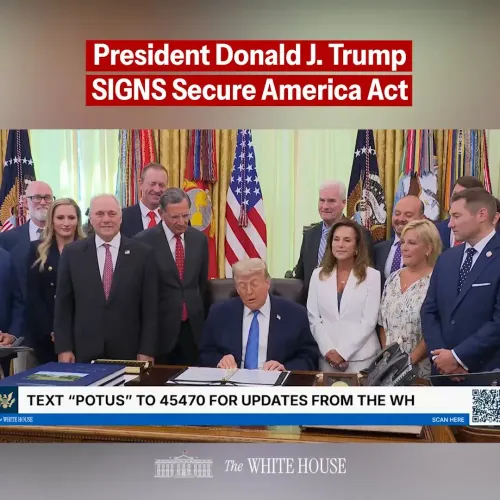
The bill now heads to President Donald Trump's desk for his signature.
The Republican-controlled House of Representatives on 10 June narrowly passed the Secure America Act, a nearly $70 billion package to fund US immigration enforcement agencies for the next three years, handing President Donald Trump a landmark win on border security and clearing the path for a significant expansion of immigration enforcement operations.
The bill cleared the House by a razor-thin 214-212 margin, largely along party lines, and now heads to Trump's desk for his signature. The measure provides long-term funding for US Immigration and Customs Enforcement (ICE) and Customs and Border Protection (CBP), ending what had been months of partisan deadlock over immigration enforcement appropriations.
How the Bill Passed
The vote marked the end of a four-month political standoff. Democrats had sought to tie funding to new restrictions on enforcement practices, but Republicans ultimately deployed the budget reconciliation process to bypass Democratic opposition and advance the legislation through Congress without bipartisan support.
The use of reconciliation — a procedural tool that allows budget-related legislation to pass the Senate with a simple majority — was central to the Republican strategy, sidestepping what would otherwise have been a near-certain Democratic filibuster.
What Republican Leaders Said
House Homeland Security Committee Chairman Andrew Garbarino hailed the vote as a fulfilment of Republican obligations. 'Today, Republicans fulfilled our responsibility to fully fund the Department of Homeland Security,' he said. 'We delivered the resources needed to keep our borders secure, interdict illicit drugs such as fentanyl, and combat human trafficking and smuggling.'
Michael Guest, chairman of the House Homeland Security Subcommittee on Border Security and Enforcement, said the measure would ensure that ICE and Border Patrol personnel have the resources needed to 'disrupt cartels, combat human trafficking and drug smuggling, and remove public safety threats from our communities.'
Homeland Security Secretary Markwayne Mullin called the bill's passage imperative, stating: 'It is imperative that Congress immediately passes the Secure America Act to fully fund these critical components.'
Trump's border czar, Tom Homan, was direct about what the funding would mean on the ground. 'When this reconciliation passes, that's $70B that will fund us until the end of the Trump Administration. You're going to see targeting increase, you're going to see arrests increase,' Homan said.
Democratic and Advocacy Group Opposition
Democrats and immigrant advocacy groups condemned the legislation, arguing it would expand enforcement powers without adequate oversight or accountability.
Todd Schulte, president of FWD.us, called the package 'a stunning policy failure,' criticising lawmakers for directing vast sums to immigration enforcement 'while the cost of living rises and health care funding is slashed.'
Rep. Grace Meng, chair of the Congressional Asian Pacific American Caucus (CAPAC), accused Republicans of giving 'ICE and Border Patrol another $70 billion to continue its mass deportation campaign without any accountability or oversight.' Meng said CAPAC members opposed additional funding 'absent serious and meaningful reforms.'
What This Means Going Forward
The Secure America Act underscores the deepening partisan divide over US immigration policy. Republicans argue that stronger enforcement is essential to border security and public safety, while Democrats contend that any new funding must be accompanied by structural reforms and safeguards against abuse. Notably, this is among the largest single immigration enforcement appropriations in recent US history, and its passage signals that the Trump administration intends to significantly scale up deportation and border operations through at least the end of its term.
With the bill now headed to Trump's desk, enforcement agencies are expected to begin planning expanded operations imminently.
Point of View
Not a mandate. Republicans deployed reconciliation precisely because they could not attract a single Democratic vote, which means the bill enters implementation with zero bipartisan legitimacy — a vulnerability that opposition groups will exploit in court and in the next election cycle. Tom Homan's promise of rising arrests is a political signal as much as an operational one, designed to demonstrate momentum on Trump's core voter promise. The deeper question is whether a three-year funding horizon, absent any reform framework, simply accelerates enforcement without resolving the structural immigration backlog that has persisted across administrations. Democrats' oversight argument is substantively valid — but their refusal to negotiate a middle ground over four months also handed Republicans a clean political win.
NationPress
14 Sept 2026
Frequently Asked Questions
What is the Secure America Act passed by the US House?
The Secure America Act is a nearly $70 billion immigration enforcement funding bill passed by the US House on 10 June by a 214-212 vote. It provides three years of funding for ICE and CBP and now heads to President Trump's desk for his signature.
How did Republicans pass the Secure America Act despite Democratic opposition?
Republicans used the budget reconciliation process, a procedural mechanism that allows budget-related legislation to pass with a simple Senate majority, bypassing the Democratic filibuster. The move ended a four-month partisan standoff over immigration enforcement funding.
What will the $70 billion fund specifically?
The funding is directed at US Immigration and Customs Enforcement (ICE) and Customs and Border Protection (CBP) for three years. Officials say it will support border security operations, fentanyl interdiction, anti-trafficking efforts, and expanded deportation activities.
Why are Democrats and advocacy groups opposing the bill?
Democrats and groups like FWD.us and CAPAC argue the bill expands enforcement powers without sufficient oversight or accountability. Critics contend the funds prioritise mass deportation over immigration reform and divert resources from healthcare and cost-of-living concerns.
What happens next after the House vote?
The Secure America Act heads to President Donald Trump's desk for his signature. Once signed, enforcement agencies including ICE and CBP are expected to begin planning significantly expanded operations, with border czar Tom Homan signalling increased arrests and targeting.