White House Announces Major Funding for US Immigration Enforcement

Synopsis
The White House announced on June 11, 2026, that major funding has been secured for US immigration law enforcement officers. The move, framed as a national security priority, comes ahead of congressional markups on the FY2027 DHS appropriations bill and directly affects ICE and CBP operations.
Key Takeaways
The White House announced on June 11, 2026 that 'massive' funding has been secured for immigration law enforcement officers.
The primary beneficiary agencies are ICE (interior enforcement) and CBP (border security), both under the Department of Homeland Security .
Specific funding figures and the legislative vehicle were not disclosed in the post.
The announcement comes ahead of congressional debate on the FY2027 DHS appropriations bill .
Indian nationals in the US — a major immigrant community — could be directly affected by any expansion in ICE and CBP operational capacity.
US administrations across party lines have used similar announcements to build legislative and public support for border security budgets.
The White House announced on Thursday, June 11, 2026, that a significant package of funding has been secured for immigration law enforcement officers across the United States, framing the move as a step toward keeping Americans safe.
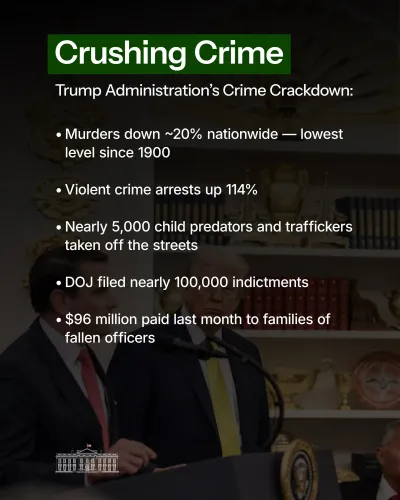
The official White House post stated: 'MASSIVE funding secured for the hardworking immigration law enforcement officers who keep Americans safe.' The announcement was accompanied by an image but did not specify the exact dollar figure, the legislative vehicle, or the agencies directly named in the linked content.
Context
Immigration law enforcement in the United States is primarily carried out by two agencies under the Department of Homeland Security (DHS): Immigration and Customs Enforcement (ICE), which handles interior enforcement, detentions, and removals, and U.S. Customs and Border Protection (CBP), which secures borders and processes immigration at ports of entry. Both agencies depend on annual congressional appropriations for personnel, operations, and infrastructure.
The DHS was established in 2002 and has since been the central cabinet department overseeing the federal government's immigration enforcement architecture. Funding cycles for FY2023 and FY2024 had previously increased enforcement staffing levels, setting a precedent for continued investment in agency capacity.
Policy Backdrop
Announcements of this nature are a recurring feature of executive branch communications, used by administrations across party lines to signal border security priorities during active congressional budget negotiations. The current focus falls on the FY2027 DHS appropriations process, which is expected to be a flashpoint for debate over immigration enforcement resources.
The White House's characterisation of the funding as 'massive' indicates an intent to project strength on immigration policy, a theme that has been central to executive messaging on national security. Such framing is typically used to build public and legislative support for sustained or expanded agency budgets.
Stakeholders and Impact
ICE officers and CBP agents are the direct beneficiaries of any such funding allocation, potentially affecting hiring, training, detention capacity, and operational reach. Increased resources for these agencies can translate into higher deportation numbers, expanded border surveillance, and greater processing capacity at ports of entry.
For Indian nationals in the United States — a population that includes a large number of visa holders, green card applicants, and undocumented immigrants — shifts in ICE and CBP funding levels carry direct implications for enforcement priorities, detention conditions, and removal proceedings. India consistently ranks among the top source countries for both legal immigration and immigration court backlogs in the US.
What's Next
Congressional committees are expected to take up markups of the FY2027 DHS appropriations bill in the coming weeks, where the specific funding figures and allocations will be debated and potentially revised. The White House announcement is likely intended to shape that legislative environment by building public momentum ahead of those votes.
How Congress responds — particularly the Senate, where bipartisan support is needed to advance appropriations — will determine whether the funding secured translates into enacted law or remains subject to negotiation. The outcome will have lasting consequences for the scale and direction of US immigration enforcement through 2027 and beyond.
Point of View
Designed to shape the political environment ahead of FY2027 DHS appropriations markups. By leading with officer welfare and public safety framing, the executive branch is attempting to insulate the funding request from opposition by grounding it in law-enforcement rather than purely partisan terms. This follows a well-established pattern of executive immigration messaging that has intensified across successive administrations as border security has become a perennial flashpoint in the US budget process. For India, which sends one of the largest contingents of immigrants to the US, the downstream effects on ICE and CBP capacity are worth watching closely.
NationPress
26 Oct 2026
Frequently Asked Questions
What did the White House announce about immigration funding on June 11 2026?
The White House announced that major funding has been secured for US immigration law enforcement officers, framing it as a measure to keep Americans safe. Specific figures were not disclosed in the post.
Which agencies will benefit from the US immigration enforcement funding?
The primary agencies are Immigration and Customs Enforcement (ICE) and U.S. Customs and Border Protection (CBP) , both operating under the Department of Homeland Security (DHS) .
How does US immigration enforcement funding affect Indians in America?
India is one of the top source countries for US immigration, and increased ICE and CBP funding can affect visa holders, green card applicants, and undocumented Indian nationals through stricter enforcement, higher detention rates, and faster removal proceedings.
What is the FY2027 DHS appropriations bill?
It is the annual congressional legislation that sets the budget for the Department of Homeland Security for fiscal year 2027 , covering funding for agencies like ICE and CBP . Congressional committees are expected to mark it up in the coming weeks.
Is White House immigration enforcement funding a new policy?
No. US administrations have routinely announced immigration enforcement funding as part of broader national security messaging. The FY2023 and FY2024 DHS appropriations cycles also increased enforcement staffing levels.