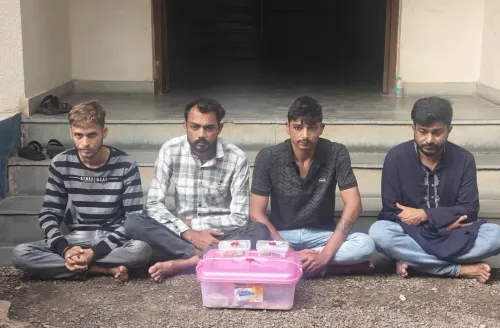
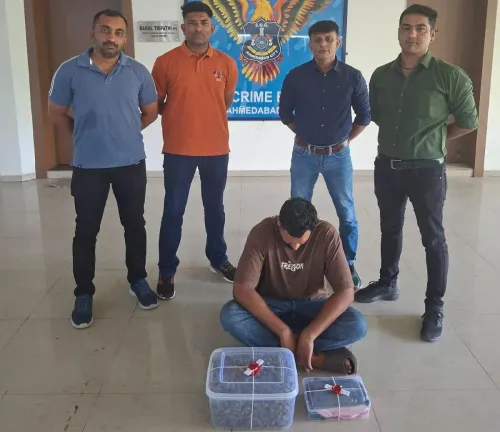
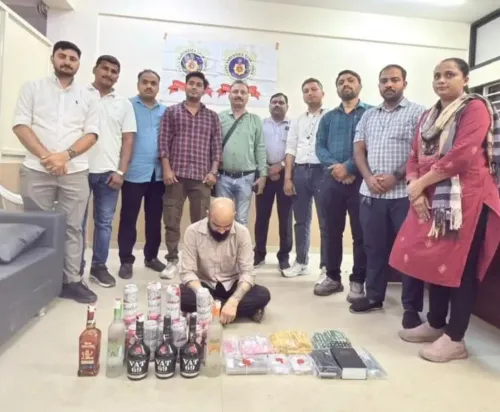
Ahmedabad ambergris bust: 3 held with ₹1.82 crore whale vomit in Sarkhej
Synopsis
Three young men — a law student, a BA student, and a paan-shop owner — were caught near Sanathal Bridge in Ahmedabad carrying 1.823 kg of ambergris worth ₹1.82 crore, allegedly sourced from a contact in Morbi. The bust, timed ahead of Rath Yatra, exposes how India's illegal ambergris trade draws in first-time offenders with no prior criminal record.
Key Takeaways
LCB Zone-7 arrested three men in Ahmedabad's Sarkhej area on 1 July with 1.823 kg of ambergris valued at ₹1.82 crore .
The accused — Vishwarajsinh Chudasama, 27 ; Darshan Sabhad, 24 ; and Veerpalsinh Rathod, 25 — had no prior criminal record.
The ambergris was allegedly sourced from Hasmukh Patel of Morbi , who reportedly handed it to the trio to find a buyer.
Possession and sale of ambergris are prohibited under the Wildlife (Protection) Act, 1972 .
Police are continuing the investigation to trace others in the alleged trafficking network, including Patel.
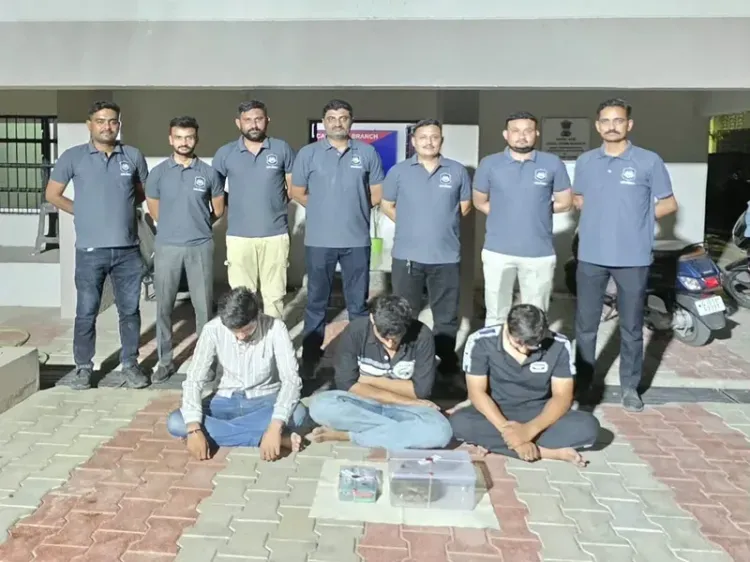
Three men were arrested in Ahmedabad's Sarkhej area on 1 July after the Local Crime Branch (LCB) Zone-7 seized 1.823 kg of ambergris — commonly known as whale vomit — valued at over ₹1.82 crore. The crackdown came as city police intensified operations against illegal wildlife trade ahead of the annual Rath Yatra.
How the Arrests Unfolded
Acting on specific intelligence gathered during routine patrolling, an LCB Zone-7 team led by Police Sub-Inspector H.D. Vaghela intercepted the three accused near Sanathal Bridge on S.P. Ring Road in the Sarkhej area. Along with the ambergris, police recovered a mobile phone valued at ₹5,000, putting the total value of seized property at ₹1,82,35,000.
The arrested men were identified as Vishwarajsinh Chudasama, 27, a resident of Limbdi in Surendranagar district; Darshan Sabhad, 24, also from Limbdi; and Veerpalsinh Rathod, 25, a resident of Changodar in Ahmedabad district. None of the three had a prior criminal record, according to police.
What the Accused Told Police
Deputy Commissioner of Police (Zone-7) Shivam Verma said the trio had not purchased the ambergris outright but were tasked with finding a buyer. 'They had brought it from Hasmukh Patel in Morbi and were searching for a buyer in Ahmedabad. During this process, the LCB apprehended them,' Verma said.
According to preliminary investigation, a labourer working on Darshan's farm allegedly introduced the group to Hasmukh Patel, who reportedly handed over the substance for sale on his behalf. Verma noted that Darshan and Vishwarajsinh were acquainted through their shared roots in the Limbdi area.
Background: Why Ambergris Is Illegal in India
Ambergris is a rare waxy substance produced in the digestive tract of sperm whales and has historically been prized by the global perfume industry as a fixative that helps fragrances last longer. Its scarcity and high black-market value have made it a recurring target for wildlife traffickers.
In India, its possession and sale are prohibited under the Wildlife (Protection) Act, 1972, which covers derivatives of protected species including sperm whales. Violations can attract significant custodial penalties. This is not the first such seizure in Gujarat — the state's coastal geography and proximity to marine trade routes have historically made it a transit point for ambergris trafficking.
Profiles of the Accused and the Broader Network
The three accused present an unusual profile for wildlife trafficking suspects. Darshan Sabhad is a third-year BA student; Vishwarajsinh Chudasama is pursuing the second year of an LLB course; and Veerpalsinh Rathod, a B.Com graduate, runs a paan shop in Changodar where Darshan works part-time.
Verma confirmed the arrests were part of a targeted action plan drawn up under the guidance of Ahmedabad City Police Commissioner G.S. Malik to curb illegal activities in the run-up to Rath Yatra. Police have initiated legal proceedings against all three and are continuing the investigation to identify others linked to the alleged wildlife trafficking network, including the role of Hasmukh Patel in Morbi.
Point of View
First-time offenders lured by the substance's extraordinary street value. What is more telling is the supply chain: a Morbi contact, a farm labourer as a go-between, and students doubling as couriers. Gujarat's coastline has long made it a conduit for marine wildlife contraband, yet enforcement has historically been reactive rather than network-led. The real test of this investigation is whether police can work up the chain to Hasmukh Patel and beyond, rather than closing the case with three low-level carriers.
NationPress
30 Sept 2026
Frequently Asked Questions
What is ambergris and why is it illegal in India?
Ambergris is a rare waxy substance formed in the digestive system of sperm whales, historically used in the perfume industry as a fragrance fixative. In India, its possession and sale are banned under the Wildlife (Protection) Act, 1972, which covers derivatives of protected species including sperm whales.
How much ambergris was seized in the Ahmedabad arrest?
Police seized 1.823 kg of ambergris, valued at ₹1,82,30,000 (over ₹1.82 crore), along with a mobile phone worth ₹5,000, bringing the total value of seized property to ₹1,82,35,000.
Who are the three men arrested in the Ahmedabad ambergris case?
The arrested men are Vishwarajsinh Chudasama (27) of Limbdi, Surendranagar; Darshan Sabhad (24), also of Limbdi; and Veerpalsinh Rathod (25) of Changodar, Ahmedabad. All three are first-time offenders with no prior criminal record.
Where did the ambergris come from, according to police?
According to the preliminary investigation, the accused told police they obtained the ambergris from a man identified as Hasmukh Patel in Morbi, who allegedly gave it to them to find a buyer in Ahmedabad rather than selling it to them outright.
Why was the crackdown launched ahead of Rath Yatra?
Ahmedabad City Police Commissioner G.S. Malik had directed a targeted action plan to curb illegal activities in the city ahead of the annual Rath Yatra. As part of this plan, LCB Zone-7 intensified surveillance on illegal trade in derivatives of protected wildlife species, leading to the Sarkhej bust.