Major Bust: 3 ULFA-I Militants Nabbed in Nagaland's Mon District
Synopsis
Assam Rifles arrested three ULFA-I cadres — including a 14-year veteran of the banned outfit — at Shangnyu village in Nagaland's Mon district on April 25. Four grenades were recovered, signalling a foiled attack plot. The precision operation highlights deepening intelligence coordination across Northeast India's volatile border zones.
Key Takeaways
Three ULFA-I cadres were arrested by Assam Rifles at Shangnyu village, Mon district, Nagaland on Friday, April 25, 2025 .
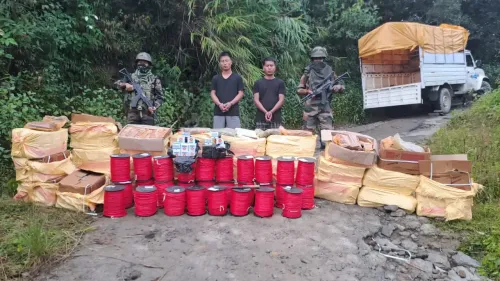
Four grenades were recovered from the arrested militants, indicating plans for imminent disruptive activity in the region.
The most senior cadre, Gajendra Asom (35) from Tezpur, Assam , has been associated with ULFA-I since 2011 , giving him over 14 years with the banned outfit.
Brojen Asom (27) from Jorhat joined ULFA-I in 2022 , highlighting the outfit's continued — if limited — recruitment activity.
The operation was conducted based on specific intelligence inputs and resulted in zero exchange of fire, reflecting improved precision in security force operations.
All three arrested cadres are residents of Assam (Tezpur, Jorhat, and Golaghat districts), underscoring ULFA-I's cross-state operational network in Northeast India.
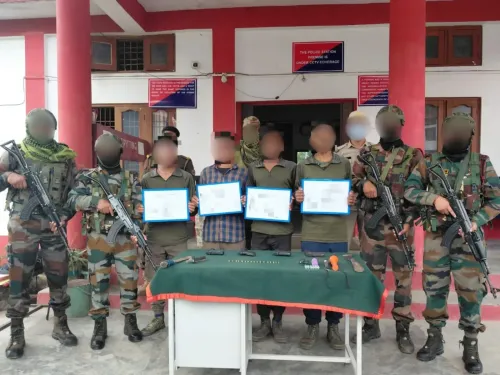
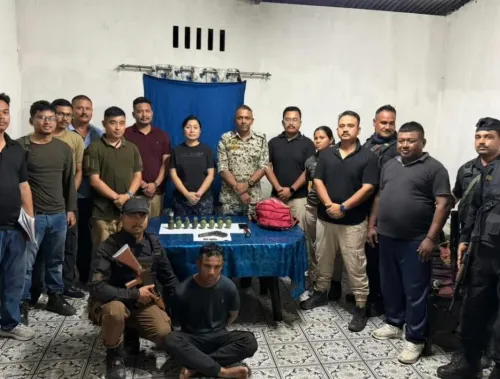
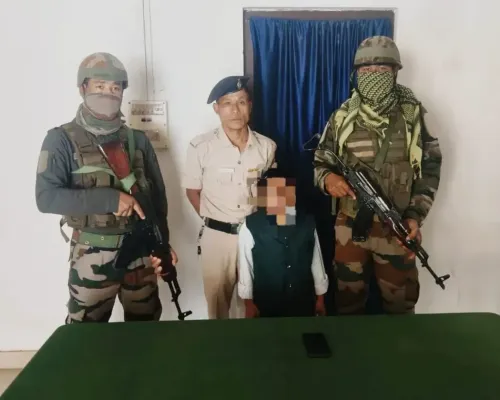
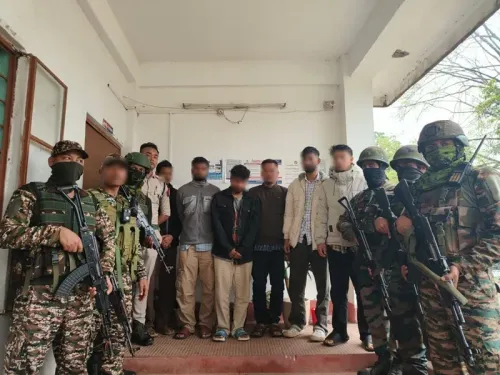
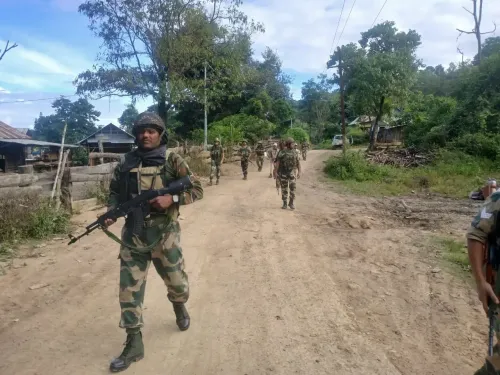
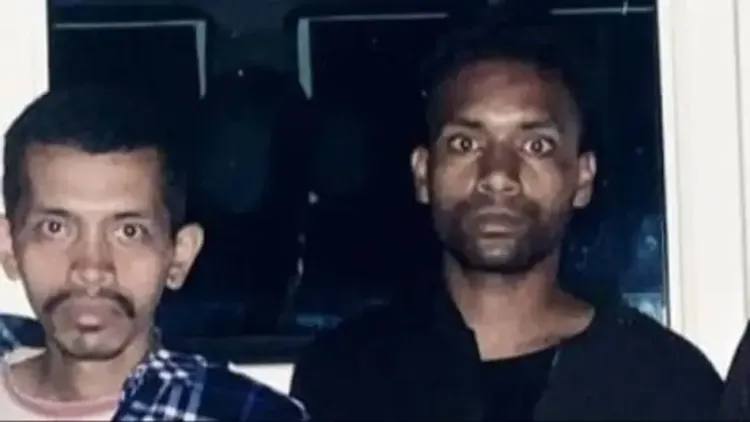
Kohima, April 25: In a significant counter-insurgency success, Assam Rifles troops apprehended three cadres of the banned United Liberation Front of Asom (Independent) [ULFA-I] in Nagaland's Mon district on Friday, April 25, officials confirmed on Saturday. The operation, conducted at Shangnyu village under the Phomching sub-division, was intelligence-driven and executed without any exchange of fire. Security forces also seized four grenades from the arrested militants, indicating imminent plans for disruptive activity.
How the Operation Unfolded
The counter-insurgency operation was launched on Friday after security agencies received specific intelligence inputs about the movement of ULFA-I cadres in the Phomching area. The militants were reportedly attempting to move towards Shangnyu village when Assam Rifles units swiftly cordoned off the area and executed a targeted raid.
All three cadres were intercepted and detained without any armed confrontation, reflecting the precision and coordination of the operation. The swift action is being viewed as a textbook intelligence-to-action response by security agencies operating in Northeast India's sensitive border zones.
Identities of the Arrested ULFA-I Cadres
The three arrested individuals have been identified as self-styled Lieutenant Gajendra Asom (35), a resident of Tezpur, Assam; self-styled Lance Corporal Brojen Asom (27) from Jorhat district; and self-styled Sergeant Puhor Asom (26) from Golaghat district.
Preliminary interrogation revealed that Gajendra Asom has been affiliated with ULFA-I since 2011, making him the most seasoned operative among the three. Puhor Asom reportedly joined the outfit in 2019, while Brojen Asom is believed to have been recruited as recently as 2022.
The recovery of four grenades from their possession strongly suggests the group was either on an active mission or preparing for an attack targeting civilian or security installations in the region.
Strategic Significance of the Mon District Operation
Mon district in Nagaland shares a sensitive border with Myanmar and has historically served as a transit corridor for insurgent groups operating across Northeast India. The presence of ULFA-I cadres — an Assam-based outfit — in Nagaland's border terrain underscores the cross-state and transnational dimensions of insurgency in the region.
This operation is particularly notable because ULFA-I, led by Paresh Baruah and believed to be based along the China-Myanmar border, has increasingly relied on Nagaland's porous terrain to move cadres and weapons. The seizure of grenades suggests active logistical operations rather than mere transit movement.
Notably, Mon district was also the site of the tragic December 2021 Oting incident, where 13 civilians were killed in a case of mistaken identity by security forces — an event that significantly strained civil-military relations in the region. The current operation, conducted with precision and zero civilian casualties, reflects the recalibrated approach security forces have adopted in the area since then.
Broader Counter-Insurgency Context in Northeast India
Security forces across Northeast India have intensified operations against ULFA-I in recent years, particularly following the breakdown of back-channel peace talks. While the mainstream faction of ULFA — led by Arabinda Rajkhowa — has been engaged in dialogue with the Government of India, the ULFA-I faction under Paresh Baruah has consistently rejected negotiations and continued armed activities.
According to security analysts, ULFA-I has been struggling with declining cadre strength and reduced operational capacity due to sustained pressure from the Indian Army, Assam Rifles, and state police forces. The recruitment of cadres as recently as 2022, as seen in this arrest, suggests the outfit is attempting to replenish its ranks despite these setbacks.
The Ministry of Home Affairs has continued to list ULFA-I as a banned terrorist organisation, and intelligence coordination between Assam, Nagaland, and central agencies has visibly improved, as evidenced by operations like this one.
Next Steps and Ongoing Investigation
Officials stated that the three arrested cadres are currently being subjected to detailed interrogation to extract intelligence on ULFA-I's network structure, supply chains, movement corridors, and any planned operations. Information gathered could potentially lead to further arrests or the neutralisation of active cells in the region.
Security forces remain on high alert across Mon, Longleng, and other border districts of Nagaland, with coordinated surveillance continuing along the India-Myanmar border. As investigations deepen, authorities are expected to share findings with Assam and central intelligence agencies to dismantle the broader network these cadres belonged to.
With Northeast India gradually moving towards sustained peace, operations like this one serve as a reminder that residual insurgent networks still pose a credible threat — and that sustained vigilance remains non-negotiable for long-term stability in the region.
Point of View
But of the structural conditions that keep militant recruitment alive.
NationPress
20 Sept 2026
Frequently Asked Questions
Who were the three ULFA-I cadres arrested in Nagaland's Mon district?
The three arrested cadres are self-styled Lieutenant Gajendra Asom (35) from Tezpur, self-styled Lance Corporal Brojen Asom (27) from Jorhat, and self-styled Sergeant Puhor Asom (26) from Golaghat. All three are residents of Assam and were apprehended at Shangnyu village in Nagaland's Mon district on April 25, 2025.
What was recovered from the arrested ULFA-I militants in Nagaland?
Security forces recovered four grenades from the possession of the three arrested ULFA-I cadres. The recovery indicates the militants were likely planning disruptive or violent activities in the region before being intercepted.
Which security force conducted the anti-ULFA-I operation in Mon district?
Assam Rifles troops conducted the targeted counter-insurgency operation at Shangnyu village under Phomching sub-division in Nagaland's Mon district. The operation was launched based on specific intelligence inputs about ULFA-I cadre movement in the area.
Why is ULFA-I active in Nagaland despite being an Assam-based outfit?
ULFA-I uses Nagaland's border terrain, particularly Mon district which shares a boundary with Myanmar, as a transit and operational corridor. The group, believed to be headquartered along the China-Myanmar border, relies on these routes to move cadres, weapons, and supplies across Northeast India.
What is the current status of ULFA-I and peace talks with the Indian government?
ULFA-I , led by Paresh Baruah , remains a banned terrorist organisation that has rejected peace negotiations with the Government of India . Unlike the mainstream ULFA faction which has engaged in dialogue, ULFA-I continues armed activities, though security analysts note its operational capacity has significantly declined due to sustained counter-insurgency pressure.