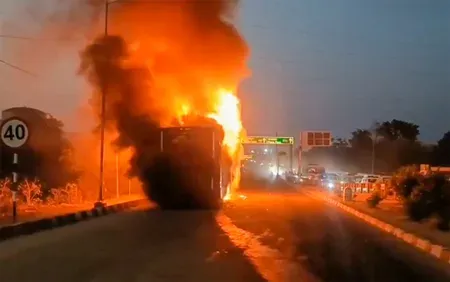
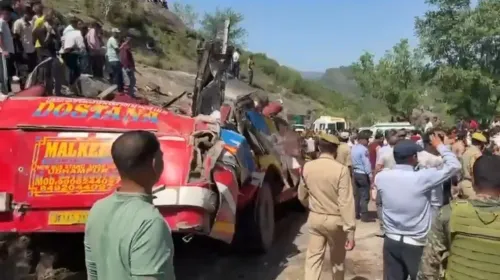
33 injured as sleeper bus overturns in Ramban tunnel on NH 44
Synopsis
A West Bengal-registered sleeper bus carrying 55 passengers overturned inside a tunnel near Maroog in Ramban, J&K, on NH 44, injuring 33. Nine have been referred to GMC Hospital Jammu. The crash is the latest in a recurring series of accidents on one of India's most dangerous mountain highways — a corridor where terrain, construction hazards, and human error combine with fatal regularity.
Key Takeaways
A West Bengal -registered sleeper bus overturned in a tunnel near Maroog , Ramban district , J&K, on 1 October 2026 .
At least 33 of the 55 passengers on board were injured.
Nine of the injured were referred to Government Medical College Hospital, Jammu for advanced care.
Rescue was coordinated by J&K Police , SDRF , CRPF , Army , and Civil Quick Response Team volunteers.
A single carriageway was opened in the affected tunnel to restore traffic movement.
The Ramban-Banihal stretch of NH 44 is widely flagged as one of India's most hazardous road segments due to unstable terrain and active road-widening works.
At least 33 passengers were injured on 1 October 2026 after a West Bengal-registered sleeper bus overturned inside a tunnel near Maroog in Ramban district, Jammu and Kashmir, while travelling from Srinagar to Jammu on National Highway 44, officials said. The bus had 55 passengers on board at the time of the accident.
Rescue Operations and Medical Response
Injured passengers were evacuated to District Hospital Ramban with assistance from Jammu and Kashmir Police, the State Disaster Response Force (SDRF), the Central Reserve Police Force (CRPF), Army personnel, and Civil Quick Response Team volunteers. Of the 33 injured, nine were subsequently referred to Government Medical College (GMC) Hospital in Jammu city for advanced treatment, indicating the severity of their condition.
Traffic Disruption and On-Site Management
Following the accident, authorities opened a single carriageway within the affected tunnel to allow traffic to continue moving. Senior officials were present at the scene, supervising both rescue efforts and traffic management operations, according to officials.
Why NH 44 Remains a High-Risk Corridor
The Srinagar-Jammu National Highway is widely regarded as one of India's most dangerous roads, serving as the sole surface lifeline connecting the Kashmir Valley to the rest of the country. According to reports from the J&K Traffic Police Department and traffic experts, accidents on this stretch are driven by a combination of treacherous terrain, ongoing infrastructure modifications, and human error.
The Ramban to Banihal segment is notably hazardous, with the highway cutting through highly unstable, rocky mountains. Frequent landslides, shooting stones, and patches of sinking roadbed make the corridor unpredictable. Heavy rainfall and flash floods routinely cause mudslides and water accumulation, leaving the road surface dangerously slick.
Traffic experts have also repeatedly flagged sub-optimal road design, including dangerous curves and steep drops. Ongoing road-widening projects have cut into mountain slopes, reportedly destabilising sections of the hillside and creating blind spots, detours, and sudden bottlenecks that heighten accident risk.
A Pattern of Recurring Accidents
This incident is part of a broader pattern of road accidents on NH 44, a highway that, despite being a critical national artery, continues to record recurring crashes. Authorities have faced sustained criticism over the pace of safety upgrades and the management of construction-phase hazards along the route. The latest accident is likely to renew calls for accelerated safety measures on the mountain corridor.
Point of View
Unresolved safety crisis on NH 44. The highway's structural vulnerabilities are known: unstable slopes, active construction blind spots, inadequate curve geometry. Yet the pace of remediation has lagged the pace of widening, meaning the construction phase itself is creating risk even as the upgrade is meant to reduce it. The referral of nine critically injured passengers to Jammu city — rather than a facility closer to Ramban — also points to a gap in trauma care infrastructure along a corridor that, by its own frequency of accidents, qualifies as a mass-casualty risk zone. Accountability for safety outcomes on this highway needs to be more visible than a post-accident presence of senior officials.
NationPress
1 Oct 2026
Frequently Asked Questions
Where did the bus accident on NH 44 occur on 1 October 2026?
The accident occurred inside a tunnel near Maroog in Ramban district, Jammu and Kashmir, on National Highway 44. The bus was travelling from Srinagar to Jammu when it overturned.
How many people were injured in the Ramban bus accident?
At least 33 of the 55 passengers on board were injured. Nine of the more seriously injured were referred from District Hospital Ramban to Government Medical College Hospital in Jammu city for further treatment.
Who carried out the rescue operations at the accident site?
Rescue operations were conducted jointly by Jammu and Kashmir Police, the State Disaster Response Force, the Central Reserve Police Force, Army personnel, and Civil Quick Response Team volunteers.
Why is the Srinagar-Jammu National Highway so prone to accidents?
NH 44 passes through highly unstable, rocky mountains, with the Ramban-Banihal stretch being particularly hazardous. Frequent landslides, shooting stones, flash floods, and ongoing road-widening construction — which has destabilised slopes and created blind spots — are among the primary causes cited by traffic experts and the J&K Traffic Police Department.
Was traffic affected after the Ramban tunnel bus accident?
Yes, but authorities moved quickly to restore partial movement. A single carriageway was opened within the affected tunnel shortly after the accident to facilitate traffic flow while rescue and management operations continued.