Jal Shakti Minister Paatil: 33 Rescued by Helicopter in Navsari

Synopsis
All 33 civilians stranded for three days by heavy monsoon flooding in Meghar village, Gandevi taluka, Navsari district, were airlifted to safety by helicopter on 25 July 2026. Union Jal Shakti Minister C. R. Paatil confirmed the rescue, crediting coordination between state leaders and the district administration.
Key Takeaways
33 civilians were stranded for three days in Meghar village , Gandevi taluka, Navsari district, due to heavy monsoon rainfall.
All 33 were evacuated safely using helicopter support coordinated through the district administration.
Union Jal Shakti Minister C.
Paatil coordinated with Gujarat CM Bhupendra Patel and Deputy CM Harsh Sanghavi on the rescue.
Paatil publicly commended the district administration, rescue teams, and all field personnel for their prompt response.
The government stated that all agencies remain on full alert for further emergencies across south Gujarat during the ongoing monsoon season.
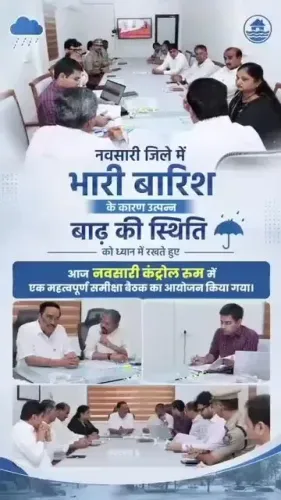
Union Jal Shakti Minister C. R. Paatil announced on Friday, 25 July 2026 that all 33 civilians stranded for three days in Meghar village of Gandevi taluka, Navsari district, due to heavy monsoon rainfall, have been safely evacuated by helicopter to secure locations.
Context
Paatil stated in his post that the residents had been trapped for three consecutive days amid severe flooding conditions in south Gujarat. 'Visham paristhitiyon ke beech unki suraksha aur sakushal nikaasi sunishchit karna hamari sarvoch prathamikta thi' ('Ensuring their safety and successful evacuation amid adverse conditions was our top priority'), he wrote.
The minister credited coordination with Gujarat Chief Minister Bhupendra Patel and Deputy Chief Minister Harsh Sanghavi, with the district administration executing the ground and aerial operation. All 33 citizens were airlifted to safety using helicopter support.
Policy Backdrop
Navsari is a coastal district in south Gujarat that faces recurring flood risk during the southwest monsoon season. India's disaster response framework, established under the Disaster Management Act, 2005, created the National Disaster Management Authority and mandated state-level coordination mechanisms for exactly such emergencies.
The National Disaster Response Force (NDRF), raised in 2006, provides specialist search-and-rescue capability during flood events, working alongside state and district administrations. Aerial evacuation using helicopters has become a standard tool in Gujarat's monsoon response playbook for villages cut off by rising waters.
Stakeholders and Impact
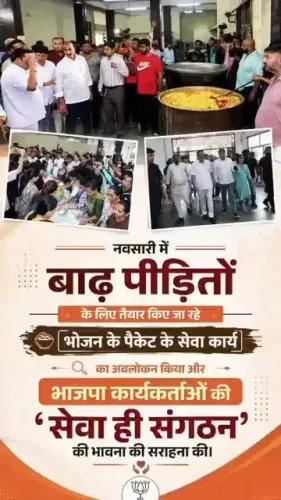
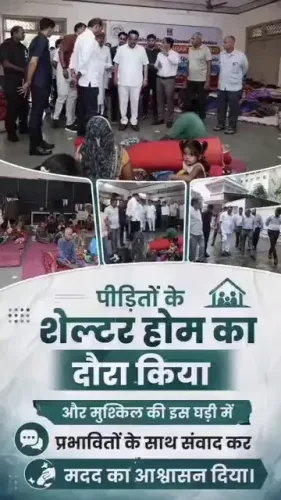
The 33 rescued civilians of Meghar village are the immediate beneficiaries of the operation. Paatil specifically praised the district administration, rescue teams, and all personnel involved, calling their service 'sarahniya' (commendable) for acting with urgency under difficult conditions.
The involvement of a Union minister in coordinating and publicly communicating a district-level rescue underscores the political salience of monsoon disaster response in Gujarat, where flooding affects large populations annually. The state government's rapid aerial deployment signals the priority placed on zero-casualty outcomes in such events.
What's Next
With heavy rainfall continuing across south Gujarat, state and district administrations remain on high alert for further rescue requirements through the remainder of the monsoon season. Paatil's post affirmed that 'shasan-prashasan poori tatparta se karyarat hai' ('the government and administration are working with full readiness') to ensure the safety and assistance of every citizen in the affected region.
Authorities and disaster management agencies will likely monitor river and water levels across Navsari and neighbouring districts closely as the season progresses, with aerial assets kept on standby for rapid deployment if further villages are cut off.
Point of View
Reinforcing the BJP's 'double-engine government' narrative in Gujarat. The rapid helicopter evacuation of a small, remote village signals that aerial assets are being deployed more proactively than in earlier monsoon seasons, a shift likely linked to political pressure to demonstrate zero-casualty outcomes. Paatil's explicit naming of Chief Minister Patel and Deputy CM Sanghavi serves both a coordination acknowledgement and a visible display of BJP's unified command structure in Gujarat. As south Gujarat enters peak monsoon weeks, the government's public communication strategy around disaster relief is as much about political optics as operational transparency.
NationPress
22 Oct 2026
Frequently Asked Questions
What happened in Meghar village Navsari during the floods?
33 civilians in Meghar village , Gandevi taluka, Navsari district, were stranded for three days due to heavy monsoon rainfall and were subsequently rescued by helicopter on 25 July 2026 .
Who coordinated the Navsari flood rescue operation?
Union Jal Shakti Minister C. R. Paatil coordinated with Gujarat Chief Minister Bhupendra Patel and Deputy Chief Minister Harsh Sanghavi , with the district administration carrying out the actual rescue.
How were the 33 stranded civilians rescued in Navsari?
All 33 civilians were evacuated using helicopter support arranged through the district administration and state government machinery.
Which district in Gujarat was affected by heavy rains in July 2026?
Navsari district in south Gujarat was affected, specifically Meghar village in Gandevi taluka, where 33 residents were stranded for three days.
What is C. R. Paatil's role in Gujarat flood relief?
C. R. Paatil is the Union Minister of Jal Shakti and a senior BJP leader from Gujarat. He coordinated with state leadership to ensure rapid relief and rescue for those stranded in the Navsari floods.