4 CISF personnel killed in friendly fire at Kathua's Sewa Project

Synopsis
Four CISF men — including an Assistant Commandant — are dead after a 'friendly fire' incident at the Sewa Project in Kathua, J&K, reportedly triggered by an altercation among deployed personnel. The deaths spotlight a well-documented but under-addressed problem: the psychological and operational toll of long-tenure paramilitary deployments in high-pressure zones.
Key Takeaways
Four CISF personnel were killed in a 'friendly firing' incident at the Sewa Project, Mashka, Kathua on 29 September 2026 .
The deceased are Assistant Commandant Ankit Kumar Pandey , SI Lakshman Singh , and constables Rafiq Ahmed and Sandeep Kumar .
All four were treated at NHPC Hospital, Himachal Pradesh , where they succumbed to gunshot injuries.
The incident reportedly followed an altercation among CISF personnel on duty; exact circumstances are under investigation.
Experts link such fratricidal incidents to family separation, duty pressure, and limited recreational avenues in long-tenure deployments.
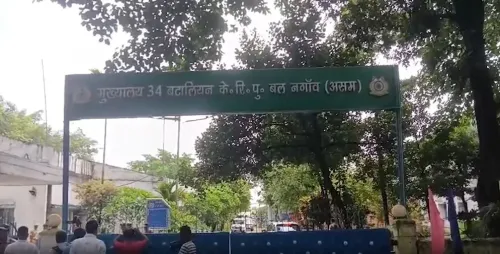
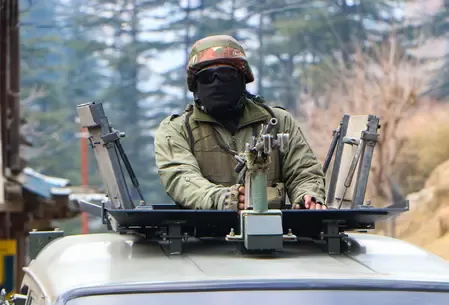
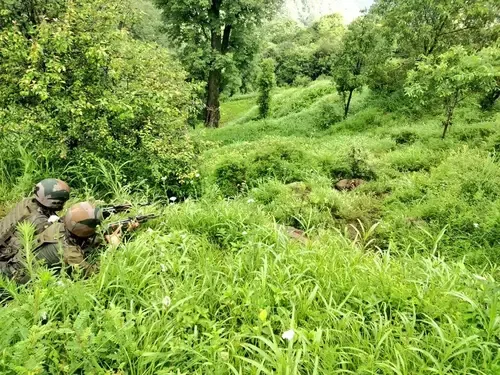
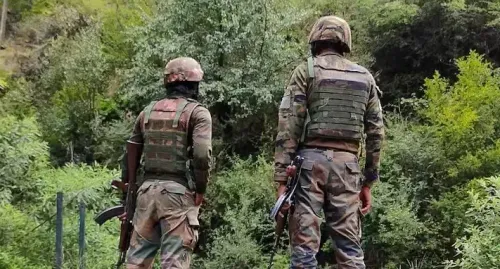
Four Central Industrial Security Force (CISF) personnel were killed in a 'friendly firing' incident at the Sewa Project in the Mashka area of Kathua district, Jammu and Kashmir, on Tuesday, 29 September 2026, according to officials. The deaths mark one of the most serious fratricidal firing incidents involving the CISF in the region in recent years.
What Happened at the Sewa Project
The firing broke out reportedly after an altercation among CISF personnel who were deployed on security duty at the project site. Four personnel sustained gunshot injuries and were evacuated to NHPC Hospital in Himachal Pradesh, where all four subsequently succumbed to their wounds.
The deceased have been identified as Assistant Commandant Ankit Kumar Pandey, Sub-Inspector Lakshman Singh, and constables Rafiq Ahmed and Sandeep Kumar.
Police Response and Ongoing Investigation
Police teams reached the incident site promptly, secured the area, and are investigating the full sequence of events. A senior police officer confirmed that the exact circumstances — including the trigger for the altercation and the chain of events leading to the firing — are yet to be established. All relevant aspects of the incident are under examination, and further details are expected as the probe progresses.
A Recurring Problem in Deployed Forces
Fratricidal or 'friendly fire' incidents have occurred previously among security forces deployed in Jammu and Kashmir. Experts have attributed such incidents to prolonged separation from families, high-pressure duty conditions, limited recreational avenues, and gaps in command and control structures. This is not an isolated pattern — security analysts point to structural stressors within long-tenure deployments as a recurring underlying factor.
Remedies Suggested by Experts
Measures recommended to reduce the risk of such incidents include frequent periodic leave to enable personnel to rejoin their families, rationalisation of duty hours, provision of recreational facilities at deployment sites, and regular informal interaction between personnel and their commanding officers. Whether these recommendations have been systematically implemented at the Sewa Project site is part of what investigators may look into.
As the investigation continues, the incident is likely to renew focus on the welfare and mental health frameworks governing paramilitary personnel deployed in challenging terrain far from home.
Point of View
Why are they still not standard practice at project-site deployments? Paramilitary welfare tends to receive attention only after deaths; structural prevention remains an afterthought. Four families have now paid the price for that institutional inertia.
NationPress
29 Sept 2026
Frequently Asked Questions
What happened at the CISF Sewa Project in Kathua?
Four CISF personnel were killed in a 'friendly firing' incident at the Sewa Project in the Mashka area of Kathua district, J&K, on 29 September 2026. The firing reportedly occurred after an altercation broke out among personnel deployed for security duty at the site.
Who were the CISF personnel killed in the Kathua incident?
The four personnel killed were Assistant Commandant Ankit Kumar Pandey, Sub-Inspector Lakshman Singh, and constables Rafiq Ahmed and Sandeep Kumar. All four were admitted to NHPC Hospital in Himachal Pradesh, where they succumbed to their gunshot injuries.
What is the status of the investigation?
Police have initiated an investigation and secured the incident site. A senior police officer confirmed that the exact sequence of events and the reasons behind the altercation are yet to be established, and all relevant aspects are under examination.
Why do friendly fire incidents occur among security forces in J&K?
Experts attribute such fratricidal incidents to prolonged separation from families, high-pressure duty conditions, lack of recreational avenues, and weaknesses in command and control structures. Remedies suggested include frequent leave, rationalised duty hours, and regular interaction between personnel and commanding officers.
Has this kind of incident happened before in J&K?
Yes, fratricidal or friendly fire incidents have occurred previously among security forces deployed in Jammu and Kashmir. Security analysts note it is a recurring problem linked to the structural stressors of long-tenure paramilitary deployments in the region.