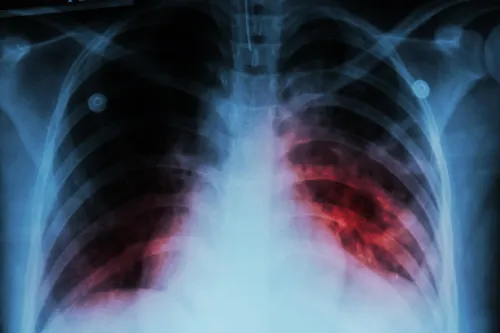
Did 4.5 Crore People Get Tested for TB in 2025, with More Than 22.6 Lakh New Cases Detected? - Anupriya Patel
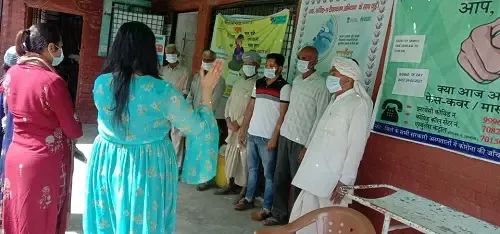
Synopsis
In a significant public health update, Union Minister Anupriya Patel reveals that 4.5 crore people were tested for tuberculosis in 2025, uncovering over 22.6 lakh new cases. This marks a crucial step in the ongoing fight against TB through the National TB Elimination Programme. Discover the details of this ambitious health initiative.
Key Takeaways
4.5 crore individuals tested for TB in 2025.
Over 22.6 lakh new cases diagnosed.
Success in treating 19,23,538 TB patients .
Improvement in treatment coverage from 53% to 92% over a decade.
Implementation of the TB Mukt Bharat Abhiyan .
New Delhi, Dec 9 (NationPress) A staggering 4.5 crore individuals underwent tuberculosis testing in 2025 within the nation, resulting in the diagnosis of over 22.6 lakh new cases of this highly contagious disease, as reported by Anupriya Patel, the Union Minister of State for Health and Family Welfare, during a parliamentary session on Tuesday.
In a written statement to the Rajya Sabha, Patel detailed the implementation of the TB Mukt Bharat Abhiyan (National TB Elimination Programme) under the framework of the National Health Mission (NHM) across the country.
“From January to October 2025, a total of 4.5 crore individuals were tested for TB, leading to the diagnosis of 22,64,704 new TB cases,” Patel remarked.
“Among the TB cases reported during this timeframe in 2024 (Jan-Oct), 19,23,538 TB patients successfully completed their treatment,” she added.
The Minister also highlighted the trends observed over the last decade concerning TB prevalence, mortality rates, and treatment coverage, according to the World Health Organization’s Global TB Report 2025.
Back in 2015, the incidence of TB in the country was recorded at 31,40,000. Treatment coverage then was at 53 percent, with 3,75,000 deaths attributed to the disease.
Over the past decade, TB cases significantly decreased to 27,10,000 and deaths reduced to 3,00,000 in 2024. Additionally, treatment coverage improved to 92 percent, as noted by Patel in the report.
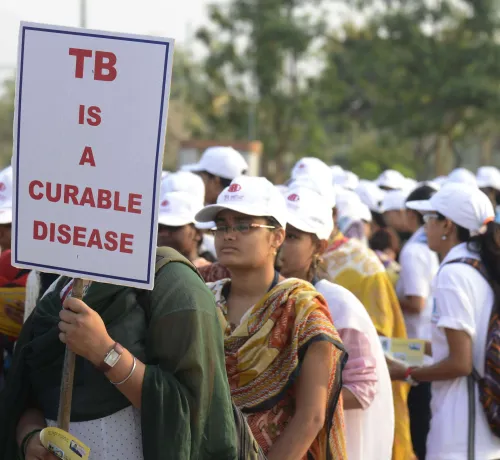
Furthermore, the Minister mentioned a “renewed approach” under the TB Mukt Bharat Abhiyan, which includes identifying vulnerable populations, screening with Chest X-rays, conducting upfront Nucleic Acid Amplification Tests (NAAT) for all presumptive TB cases, initiating prompt and appropriate treatment, providing differentiated care for high-risk TB cases, nutrition support, and offering preventive treatment to household contacts and eligible vulnerable groups.
Point of View
This report underscores India's ongoing battle against tuberculosis and reflects the government's commitment to public health. The significant increase in testing and treatment coverage demonstrates a proactive approach to managing a historically prevalent disease. This initiative is crucial for improving health outcomes and achieving national health goals.
NationPress
2 Oct 2026
Frequently Asked Questions
How many people were tested for TB in 2025?
In 2025, a total of 4.5 crore individuals were tested for tuberculosis.
How many new TB cases were diagnosed?
More than 22.6 lakh new TB cases were diagnosed in 2025.
What is the TB Mukt Bharat Abhiyan?
The TB Mukt Bharat Abhiyan is a national program aimed at eliminating tuberculosis in India.
What improvements have been observed in TB treatment coverage?
Treatment coverage has improved significantly from 53 percent in 2015 to 92 percent in 2024.
What strategies are being employed in the fight against TB?
Strategies include identifying vulnerable populations, screening, immediate testing, and providing prompt treatment and nutritional support.