Hyderabad Police bust Ghost SIM network: 66 arrested across 13 states
Synopsis
Hyderabad Police's Operation Octopus 3.0 has exposed a sophisticated Ghost SIM supply chain stretching across 13 states — with telecom agents from Airtel, Jio, and Vodafone Idea among those arrested. With ₹101.87 crore in fraud linked to just 66 accused, the operation reveals how deeply cyber criminals have embedded themselves inside legitimate telecom distribution networks.
Key Takeaways
Hyderabad Police arrested 66 persons across 13 states under Operation Octopus 3.0 on 20 May 2025 .
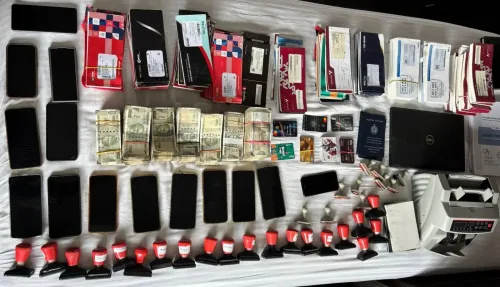
1,194 Ghost SIMs were identified; 544 SIMs seized within Hyderabad, including 432 sealed and ready for deployment.
The 66 accused are collectively linked to 76 cybercrime cases involving ₹101.87 crore in fraud.
Among those arrested: 10 Vodafone Idea agents , 7 Airtel agents , and 3 Jio agents .
Fraudsters used bulk SIM camps, OTP sharing, and eSIM conversion to harvest ghost connections from unsuspecting citizens.
Hyderabad Police will now engage TRAI , the Department of Telecom , and TSP senior leadership to tighten KYC and distribution protocols.
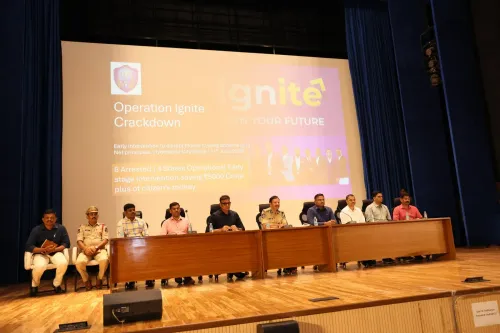
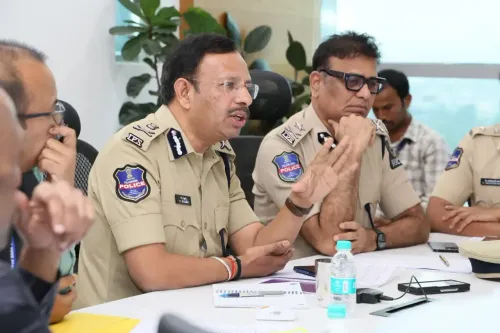
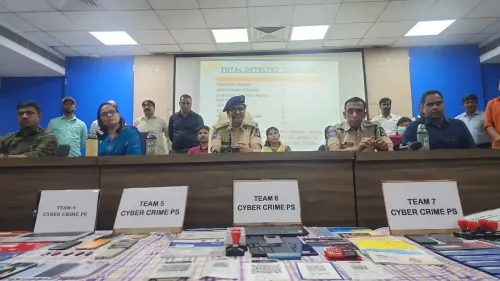
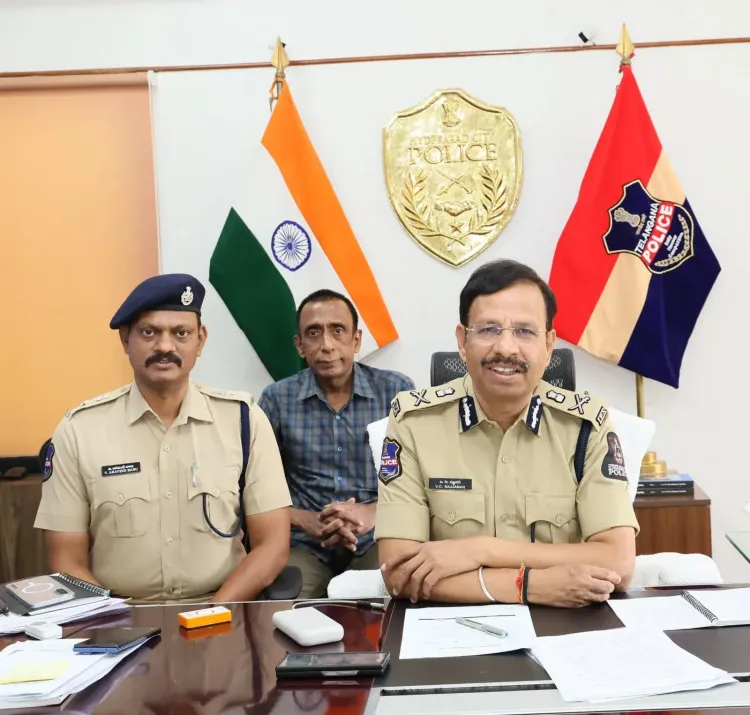
Hyderabad Police on Wednesday, 20 May announced the arrest of 66 persons across 13 states as part of Operation Octopus 3.0, a nationwide crackdown targeting the Ghost SIM network that serves as the anonymity backbone for organised cyber fraud in India. Hyderabad Police Commissioner V. C. Sajjanar confirmed the operation, which identified 1,194 Ghost SIMs linked to cases registered at the Cyber Crime Police Station (CCPS), Hyderabad.
Operation Octopus 3.0: What Was Targeted
Ghost SIMs are mobile connections fraudulently activated in the names of unsuspecting or exploited subscribers, providing cyber criminals with untraceable communication channels. Eighteen trained teams were deployed across 13 states over a continuous seven-day operation, seizing 544 SIMs within Hyderabad city alone through the CCPS Special Task Force. Of these, 432 were sealed SIMs awaiting deployment for cybercrime activities.
The operation builds on earlier phases: Operation Octopus 1.0 targeted mule account holders, and Operation Octopus 2.0 focused on bank officials abetting cyber fraud. The third iteration turns the spotlight on telecom infrastructure misuse.
Who Was Arrested and Their Links to Telecom Firms
Among the 66 persons apprehended, 44 were Ghost SIM holders, 20 were Point-of-Sale (PoS) agents or telecom promoters, and two were Ghost SIM suppliers. Of the arrested PoS agents, 10 were associated with Vodafone Idea, seven with Airtel, and three with Jio.
Collectively, the 66 accused are linked to 76 cybercrime cases across India involving a total fraudulent amount of ₹101.87 crore.
How the Ghost SIM Racket Operated
Investigators found multiple methods used to harvest SIM cards illegally. During Mobile Number Portability (MNP) eKYC verification, certain PoS agents activated additional SIM cards in genuine customers' names without their knowledge, then converted them to eSIMs for dispatch abroad.
Agents also offered free SIM activations to less digitally literate individuals, diverting the cards to distributors on commission for use in overseas fraud. In some cases, customers were monetarily induced to surrender SIM cards or share OTPs, enabling the creation of fake profiles on WhatsApp, social media, dating, and matrimonial platforms. Bulk SIM distribution camps were reportedly run in villages under the guise of free schemes, exploiting the Aadhaar identities of illiterate individuals.
What Hyderabad Police Plans Next
Commissioner Sajjanar said Hyderabad City Police will convene structured meetings with Telecom Service Providers (TSPs) — Airtel, Jio, and Vodafone Idea — at their senior leadership levels to develop stringent protocols curbing Ghost SIM proliferation within their distribution chains. The police will also approach the Department of Telecom, TRAI, and other public stakeholders to plug procedural loopholes and strengthen KYC norms.
The operation was supervised by V. Aravind Babu, DCP Cybercrimes, and Siva Maruthi, ACP Cybercrimes, with teams drawn from CCPS Hyderabad, Detective Inspectors, and Armed Reserve staff. As India's cyber fraud ecosystem continues to evolve, the pressure on telecom distributors to enforce tighter identity verification is set to intensify.
Point of View
Jio, and Vodafone Idea PoS agents among the accused points to a systemic compliance failure, not isolated rogue behaviour. Hyderabad Police's move to engage TSPs at senior leadership level mirrors its earlier pressure on banks over mule accounts — a model that has shown some results. The harder question is whether TRAI and the Department of Telecom will mandate structural fixes, or whether voluntary protocols will again prove insufficient against commission-driven distribution incentives.
NationPress
3 Oct 2026
Frequently Asked Questions
What is Operation Octopus 3.0?
Operation Octopus 3.0 is a Hyderabad Police-led nationwide crackdown targeting the Ghost SIM network used by cyber criminals to mask their identities. Launched by the Cyber Crime Police Station (CCPS) Hyderabad, it resulted in 66 arrests across 13 states and the seizure of 544 SIMs within the city.
What are Ghost SIMs and why are they dangerous?
Ghost SIMs are mobile connections fraudulently activated in the names of unsuspecting or exploited individuals, giving cyber criminals untraceable communication channels. They are used to operate fake profiles on WhatsApp, social media, dating, and matrimonial platforms, and to coordinate financial fraud remotely.
How much money is linked to the accused in Operation Octopus 3.0?
The 66 persons arrested are collectively linked to 76 cybercrime cases involving a total fraudulent amount of ₹101.87 crore across India, according to Hyderabad Police Commissioner V. C. Sajjanar.
Which telecom companies were implicated in the Ghost SIM network?
PoS agents and telecom promoters from Vodafone Idea (10 arrested), Airtel (7 arrested), and Jio (3 arrested) were among the 20 telecom-linked individuals apprehended. Hyderabad Police has said it will engage all three TSPs at senior leadership levels to develop stricter distribution protocols.
What action will Hyderabad Police take to prevent Ghost SIM fraud in the future?
Hyderabad Police plans to hold structured meetings with Airtel, Jio, and Vodafone Idea leadership, and will approach the Department of Telecom and TRAI to plug KYC loopholes and tighten SIM distribution norms. The approach mirrors its earlier engagement with banks over mule accounts under Operations Octopus 1.0 and 2.0.