Tejashwi Yadav mourns 7 deaths in Lakhisaray temple tragedy
Synopsis
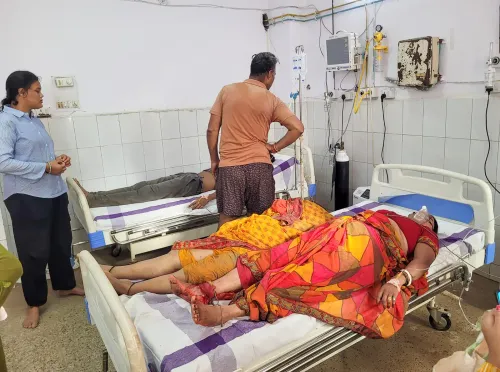
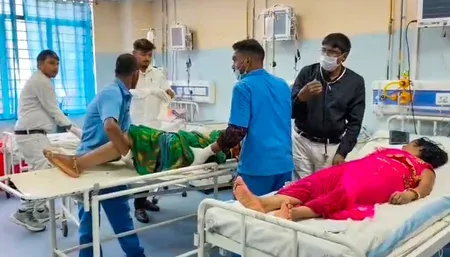
Seven pilgrims died and many were injured when a live wire fell during Sawan jalabhishek at Lakhisaray's Ashok Dham temple. RJD leader Tejashwi Yadav mourned the deaths, demanded compensation, and blamed the NDA government's administrative failures for the tragedy.
Key Takeaways
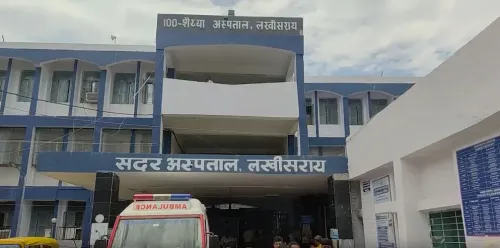
Seven pilgrims died and several were injured after a live electrical wire fell at Ashok Dham (Indra Damaneshwar Mahadev Temple) in Lakhisaray, Bihar .
The incident occurred on the third Monday of Sawan — a peak-footfall day for Shiva devotees — during a jalabhishek ritual.
The fallen wire caused electric current to spread, triggering panic and a stampede in the crowded temple compound.
RJD leader Tejashwi Yadav demanded immediate compensation for victims' families and urgent medical care for the injured.
Yadav blamed the NDA government (JD(U)-BJP alliance under CM Nitish Kumar) for inadequate crowd management and pilgrim safety.
A magisterial inquiry and ex-gratia announcement from the Bihar government are expected in the coming days.
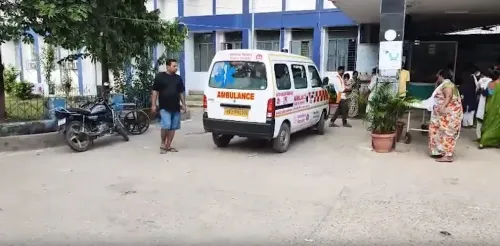
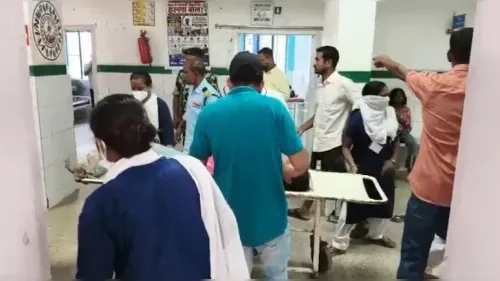
Seven pilgrims died and several more were injured when a live wire fell during a jalabhishek ritual at Ashok Dham (Indra Damaneshwar Mahadev Temple) in Lakhisaray district, Bihar, on the third Monday of Sawan — the holiest day of the monsoon-season calendar for Shiva devotees — triggering a stampede in the crowded temple compound. RJD leader and Leader of the Opposition Tejashwi Yadav expressed grief over the tragedy on Monday, 17 August 2026, and turned the incident into a pointed indictment of the state's ruling alliance.
What happened at Ashok Dham
During the peak of Sawan devotion, when tens of thousands of pilgrims converge on Shiva temples across Bihar, an electrical wire reportedly fell inside the Ashok Dham premises while worshippers were performing jalabhishek — the ritual pouring of water over the Shivalinga. The resulting current spread through the wet ground, triggering panic and a stampede. Seven people lost their lives; the number of injured remains under assessment.
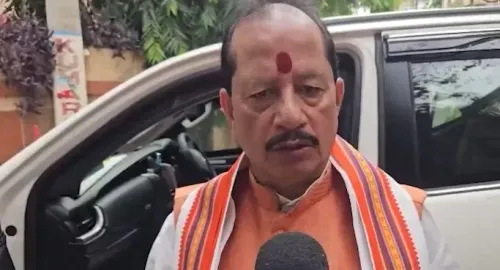
Yadav described himself as 'marmaahat' — deeply wounded — by the news. He offered condolences to the bereaved families and called for immediate compensation for the kin of the deceased and swift medical care for the injured, demanding that the government act without delay.
Tejashwi's charge against the NDA government
The RJD leader did not stop at condolences. He squarely blamed the NDA government — the JD(U)-BJP alliance led by Chief Minister Nitish Kumar — for what he called a failure of crowd management and pilgrim safety inside the temple complex. 'The absence of proper security and crowd management for devotees inside the temple premises is a sign of the NDA government's administrative disorder,' Yadav wrote, using the Hindi phrase 'prashasanik kuvyavastha' — administrative dysfunction.
The charge fits a well-worn pattern: opposition leaders in Bihar have repeatedly used lapses at large religious gatherings — stampedes, electrocution incidents, infrastructure failures — to question the state administration's preparedness. Sawan Mondays are predictably high-footfall events, making crowd-control planning a baseline expectation, not an extraordinary ask.
Lakhisaray's Ashok Dham and the weight of Sawan
Lakhisaray, a district in eastern Bihar, is home to the Ashok Dham shrine, which draws large congregations during Sawan — the auspicious month in the Hindu lunar calendar when devotion to Lord Shiva peaks. The third Monday of Sawan carries particular religious significance, ensuring that crowds at such temples are at their densest. Electrical infrastructure inside and around heritage temple complexes, often ageing and poorly maintained, has been a recurring safety concern at such events across India.
With a magisterial inquiry likely and pressure mounting on the Bihar government to announce ex-gratia payments, the coming days will test whether the state's response matches the scale of the grief in Lakhisaray.
Point of View
Yet electrical hazards and crowd-management failures recur. Tejashwi Yadav's response follows the RJD's established playbook of converting administrative lapses into governance indictments against the Nitish Kumar-led NDA. The political pressure, however, carries a legitimate policy demand — ageing temple infrastructure and absent safety protocols are a genuine public-safety crisis, not just an opposition talking point. How swiftly the Bihar government announces compensation and orders an inquiry will determine whether this becomes a sustained accountability moment or fades after a perfunctory response.
NationPress
1 Oct 2026
Frequently Asked Questions
What happened at Ashok Dham temple in Lakhisaray?
A live electrical wire fell inside the Ashok Dham (Indra Damaneshwar Mahadev Temple) in Lakhisaray, Bihar, during a Sawan Monday jalabhishek ritual, sending current through the wet ground, causing panic and a stampede that killed at least 7 pilgrims and injured several others.
What did Tejashwi Yadav say about the Lakhisaray temple accident?
Tejashwi Yadav expressed deep grief over the deaths, demanded compensation for victims' families and immediate medical care for the injured, and blamed the NDA government's administrative failures for the lack of crowd management and pilgrim safety at the temple.
When did the Lakhisaray temple tragedy occur?
The incident occurred on the third Monday of Sawan, 17 August 2026, one of the most significant days in the Shiva-devotion calendar when temple footfall is at its peak.
Which government is responsible for Bihar temple safety?
Bihar is governed by the NDA alliance comprising JD(U) and BJP under Chief Minister Nitish Kumar. Tejashwi Yadav has specifically held this government accountable for the safety lapses at Ashok Dham.
Will victims' families receive compensation after the Lakhisaray temple accident?
Tejashwi Yadav has demanded the Bihar government announce ex-gratia compensation for the families of the deceased. A formal government announcement and likely a magisterial inquiry are expected in the days following the incident.