AAP MPs Exit: Punjab BJP Slams Kejriwal's Authoritarian Rule
Synopsis
Two-thirds of AAP's Rajya Sabha MPs have quit the party, prompting Punjab BJP's Ashwani Sharma to call it proof of Kejriwal's authoritarian rule. State BJP chief Sunil Jakhar welcomed the defectors, declaring it the beginning of AAP's end. The crisis reignites debates over Punjab's governance failures, drug menace, and AAP's 'remote control' leadership model.
Key Takeaways
Two-thirds of AAP's Rajya Sabha MPs resigned from the party, triggering a major internal crisis for Arvind Kejriwal on April 24 .
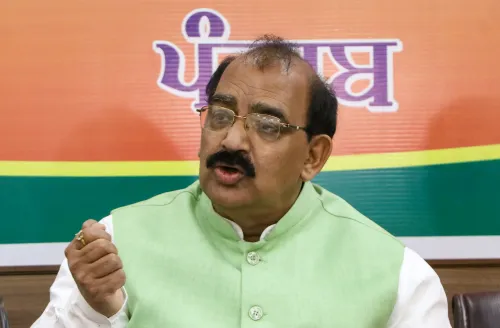
Punjab BJP Working President Ashwani Sharma called the exodus proof of Kejriwal's authoritarian leadership and labelled CM Bhagwant Mann a "puppet." Punjab BJP State President Sunil Jakhar welcomed the defecting MPs into the BJP , predicting AAP's departure marks the beginning of the party's collapse.
Jakhar accused the AAP government of allowing gangsterism and drug abuse to peak in Punjab , eroding public safety and trust.
The Swati Maliwal insult and the Raghav Chadha controversy were cited by BJP as unresolved issues that continue to damage AAP's credibility.
The defections reignite the 'remote control' governance allegation — that Punjab is effectively run from New Delhi by Kejriwal's inner circle rather than elected state leaders.
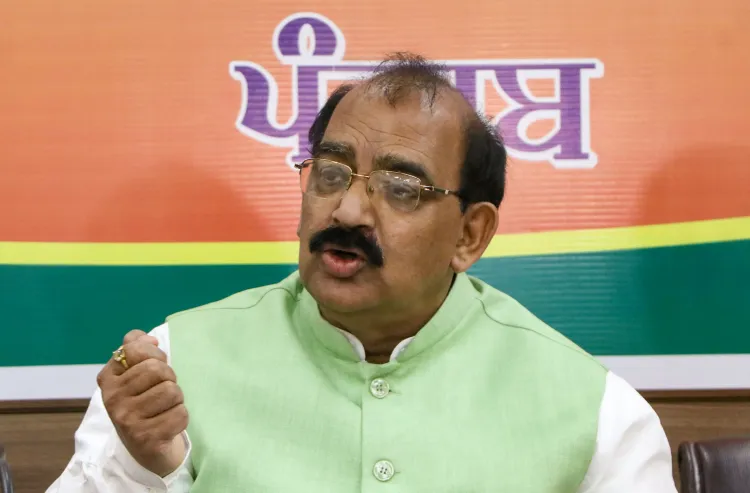
Chandigarh, April 24: The mass resignation of two-thirds of Aam Aadmi Party's (AAP) Rajya Sabha Members of Parliament has triggered a sharp political response from the Punjab BJP, with Working President Ashwani Sharma declaring on Friday that the unprecedented exodus exposes deep organisational fractures and points to an increasingly authoritarian style of governance under Arvind Kejriwal. The development is being seen as one of the most significant internal crises to hit AAP since its formation.
Sharma Calls It a Leadership Crisis for Kejriwal
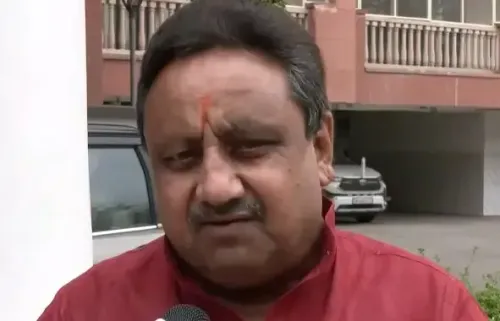
Ashwani Sharma did not mince words, stating that the large-scale departures from the party's parliamentary ranks reveal the "deep cracks within AAP" and signal growing dissatisfaction with the way Kejriwal runs the organisation. He argued that when elected representatives at such a senior level choose to walk away, it is no longer a matter of individual grievance — it reflects a systemic failure at the top.
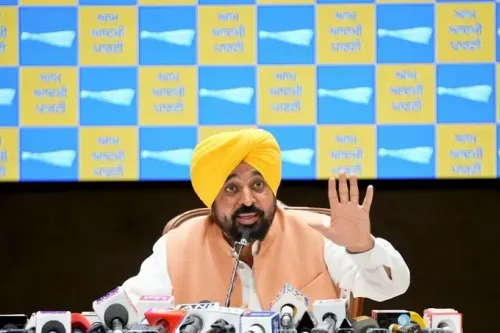
Sharma also turned his attention to Punjab Chief Minister Bhagwant Mann, dismissing him as a "puppet" who resorted to making "irrelevant statements" rather than addressing the core issues raised by the departing MPs. According to Sharma, this deflection is a pattern the party has repeatedly employed to avoid accountability.
Maliwal Insult and Raghav Chadha Controversy Resurface
The Punjab BJP leader also brought up two lingering controversies that have dogged the party — the alleged insult to Swati Maliwal, a former AAP ally and Delhi Commission for Women chairperson, and the political controversy surrounding Rajya Sabha MP Raghav Chadha. Sharma insisted these are "serious issues that will not be forgotten easily by the people" and form part of a broader pattern of internal suppression within the party.
These incidents, critics argue, highlight a culture within AAP where dissent is not tolerated and individuals who raise uncomfortable questions are sidelined or publicly humiliated — a charge the party has consistently denied.
Punjab Under AAP: BJP's Charge of Deception and Misgovernance
Sharma further stated that for the past four and a half years, Punjab has been subjected to what he called "systematic deception" under the combined leadership of Kejriwal and the Aam Aadmi Party. He emphasised that voters in the state had cast their ballots with the hope of seeing Punjab governed by its own people — a promise that, according to him, has been thoroughly betrayed by a leadership structure that remains centralised in New Delhi.
This criticism directly references a long-standing allegation against AAP's Punjab model: that despite projecting Bhagwant Mann as the face of the government, real decision-making power rests with Kejriwal and a coterie of Delhi-based party insiders — a "remote control" arrangement that BJP leaders have repeatedly flagged.
Jakhar Welcomes Defectors, Predicts AAP's Collapse
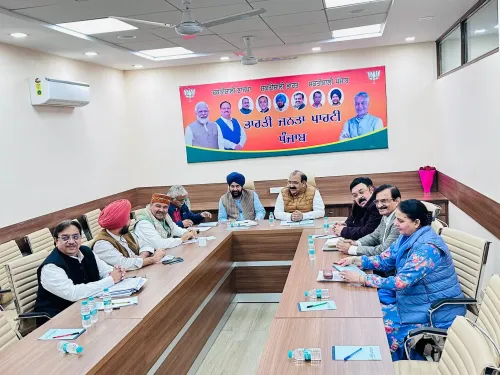
Punjab BJP State President Sunil Jakhar welcomed the departing Rajya Sabha MPs into the Bharatiya Janata Party, calling their arrival a boost for the party in Punjab and predicting it would mark "the beginning of the decline of AAP" — which he described as one of the shortest-lived active political parties in the country's recent history.
In a message posted across social media platforms, Jakhar wrote: "A warm welcome to all the MPs who have left the sinking ship of AAP in time and joined the Bharatiya Janata Party. Due to poor governance, corruption, and lawlessness under AAP, the people of Punjab have become disillusioned with the party."
He added that even well-intentioned individuals within the party are now being "compelled to leave" because AAP has abandoned public interest in favour of factional politics and centralised control.
Gangsterism, Drugs, and Governance Failure: BJP's Ground-Level Critique
Jakhar painted a grim picture of Punjab under the current government, alleging that "lawlessness and corruption have reached their peak" and that ordinary citizens no longer feel safe. He specifically called out the twin crises of gangsterism and drug abuse, stating these twin menaces are consuming the state's youth at an alarming rate.
Notably, Punjab's drug problem has been a politically sensitive issue for decades, predating the AAP government. However, the BJP argues that AAP's failure to deliver on its signature promise of eliminating the drug trade — a central plank of its 2022 election campaign — makes the current government uniquely culpable for the crisis.
Jakhar also reiterated the "remote control" allegation, stating that the centralised power structure within AAP does not allow capable leaders within the party to function independently, ultimately harming both the organisation and the state it governs.
As AAP faces mounting pressure from within and outside, all eyes will now be on how Arvind Kejriwal responds to the defections — and whether the party can arrest its slide ahead of future electoral contests in Punjab and beyond. Political analysts suggest that the coming weeks will be critical in determining whether this exodus remains a manageable setback or signals the beginning of a deeper structural unravelling of the party.
Point of View
Yet today faces the same charges of centralised authoritarianism and intolerance of dissent that it once levelled at its rivals. The irony is sharp: a party that rose to power in Punjab promising Punjabis self-governance is now being accused of running the state by remote control from Delhi. If the BJP can convert this narrative into electoral momentum, the 2027 Punjab assembly elections could see a dramatically different political landscape.
NationPress
19 Sept 2026
Frequently Asked Questions
Why did AAP's Rajya Sabha MPs resign from the party?
Two-thirds of AAP's Rajya Sabha MPs departed from the party amid reports of growing internal dissent against Arvind Kejriwal's centralised leadership style. Punjab BJP leaders have cited the exits as evidence of deep organisational cracks and authoritarian functioning within AAP.
What did Punjab BJP's Ashwani Sharma say about Kejriwal after the AAP MPs' exit?
Punjab BJP Working President Ashwani Sharma stated on April 24 that the mass departure of AAP's Rajya Sabha MPs raises serious concerns about Arvind Kejriwal's leadership and reflects his increasingly authoritarian style of running the party. He also called Chief Minister Bhagwant Mann a 'puppet' who deflects from real issues.
Which BJP leader welcomed the AAP MPs who joined BJP?
Punjab BJP State President Sunil Jakhar welcomed the defecting AAP Rajya Sabha MPs into the Bharatiya Janata Party, calling their arrival a strengthening of the party in Punjab. He described their departure from AAP as leaving a 'sinking ship' and predicted it signals the beginning of AAP's decline.
What is the 'remote control' allegation against AAP in Punjab?
The 'remote control' allegation refers to BJP's long-standing charge that real decision-making power in Punjab's AAP government rests with Arvind Kejriwal and Delhi-based party insiders rather than Chief Minister Bhagwant Mann. Critics argue this centralised structure prevents capable local leaders from functioning independently.
How does the AAP MPs' exit affect Punjab politics ahead of 2027 elections?
The mass departure of AAP's Rajya Sabha MPs is expected to intensify political pressure on the Bhagwant Mann government in Punjab, which faces criticism over governance, drug menace, and gangsterism. Political analysts suggest this crisis could significantly alter the electoral dynamics heading into the 2027 Punjab assembly elections.