Andhra ACB Re-Interrogates Suspended Official in DA Case

Synopsis
Andhra Pradesh's ACB has taken suspended Endowments Department official Kalingiri Shanti into police custody for the second time, alleging non-cooperation in a Rs 1.37 crore Disproportionate Assets case. Her reinstatement just weeks before her April 7 arrest raises serious questions about bureaucratic accountability in the state.
Key Takeaways
Kalingiri Shanti , suspended Assistant Commissioner in AP's Endowments Department , was taken into second police custody by the ACB on April 24, 2025 .
The ACB unearthed assets worth Rs 1.37 crore during 10-hour raids on April 7 across Tadepalli, Undavalli, and Visakhapatnam.
Seized assets include a flat in Visakhapatnam , a G+2 building at Kunchanapalli , 776 grams of gold , and Rs 1.15 lakh cash .
Shanti was reinstated from her first suspension in March 2026 and arrested weeks later — her second suspension in under two years .
The ACB alleged she did not cooperate during her first custody interrogation on April 15-16 , prompting the court to grant fresh custody.
Shanti has also filed a petition seeking permission to meet her two-and-a-half-year-old son while in judicial custody.
The Anti-Corruption Bureau (ACB) of Andhra Pradesh has resumed interrogation of Kalingiri Shanti, a suspended Assistant Commissioner in the Endowments Department, in a high-profile Disproportionate Assets (DA) case. On Friday, April 25, ACB officials retrieved Shanti from Vijayawada District Jail and transported her to Vijayawada Government General Hospital for a mandatory medical examination before commencing fresh rounds of questioning.
Court Grants Second Police Custody
The ACB court on Thursday, April 24, granted the anti-graft agency two days of police custody over Shanti — marking the second time she has been remanded to police custody in this case. Her first custody period was between April 15 and 16, during which investigators alleged she was uncooperative and withheld crucial information.
The ACB formally approached the court citing lack of cooperation during the earlier interrogation, arguing that her continued non-compliance was impeding the investigation into her allegedly disproportionate wealth.
Assets Worth Rs 1.37 Crore Unearthed in April 7 Raids
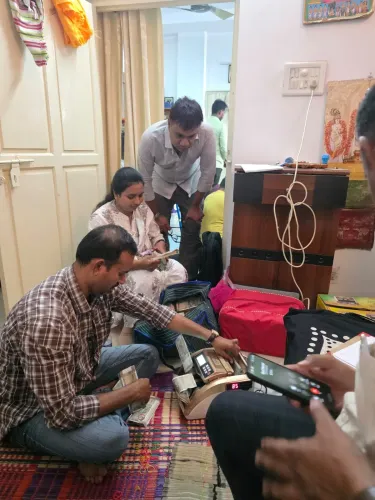
Shanti was originally arrested on April 7 following simultaneous raids lasting over 10 hours across multiple locations including Tadepalli, Undavalli, and Visakhapatnam. The ACB found she had accumulated assets worth Rs 1.37 crore, grossly disproportionate to her legitimate income sources.
Among the assets seized were a residential flat in Visakhapatnam, a G+2 building at Kunchanapalli, 776 grams of gold ornaments, nearly 3 kg of silver articles, cash worth Rs 1.15 lakh, bank balances of approximately Rs 3 lakh, a car, a motorcycle, and various electronic gadgets. Investigators also seized incriminating documents from the premises.
Following the raids, the ACB registered a DA case under the Prevention of Corruption Act, and the court sent her to judicial custody till April 21, which was subsequently extended.
Background: A Career Marked by Repeated Suspensions
Shanti was appointed as Assistant Commissioner in the Endowments Department through the Andhra Pradesh State Public Service Commission (APPSC) in 2020 and served postings in both Visakhapatnam and Vijayawada.
After the TDP-led coalition government assumed power in 2024, Shanti faced her first suspension over allegations of administrative irregularities. She remained under suspension from July 2024 to March 2026. Notably, the suspension was revoked just weeks before her arrest — she had been awaiting a fresh posting when the ACB swooped in.
This marks the second suspension in under two years, raising serious questions about internal accountability mechanisms within the Endowments Department and the government's vetting process before reinstating officials with pending conduct inquiries.
Personal Plea Amid Legal Battle
Shanti, currently lodged in Vijayawada District Jail, had filed a petition seeking permission to meet her two-and-a-half-year-old son. The court heard arguments on the matter and posted it for orders on April 16. The case has drawn attention not only for the scale of alleged corruption but also for the human dimensions of a young child separated from his mother during a prolonged legal proceeding.
Broader Implications for Andhra Pradesh's Anti-Corruption Drive
This case is emblematic of a wider crackdown on corruption within Andhra Pradesh's state bureaucracy under the current government. The Endowments Department, which manages thousands of temples and their associated revenues, has historically been vulnerable to financial irregularities — making Shanti's case a significant test of the ACB's resolve.
Critics argue that the lifting of Shanti's first suspension without a thorough conduct review reflects systemic lapses in bureaucratic oversight. The fact that she was reinstated and then arrested within weeks points to a disconnect between administrative decisions and active anti-corruption investigations.
As the two-day police custody period progresses, the ACB is expected to probe the source of funds used to acquire the seized properties and trace any financial transactions that may implicate other officials or intermediaries. The outcome of this interrogation could determine whether additional arrests or charge-sheets are forthcoming in the case.
Point of View
Reinstated without apparent due diligence, and arrested weeks later with assets worth Rs 1.37 crore. The ACB's allegation that she refused to cooperate during initial questioning — prompting a second custody — suggests the investigation may be targeting a wider network. More critically, the Endowments Department, entrusted with managing temple wealth belonging to millions of devotees, has become a recurring hotspot for corruption, raising uncomfortable questions about whether reinstatement protocols are being weaponised to shield officials from accountability until political winds shift.
NationPress
17 Sept 2026
Frequently Asked Questions
Who is Kalingiri Shanti and why was she arrested?
Kalingiri Shanti is a suspended Assistant Commissioner in the Andhra Pradesh Endowments Department. She was arrested on April 7, 2025, by the ACB after raids revealed assets worth Rs 1.37 crore disproportionate to her known income sources.
What assets were seized from Kalingiri Shanti by the ACB?
The ACB seized a residential flat in Visakhapatnam, a G+2 building at Kunchanapalli, 776 grams of gold, nearly 3 kg of silver, Rs 1.15 lakh cash, Rs 3 lakh in bank balances, a car, a motorcycle, and electronic gadgets. Total disproportionate assets were valued at Rs 1.37 crore.
Why is the ACB questioning Kalingiri Shanti a second time?
The ACB told the court that Shanti did not cooperate during her first police custody interrogation on April 15-16, 2025. The court granted a second two-day custody period starting April 24 to allow investigators to continue questioning her.
How many times has Kalingiri Shanti been suspended?
Kalingiri Shanti has been suspended twice in under two years. Her first suspension came after the TDP-led coalition government took power in 2024, lasting from July 2024 to March 2026. Her second suspension followed her arrest in the DA case in April 2025.
What is the Andhra Pradesh Endowments Department?
The Andhra Pradesh Endowments Department is a state government body that administers Hindu religious temples, their properties, and associated revenues. It has been the subject of multiple corruption investigations due to the significant financial assets it manages.