Adani, Anushkaa Foundations to treat 10,000 clubfoot children across 5 states
Synopsis
A treatable birth defect that affects 1 in 800 Indian newborns is finally getting a scaled public-health response. The Adani and Anushkaa Foundations have committed three years and 67 clinics across 61 districts to treat 10,000 children with clubfoot — leaning on the low-cost Ponseti method and frontline health workers rather than hospital-heavy surgery.
Key Takeaways
The Adani Foundation and Anushkaa Foundation announced a three-year partnership on 3 June 2025 , World Clubfoot Day.
The initiative will support treatment for over 10,000 children with clubfoot across Madhya Pradesh, Haryana, Uttar Pradesh, Maharashtra and Himachal Pradesh .
It will back 67 clubfoot clinics in 61 districts in partnership with the National Health Mission .
51 healthcare professionals will be trained and over 30,000 frontline workers sensitised for early detection.
Clubfoot affects nearly 1 in 800 newborns and is correctable via the Ponseti method if treated early.
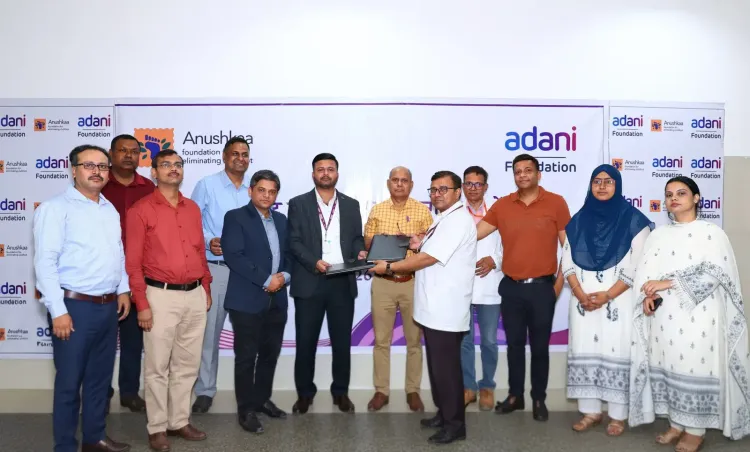
The Adani Foundation and the Anushkaa Foundation on 3 June 2025 announced a three-year partnership to fund treatment and follow-up care for more than 10,000 children living with clubfoot across five Indian states, working through public healthcare systems. The initiative, unveiled on World Clubfoot Day, will be rolled out with the National Health Mission (NHM) in Madhya Pradesh, Haryana, Uttar Pradesh, Maharashtra and Himachal Pradesh.
Where the programme launches
The programme was formally launched at the Manyavar Kanshiram Samyukth Chikitsalay and Trauma Centre in Kanpur, Uttar Pradesh — a state that reportedly carries one of the highest burdens of clubfoot cases in India. Organisers said the choice of venue underscores the scale of unmet need in the Hindi heartland.
Why clubfoot care matters
Clubfoot is a congenital condition in which one or both feet turn inward at birth, affecting nearly one in every 800 newborns. While the globally recognised Ponseti method can correct the deformity when started early, many children in underserved districts miss the treatment window because of late detection, weak referral chains, or distance from specialised care.
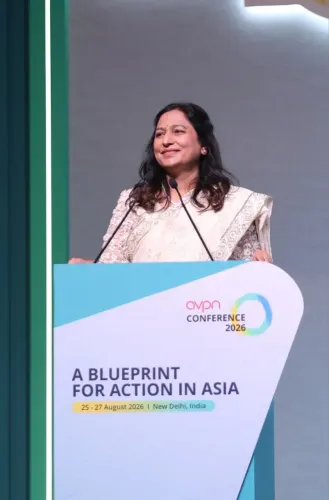
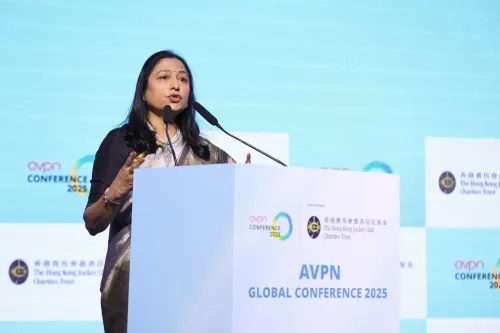
Dr Priti Adani, Chairperson of the Adani Foundation, said no child should be held back by a treatable condition when identified in time. ‘Every child deserves the opportunity to move, learn, play, and participate fully in life. Creating opportunities for specially abled individuals has long been central to the Adani Foundation's philosophy, and this partnership reflects that commitment,' she said.
What the partnership will deliver
Under the programme, 67 clubfoot clinics across 61 districts in the five states will be supported to expand treatment access and build healthcare capacity. The initiative will also train and strengthen 51 healthcare professionals directly involved in clubfoot management.
In addition, more than 30,000 frontline health workers will be sensitised to improve early detection and ensure timely referral of newborns showing signs of the condition. The model leans heavily on integrating screening into existing maternal and child health touchpoints rather than building parallel systems.
The collaboration's intent
Deepak Premnarayen, Founder of the Anushkaa Foundation, said the tie-up would strengthen systems for early diagnosis and intervention while expanding access to quality treatment. ‘This partnership with the Adani Foundation will help expand access to quality treatment across 61 districts in five states while strengthening systems for early diagnosis and intervention. Together, we can ensure that a treatable condition does not become a lifelong barrier to mobility and opportunity,' Premnarayen added.
What's next
Implementation will run through public hospitals and district health networks under NHM oversight, with rehabilitation support baked into the three-year roadmap. If execution holds, the programme could become a template for scaling Ponseti-based care nationally — particularly in states where surgical correction still dominates over the less invasive plaster-cast protocol.
Point of View
000 figure; it's the bet on Ponseti-based, NHM-integrated care over surgical correction, which mainstream Indian paediatric orthopaedics has been slow to standardise. The model's success will hinge less on clinics built and more on whether ASHA and ANM workers actually flag cases in the first 30 days of life. If frontline sensitisation holds, this could quietly become one of the more cost-effective disability-prevention programmes in the country.
NationPress
27 Sept 2026
Frequently Asked Questions
What is the Adani Foundation and Anushkaa Foundation clubfoot initiative?
It is a three-year partnership announced on 3 June 2025 to support treatment and follow-up care for more than 10,000 children with clubfoot across five Indian states. The programme will be implemented with the National Health Mission through 67 clinics in 61 districts.
Which states are covered under the clubfoot treatment programme?
The initiative covers Madhya Pradesh, Haryana, Uttar Pradesh, Maharashtra and Himachal Pradesh. Uttar Pradesh, where the programme was launched in Kanpur, reportedly carries one of the highest clubfoot burdens in India.
What is clubfoot and how is it treated?
Clubfoot is a congenital condition in which one or both feet turn inward at birth, affecting nearly one in every 800 newborns. It is typically corrected using the globally recognised Ponseti method, a largely non-surgical approach involving serial plaster casting that works best when started in infancy.
How will frontline health workers be involved?
More than 30,000 frontline health workers will be sensitised to identify clubfoot at birth and refer affected children for early treatment. Additionally, 51 healthcare professionals will receive specialised training in clubfoot management.
Why is early detection of clubfoot important?
Early detection allows the Ponseti method to fully correct the deformity, preventing lifelong mobility issues. Children in underserved areas often miss this window because of weak referral systems and limited access to trained specialists.