How is Adani Group Enhancing Opportunities for Tier-3 and Tier-4 Students?
Synopsis
Adani Group's commitment to empowering tier-3 and tier-4 cities is reshaping the future workforce. Karan Adani emphasizes local hiring, skill development, and the need for a younger, tech-savvy workforce. Discover how these initiatives are pivotal for the company's growth and the empowerment of local youth.
Key Takeaways
Adani Group aims to empower students from tier-3 and tier-4 cities.
Investment of Rs 2 lakh crore annually in greenfield projects.
Focus on energy , logistics , and infrastructure .
Need for a younger workforce embracing technology .
Commitment to local hiring and skill development.
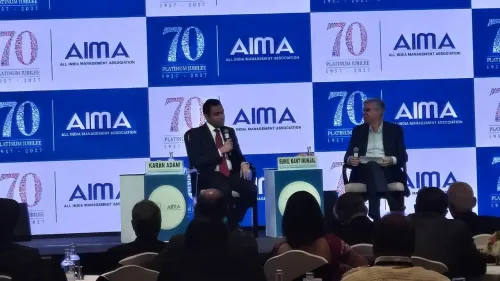
New Delhi, Feb 21 (NationPress) The Adani Group is committed to expanding opportunities for students from tier-3 and tier-4 cities, as young individuals from smaller towns exhibit strong determination and drive, which are essential for the company’s future growth, stated Karan Adani, Managing Director of Adani Ports and SEZ Limited during a speech on Saturday.
At the Platinum Jubilee (70th) Foundation Day and 20th National Management Day event organized by the All India Management Association, he shared insights on the group’s transformation strategies and workforce plans.
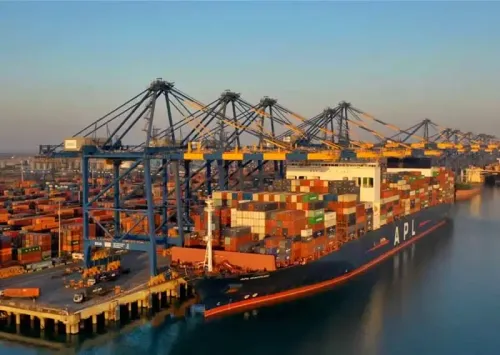
Karan Adani emphasized that the group’s primary focus lies in three significant sectors: energy utilities, logistics (including ports and airports), and infrastructure.
He referred to energy as the next major frontier in various forms, noting that since 2010, the group has leveraged global bond markets for ratings and funding.
Furthermore, Karan Adani remarked that the group is undergoing a substantial transformation and has pledged an investment of Rs 2 lakh crore annually in greenfield projects.
He highlighted the importance of speed and rapid scaling in the company’s growth trajectory.
“Our organization, which comprises 16 hierarchical layers from the chairman down to the base level, is striving to empower lower-level employees by granting them enhanced decision-making authority,” he explained.
He noted that the group manages the complete port ecosystem internally, including equipment operators, truck drivers, and maintenance teams.
“This approach was necessary because previously there were no established systems, prompting the company to create its own framework through ongoing improvements,” he added.
Despite a population of 1.4 billion in India, Karan Adani pointed out the persistent shortage of skilled labor.
“To combat this issue, each project emphasizes large-scale local hiring and structured skill development in surrounding areas. This not only ensures timely project delivery but also generates job opportunities for local youth,” he stated.
Regarding future workforce aspirations, Karan Adani expressed the company’s goal to lower the average employee age, currently at 38 years, and to boost the representation of women, who constitute 15 percent of the workforce.
“Embracing more technology and artificial intelligence necessitates a younger workforce,” he noted.
He also mentioned that many leaders within the group have risen through the ranks, with nearly 80 percent starting as trainees and advancing to CEO positions.
“Cross-training managers across different businesses has enriched their experience and skills,” he concluded.
Point of View
I find Adani Group's focus on tier-3 and tier-4 students commendable. By investing in local talent and promoting skill development, they are addressing a significant gap in skilled labor while fostering economic growth in smaller towns. Such initiatives pave the way for a more inclusive workforce.
NationPress
1 Oct 2026
Frequently Asked Questions
Why is Adani Group focusing on tier-3 and tier-4 cities?
The company recognizes the strong drive and determination of youth from these regions, which are crucial for its future growth.
What sectors is Adani Group concentrating on?
The group's primary sectors include energy utilities, logistics, and infrastructure.
How much is Adani Group investing annually in projects?
Adani Group has committed to invest Rs 2 lakh crore each year in greenfield projects.
What is the average age of employees at Adani Group?
The average age of employees currently stands at 38 years.
How does Adani Group approach skill development?
Each project prioritizes local hiring and structured skill development to create employment opportunities for local youth.