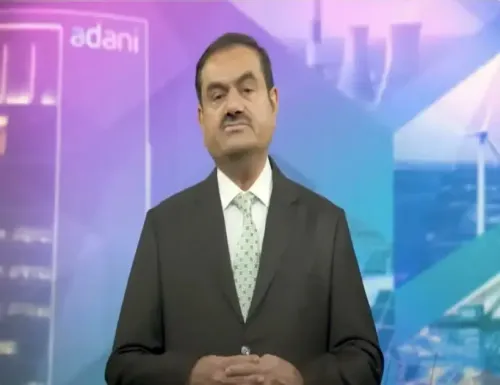
Adani Group settlement clears path for India nuclear push, says Holtec chief
Synopsis
Holtec International's founder says Adani Group's US legal settlement clears the way for the conglomerate to join India's newly opened nuclear programme. With a strong pitch for Small Modular Reactors district by district, and Holtec already in talks with Indian officials, this interview signals that global nuclear capital is actively sizing up India's energy market.
Key Takeaways
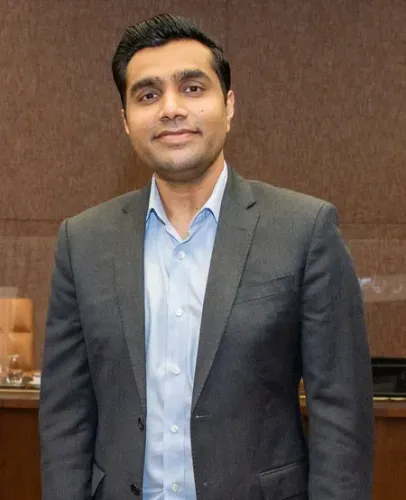
Holtec International CEO Dr Kris Singh says Adani Group's US legal settlement enables it to participate in India's nuclear energy programme .
Singh described Adani as 'a fantastic business conglomerate' with a strong infrastructure track record including ports and large-scale projects.
He argued nuclear power is 'indispensable' for a heavily industrialised India, providing stable 24x7 base-load electricity that renewables alone cannot.
Singh advocated deploying Small Modular Reactors (SMRs) across Indian districts to decentralise generation and cut transmission costs.
Holtec International , founded in 1986 by Bihar-origin Singh, is already in talks with Indian government officials about nuclear collaboration.
Singh called on India to open the nuclear sector further to foreign investment, including from countries like Russia.
Adani Group's resolution of its legal troubles in the United States could open the door for the conglomerate to play a significant role in India's nuclear energy expansion, according to Dr Kris Singh, Founder and CEO of Holtec International, a US-based nuclear and clean energy technology company. Singh made the remarks in a recent interview, describing the development as a positive step for India's broader energy ambitions.
Adani Well-Positioned for Nuclear Infrastructure
'I'm glad to see that it's been settled. So, the Adani (Group) can participate in the nuclear programme that had just opened up,' Singh said. He described the conglomerate as 'a fantastic business conglomerate' and 'a critical business house in India,' pointing to its track record in large-scale infrastructure. 'I think they will make a great contribution in the nuclear program right up the alley with the way they do things. They have built ports. They have built fairly large infrastructure projects,' he added.
Why Nuclear Is Indispensable for India
Singh argued that India's rapidly expanding energy requirements cannot be met by solar and wind power alone. While acknowledging India's significant investments in renewables, he cautioned that intermittent sources lack the reliability needed for a heavily industrialised economy. 'The problem with solar though, is that the batteries have a very short life. They tend to be prone to fire,' he noted. 'Nuclear provides the base load. The load doesn't change. 24X7, you have a base load. So nuclear is indispensable,' Singh said.
The Case for Small Modular Reactors Across India
Singh strongly advocated for the widespread deployment of Small Modular Reactors (SMRs) across Indian districts as a means of decentralising power generation. He argued that locally sited SMRs would reduce reliance on costly, long-distance high-voltage transmission infrastructure. 'You don't need big, giant high voltage lines that carry gigawatts of energy because they get very, very expensive,' he said. This aligns with a broader global push toward SMR adoption as a scalable, lower-footprint nuclear solution.
Holtec Engaging Indian Officials
Holtec International is already in active dialogue with Indian government officials through its India operations, Singh confirmed, noting that his company's India-based leadership was scheduled to meet officials imminently. He also called on India to liberalise foreign investment rules in the nuclear sector. 'The country needs to get to a place where somebody, if Russia, wants to come and build a reactor in the country, they should be able to come build it,' Singh said. Originally from Bihar, Singh founded Holtec International in 1986; the firm now operates across multiple countries as a global nuclear and clean energy company.
What Comes Next
With the Adani Group's US legal settlement reportedly behind it, and India's civil nuclear sector showing signs of greater openness to private and foreign participation, the stage may be set for accelerated investment. Analysts and industry observers will be watching whether the government moves to formalise SMR policy frameworks and ease foreign direct investment norms in the sector in the months ahead.
Point of View
Which means his praise for Adani is also a signal about potential partnerships. The more substantive point is his SMR argument: India has spent decades debating nuclear scale-up while grid reliability has remained a chronic problem. If the government uses the post-settlement moment to fast-track SMR policy and ease FDI norms, it could mark a genuine structural shift. But India's nuclear sector has a long history of promising openings that stalled on regulatory and liability hurdles — the Civil Liability for Nuclear Damage Act remains a persistent deterrent for foreign players. Whether this moment translates into megawatts or stays at the level of encouraging interviews is the real question.
NationPress
6 Oct 2026
Frequently Asked Questions
Why does the Adani Group's US legal settlement matter for India's nuclear sector?
The settlement removes a legal cloud that had restricted Adani Group's ability to participate in US-linked or internationally partnered nuclear projects. According to Holtec International CEO Dr Kris Singh, the resolution means Adani can now engage with India's nuclear programme, which has recently opened up to greater private and foreign participation.
Who is Dr Kris Singh and why is his view significant?
Dr Kris Singh is the Founder and CEO of Holtec International, a US-based global nuclear and clean energy technology company he established in 1986. Originally from Bihar, Singh's company is actively in talks with Indian government officials about nuclear collaboration, making his assessment of India's nuclear landscape directly relevant to policy and investment decisions.
What are Small Modular Reactors and why does Singh recommend them for India?
Small Modular Reactors (SMRs) are compact, scalable nuclear reactors that can be deployed locally rather than at centralised mega-plants. Singh argues that district-level SMR deployment in India would decentralise power generation, reduce dependence on expensive long-distance high-voltage transmission infrastructure, and provide the stable base-load electricity that solar and wind cannot reliably deliver.
What is Holtec International's current engagement with India?
Holtec International is already operating in India and is in active dialogue with government officials, according to Singh. He confirmed that the company's India-based leadership was scheduled to meet officials imminently, signalling that commercial discussions are at an advanced stage.
What changes does Singh want India to make to its nuclear investment rules?
Singh called for India to liberalise foreign direct investment norms in the nuclear sector, enabling international players — including from countries like Russia — to build reactors in India. He indicated that greater openness to foreign capital is essential for India to scale up nuclear capacity at the pace its growing energy needs require.