Could Lowering the Age of Consent from 18 Jeopardize Child Safety?
Synopsis
The Union government warns that altering the age of consent from 18 could endanger child safety and undermine the POCSO Act's provisions, reflecting a serious commitment to protecting minors.
Key Takeaways
The age of consent in India is set at 18 years to ensure child safety.
Any changes to this age could lead to increased exploitation of minors.
The POCSO Act aims to protect children from sexual offences.
Legislative consistency is essential for safeguarding vulnerable populations.
India's laws are aligned with international standards for child protection.
New Delhi, Feb 6 (NationPress) The Protection of Children from Sexual Offences (POCSO) Act, 2012, designates a child as any individual under the age of 18. The potential reduction of the age of consent or the introduction of exceptions regarding sexual conduct could jeopardize child safety, the Union government asserted in Lok Sabha on Friday.
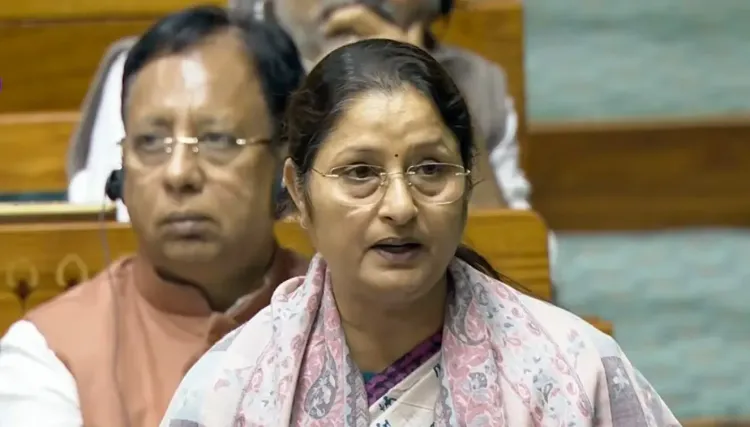
In response to a question, Union Minister for Women and Child Development Annpurna Devi stated, "The POCSO Act does not specifically define consent, and under the existing legal framework, any sexual interaction with a person under 18 is considered an offence, regardless of any claimed consent."
"Any modification of the age of consent or the introduction of exceptions could compromise child safety, elevate the risk of exploitation, and dilute India's commitment to safeguarding children, particularly adolescent girls," the Union Minister emphasized.
Her comments were in response to inquiries from K. Subbarayan and Selvaraj V, who sought to know if the Union government's attention had been drawn to concerns raised by a two-judge bench of the Supreme Court regarding the frequent misuse of the POCSO Act, urging the Centre to contemplate a "Romeo-Juliet" clause to exempt "genuine adolescent relationships" from the Act's most severe provisions.
The Union Minister reaffirmed that the legislative decision to keep the age of consent at 18 years is a deliberate and well-considered policy choice.
The age of majority is uniformly established at 18 years across various laws to ensure consistency and coherence within the legal framework, Minister Annpurna Devi noted.
She further explained that this uniformity is maintained in laws such as the Bharatiya Nyaya Sanhita, 2023; the POCSO Act, 2012; the Prohibition of Child Marriage Act, 2006; the Hindu Adoptions and Maintenance Act, 1956; the Juvenile Justice (Care and Protection of Children) Act, 2015; and the Hindu Minority and Guardianship Act, 1956.
The legislative intent behind these laws highlights the established understanding that individuals below 18 years of age are not considered capable of providing informed consent or making decisions that may have long-term implications of which they are not fully aware," the Minister added.
"Establishing a consistent age of consent at 18 years serves to eliminate manipulation, coercion, and exploitation of minors, acknowledging that children lack the legal and psychological capacity to offer meaningful and informed consent regarding sexual matters," she stated.
Union Minister Annpurna Devi noted that the definition of a child under the POCSO Act, 2012, and other child-focused legislation aligns with India's international commitments under the United Nations Convention on the Rights of the Child, particularly Article 1.
Point of View
It is paramount to recognize that the age of consent is a foundational aspect of child protection laws in India. Maintaining a clear and uniform legal framework is essential for safeguarding vulnerable populations, especially minors, against exploitation. Our commitment to child safety must remain unwavering, and any proposed changes should be approached with utmost caution.
NationPress
22 Sept 2026
Frequently Asked Questions
What is the age of consent defined by the POCSO Act?
The age of consent is set at 18 years according to the POCSO Act, 2012.
What concerns were raised regarding the age of consent?
Concerns were raised that diluting the age of consent could undermine child safety and increase the risk of exploitation.
Who commented on the implications of changing the age of consent?
Union Minister for Women and Child Development, Annpurna Devi, highlighted the potential dangers of such changes.
What legislative framework supports the age of consent?
The age of consent is supported by multiple laws, including the Prohibition of Child Marriage Act and the Juvenile Justice Act .
What is the international stance on the age of consent?
The age of consent aligns with India's obligations under the United Nations Convention on the Rights of the Child .