Akhilesh demands ₹1 cr aid after temple dome kills worker
Synopsis
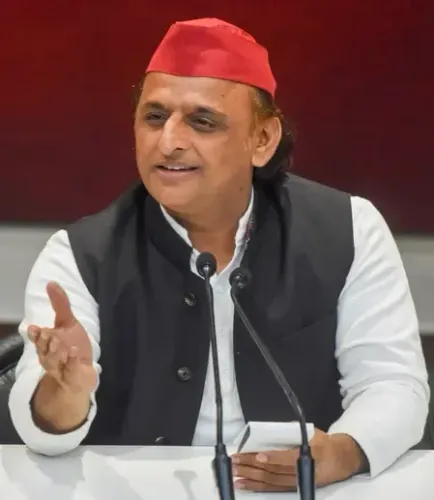
Samajwadi Party president Akhilesh Yadav has condemned the death of a labourer killed by a falling dome when an ancient Maa Kali temple was demolished for road widening in Uttar Pradesh, calling the safety lapse 'highly condemnable' and demanding ₹1 crore compensation for the worker's family.
Key Takeaways
Samajwadi Party president Akhilesh Yadav condemned the death of a labourer struck by a falling dome during demolition of an ancient Maa Kali temple .
The demolition was carried out in the name of road widening in Uttar Pradesh .
Yadav called conducting high-risk demolition without safety arrangements 'highly condemnable.' He demanded the state government pay ₹1 crore in financial assistance to the deceased worker's family.
The incident highlights a recurring pattern of inadequate safety measures for informal labourers at demolition sites across India.
No official government response on compensation had been recorded at the time of publication.
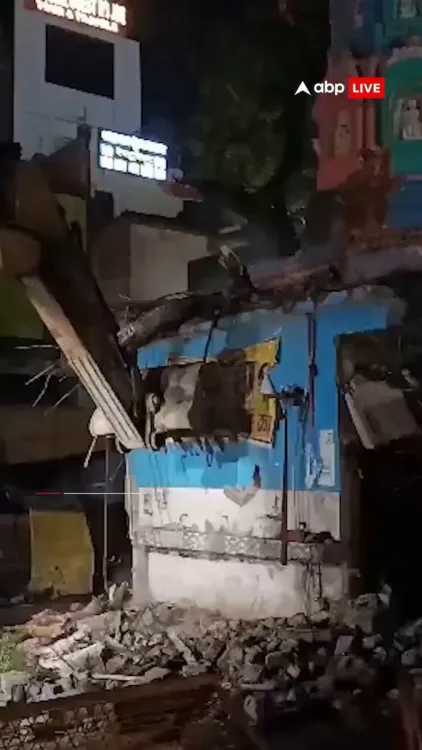
Samajwadi Party president Akhilesh Yadav on Sunday, 12 July 2026, condemned the death of a labourer struck by a falling dome during the demolition of an ancient Maa Kali temple carried out in the name of road widening, and demanded that the state government pay ₹1 crore in compensation to the deceased worker's family.
Context
In his post, Akhilesh Yadav described the incident as an extremely tragic accident (bेहद dukhad hadsa), stating that an ancient Maa Kali temple was razed under a road-widening drive and that a labourer was killed when the temple's dome fell on him. He called the practice of undertaking such high-risk demolition work without adequate safety and protective arrangements 'highly condemnable' (ati nindaniya).
The former Chief Minister directly called on the government to provide ₹1 crore in financial assistance to the family of the deceased. No official response from the Uttar Pradesh government had been recorded at the time of publication.
Policy Backdrop
Uttar Pradesh has pursued an extensive programme of road widening and urban infrastructure expansion across its cities and towns since the 2010s, aimed at decongesting traffic corridors and improving connectivity. These projects have periodically involved the demolition of older structures, including places of worship, that fall within the proposed right-of-way.
Across India, the demolition of heritage and religious structures during infrastructure expansion has repeatedly drawn criticism on two counts: inadequate safety measures for daily-wage construction and demolition workers, and insufficient regard for the cultural or religious significance of the structures being razed. Labourers on such sites are often employed informally and work without helmets, barricades, or any formal safety protocol.
Stakeholders and Impact
The immediate victims are the family of the deceased labourer, who — like most informal construction workers — likely had no formal employment contract or accident insurance, leaving them entirely dependent on state relief. Temple devotees and the local community who worshipped at the ancient Maa Kali shrine are also directly affected by its demolition.
Akhilesh Yadav's demand for ₹1 crore compensation sets a public benchmark against which the state government's response will be measured. The incident also puts a spotlight on enforcement of construction-site safety norms under the Building and Other Construction Workers (Regulation of Employment and Conditions of Service) Act, which mandates protective gear and safety arrangements at demolition sites.
What's Next
Political pressure from the opposition is likely to intensify calls for an official inquiry into whether proper safety protocols were followed at the demolition site and who authorised the work. The state government's decision on compensation — and whether it meets, exceeds, or falls short of the ₹1 crore figure demanded — will be closely watched by opposition parties and civil society groups.
The episode could also reignite a broader debate in Uttar Pradesh about the process by which religious structures are identified for demolition during public works, and whether affected communities are given adequate notice and recourse before such action is taken.
Point of View
He forces the ruling government into a visible response — any figure below that benchmark becomes a political liability. The incident fits a broader national pattern where infrastructure-driven demolitions of older structures, particularly places of worship, generate both communal and labour-rights grievances that opposition parties have consistently sought to amplify. The demand also implicitly invokes the state's legal obligations under worker-safety statutes, giving the critique a policy grounding beyond electoral rhetoric.
NationPress
12 Jul 2026
Frequently Asked Questions
What happened at the Maa Kali temple demolition site in Uttar Pradesh?
A labourer was killed when the dome of an ancient Maa Kali temple fell on him during its demolition, which was being carried out as part of a road-widening project in Uttar Pradesh.
What did Akhilesh Yadav demand after the temple demolition worker's death?
Akhilesh Yadav demanded that the Uttar Pradesh government provide ₹1 crore in financial assistance to the family of the labourer who died in the incident.
Why was the Maa Kali temple demolished?
According to Akhilesh Yadav's post, the ancient Maa Kali temple was demolished in the name of road widening — a common reason cited by authorities when older structures fall within the path of planned road expansion.
Is it legal to demolish temples for road widening in India?
Authorities can acquire land and structures, including religious sites, for public infrastructure projects under Indian law, but the process requires due notice and compensation to affected parties; demolitions must also comply with construction worker safety regulations.
What safety rules apply to demolition sites in India?
The Building and Other Construction Workers (Regulation of Employment and Conditions of Service) Act mandates that employers provide protective equipment and ensure safe working conditions at demolition and construction sites; violations can attract legal penalties.