Akhilesh Yadav demands action over teacher misconduct case
Synopsis
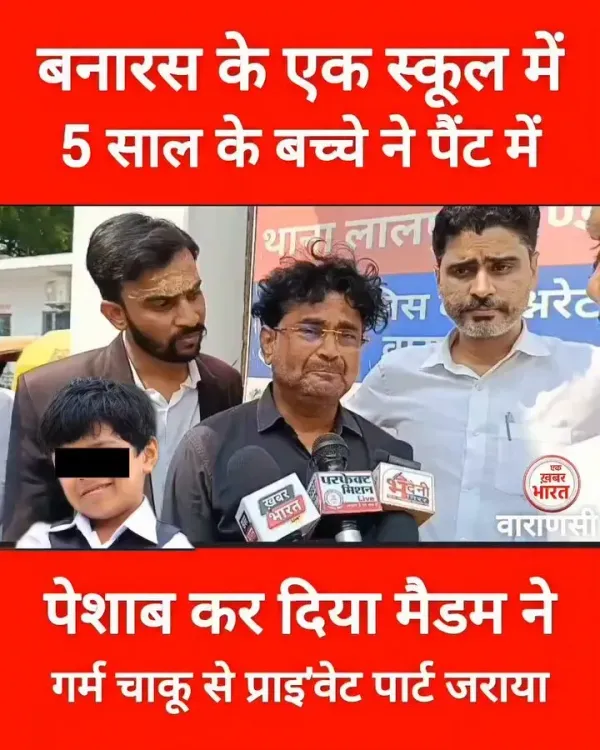
Samajwadi Party president Akhilesh Yadav on 27 July 2026 demanded immediate action over an alleged case of teacher misconduct, warning that the incident could cause lifelong psychological harm to the child involved and calling on teachers to treat students with empathy and humanity.
Key Takeaways
Samajwadi Party president Akhilesh Yadav posted on X on 27 July 2026 demanding immediate action in a teacher misconduct case.
He warned the incident could have a 'painful and horrifying' lifelong impact on the child involved.
Yadav called on teachers to treat children with empathy and humanity , framing the issue as one of professional awareness.
The Right of Children to Free and Compulsory Education Act, 2009 prohibits corporal punishment and mental harassment in Indian schools.
Uttar Pradesh runs one of the country's largest government school systems, where teacher conduct has been a recurring concern raised by opposition leaders.
Any official inquiry or action by the UP education department in response to the case will be closely monitored.
Samajwadi Party president Akhilesh Yadav on Monday, 27 July 2026, called for immediate and appropriate action in what he described as an extremely serious case of a teacher failing to show empathy toward a child, warning that the incident could leave lifelong trauma on the young student.
Posting in Hindi on X, Yadav wrote: 'ये एक बेहद गंभीर मामला है जिसका दर्दनाक और ख़ौफ़नाक असर उस बच्चे पर जीवनभर हो सकता है।' — ('This is an extremely serious matter whose painful and horrifying impact could last a lifetime for that child.')
He further stated that teachers must possess the basic understanding to treat children with compassion and humanity, adding a direct demand: 'तत्काल यथोचित कार्रवाई हो!' — ('Immediate and appropriate action must be taken!')
Context
The post does not specify the incident's location or the identity of those involved, though Yadav's political base and legislative focus are centred on Uttar Pradesh, which operates one of the largest government school systems in the country. Opposition leaders in the state have periodically raised concerns about teacher conduct and the treatment of students in public schools.
Yadav, who also serves as a Lok Sabha MP, has consistently used social media to flag governance issues related to education and child welfare in the state, often directing his remarks toward the ruling administration in Lucknow.
Policy Backdrop
The Right of Children to Free and Compulsory Education Act, 2009 explicitly prohibits corporal punishment and mental harassment in schools across India. The law mandates child-friendly learning environments and places responsibility on school management to ensure the physical and psychological safety of students.
Despite these legal protections, complaints about teacher misconduct — ranging from verbal humiliation to physical punishment — continue to surface in government schools, prompting periodic interventions from civil society and political leaders alike. Teacher training programmes and sensitisation workshops have been recommended by education bodies but implementation remains uneven across states.
Stakeholders and Impact
The primary stakeholder in this case, as Yadav highlighted, is the child at the centre of the alleged incident, whose long-term psychological wellbeing he described as being at risk. Child rights advocates have long argued that incidents of teacher insensitivity or misconduct, if left unaddressed, can result in school dropout, loss of self-esteem, and lasting emotional harm.
Teachers as a group are also stakeholders: Yadav's remarks, while critical, framed the issue as one of training and awareness — calling for teachers to exercise 'hamdardi aur insaaniyat' (empathy and humanity) — rather than a blanket indictment of the profession. The state education department and school administration of the institution concerned are implicitly called upon to respond.
What's Next
Yadav's demand for 'tatkal yathochit karrawaai' (immediate and appropriate action) puts pressure on the Uttar Pradesh education department and state government to respond publicly. Whether an inquiry is ordered or disciplinary proceedings initiated against the teacher in question will be closely watched by child rights groups and opposition parties.
The incident underscores a recurring challenge in India's public education system: translating legal protections for children into consistent, on-ground practice. Political pressure from senior opposition figures can sometimes accelerate official responses, making Yadav's intervention a potential catalyst for administrative action.
Point of View
Where education and child welfare have become recurring pressure points against the state government. By framing the issue around teacher empathy rather than systemic failure alone, Yadav adopts a rhetorically broader position that is harder to deflect. The demand for 'immediate and appropriate action' is a direct accountability signal aimed at the UP education administration, and its resonance will depend on whether the state responds visibly. Such social-media interventions by senior opposition figures have, in past instances, accelerated official inquiries — making this post more than routine commentary.
NationPress
25 Oct 2026
Frequently Asked Questions
What did Akhilesh Yadav say about the teacher misconduct case?
Akhilesh Yadav described the case as extremely serious and warned it could have a painful, lifelong psychological impact on the child. He called on teachers to treat students with empathy and humanity, and demanded immediate and appropriate action from the authorities concerned.
Which law protects children from teacher misconduct in India?
The Right of Children to Free and Compulsory Education Act, 2009 prohibits corporal punishment and mental harassment in schools and mandates child-friendly learning environments across India.
What action is Akhilesh Yadav demanding in this case?
Yadav demanded 'tatkal yathochit karrawaai' — immediate and appropriate action — directed at the authorities responsible for the school and the teacher involved in the alleged incident.
What is Akhilesh Yadav's role in Indian politics?
Akhilesh Yadav is the national president of the Samajwadi Party, a former Chief Minister of Uttar Pradesh, and a sitting Lok Sabha MP. He frequently raises education and child welfare issues in public discourse.
Why is teacher conduct in UP schools a political issue?
Uttar Pradesh operates one of India's largest government school systems, and incidents of alleged teacher misconduct have periodically drawn political attention. Opposition leaders, including Yadav, have used such cases to highlight gaps in public school administration and teacher training.