Akhilesh accuses BJP of hiding Ram's image to cover temple 'theft'
Synopsis
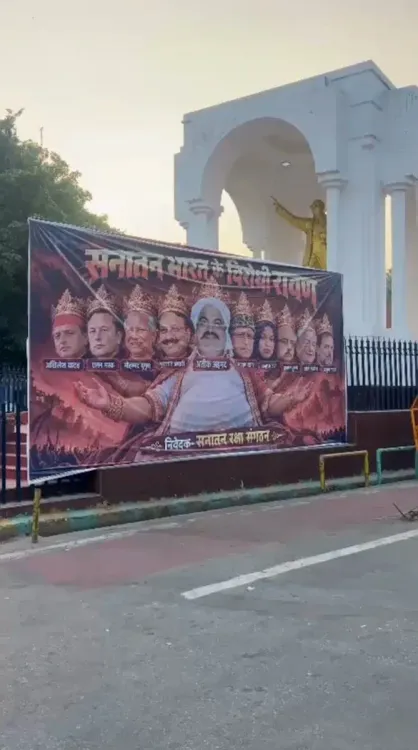
SP president Akhilesh Yadav accused the BJP of plastering a poster over Lord Ram's image to suppress public anger over alleged financial irregularities at the Ayodhya Ram Mandir, sharpening the attack with a Dussehra effigy metaphor ahead of UP elections.
Key Takeaways
Akhilesh Yadav posted on 18 October 2026 alleging BJP placed a poster to conceal an image of Lord Ram during the Dussehra period.
He charged that the sight of Lord Ram now reminds people of alleged 'theft' at the Ramlala temple in Ayodhya , fuelling public anger against the BJP.
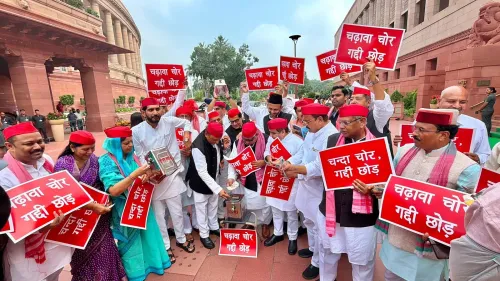
Akhilesh coined the phrase 'chadhawa-chanda-daan' — three forms of alleged donation theft — and suggested their effigies could be burned alongside Ravana's.
He also alleged the BJP ordered a lathi charge on those associated with the Ramcharitmanas in Lucknow .
The Ram Mandir was inaugurated on 22 January 2024 ; opposition allegations about donation management have not been verified in official findings.
The attack fits the SP's established strategy of using Ram Mandir-linked symbolism as a counter-offensive tool ahead of Uttar Pradesh assembly elections .
On the eve of Dussehra — when effigies of Ravana burn across Uttar Pradesh — Samajwadi Party president Akhilesh Yadav turned the festival's symbolism into a pointed political attack on Sunday, 18 October 2026, alleging that a BJP-linked poster was deliberately placed to obscure an image of Lord Ram and shield the party from public anger over alleged financial irregularities at the Ayodhya Ram Mandir.
In a combative post on X, Akhilesh wrote that the BJP's real motive was not to put up a new poster but to hide the image of 'Prabhu Ram' (Lord Ram) beneath it — because, he argued, the sight of Lord Ram now triggers public memory of what he called the 'theft' at Ramlala's temple in Ayodhya. 'Whenever anyone sees an image of Lord Ram, they are reminded of the theft committed at the Ramlala temple in Ayodhya by the BJP gang and their associates, which only inflames public rage further against that gang,' the SP chief wrote.
Dussehra effigy politics: the 'tri-demon' taunt
Akhilesh sharpened the Dussehra metaphor further, warning that alongside Ravana's effigy, some aggrieved devotee may just choose to burn effigies of what he called the 'chadhawa-chanda-daan' — the three demons of offering-collection, donation, and contribution theft. The framing is deliberate: it invokes the festival's tradition of burning the wicked, and redirects it from mythology to contemporary grievance.
He also revived a separate allegation, reminding followers that this same 'BJP gang' had, according to him, ordered a lathi charge on people associated with the Ramcharitmanas in Lucknow. The double invocation — Ram Mandir and Ramcharitmanas — is designed to portray the BJP as hostile to the very faith it claims to champion.
Ram Mandir inauguration and the corruption allegations that followed
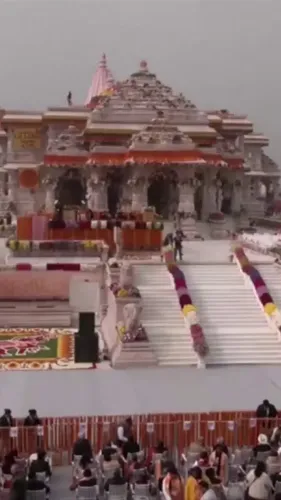
The Ram Mandir in Ayodhya was inaugurated on 22 January 2024 under the BJP-led central government, in a nationally televised ceremony that dominated India's political calendar that year. Almost immediately, opposition parties — the Samajwadi Party prominent among them — began raising questions about the management of donations, construction accounts, and temple-trust governance. Those allegations have never been tested in court or substantiated in official audit findings available through October 2026.
Akhilesh's post is the latest in a pattern the SP has followed consistently: using the Ram Mandir — a symbol the BJP invested enormous political capital in — as a counter-offensive tool, arguing that the BJP's stewardship of the shrine has betrayed the faith of ordinary devotees.
What this means for Uttar Pradesh's political temperature
Uttar Pradesh, India's most populous state, remains the central battlefield for both the BJP and the SP. With assembly elections on the horizon, the SP has calculated that anchoring an anti-corruption message in the language of aastha (faith) is more potent than conventional opposition rhetoric. Calling the BJP a 'giro' (gang) — rather than a party — is a register shift that signals Akhilesh is in full campaign mode.
Whether the temple trust or the BJP issues a formal rebuttal, and how the clergy and devotees of Ayodhya respond, will determine whether this framing gains traction or invites a counter-mobilisation. The effigy of Ravana burns tonight. Whose political capital burns with it is the real question heading into the next electoral cycle.
Point of View
He attempts to make the critique feel morally and spiritually intuitive to devotees, not just politically motivated. The 'lathi on Ramcharitmanas' callback layers a second data point, building a pattern of the BJP as anti-devotee rather than pro-devotee. The strategic risk is that such attacks can consolidate BJP's base if perceived as an assault on the temple itself, but the potential reward — peeling away devout voters who feel the shrine's sanctity has been monetised — is precisely what the SP is wagering on ahead of the next UP election cycle.
NationPress
18 Oct 2026
Frequently Asked Questions
What is Akhilesh Yadav's accusation about the Ram Mandir poster?
Akhilesh Yadav alleged that BJP members placed a poster over an image of Lord Ram specifically to hide it from public view, arguing that people now associate Ram's image with alleged financial irregularities at the Ayodhya Ram Mandir.
What is the 'Ram Mandir chori' or temple theft allegation?
Opposition parties including the Samajwadi Party have repeatedly alleged that donations and construction funds at the Ayodhya Ram Mandir were misappropriated after the temple's inauguration on 22 January 2024. These allegations have not been substantiated in any official audit or court finding as of October 2026.
What is the 'chadhawa-chanda-daan' reference Akhilesh used?
Akhilesh coined the term to refer to three categories of alleged financial wrongdoing at the temple — misappropriation of devotees' offerings, donations, and charitable contributions — calling them 'tri-demons' whose effigies may be burned at Dussehra.
When was the Ayodhya Ram Mandir inaugurated?
The Ram Mandir in Ayodhya was inaugurated on 22 January 2024 under the BJP-led central government in a nationally televised ceremony.
What did Akhilesh say about the Ramcharitmanas lathi charge in Lucknow?
Akhilesh alleged that the same 'BJP gang' had previously ordered a lathi charge on people associated with the Ramcharitmanas in Lucknow, presenting it as a second example of the BJP acting against Hindu devotional traditions. This incident could not be independently verified from available records.