Akhilesh Yadav demands court notice over Ram Mandir funds row

Synopsis
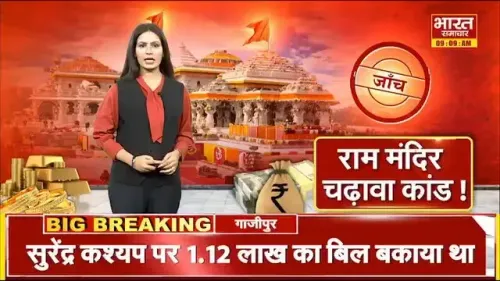
Samajwadi Party president Akhilesh Yadav has alleged that crores of rupees from Ram Mandir offerings have gone missing, calling it shameful for the temple trust and demanding Supreme Court suo motu action. He also questioned the government's silence on the matter.
Key Takeaways
Akhilesh Yadav alleged on 7 June 2026 that crores of rupees from Ram Mandir offerings had reportedly gone missing.
He described the situation as 'extremely shameful' for the Shri Ram Janmabhoomi Teerth Kshetra Trust and said no one from the trust was willing to explain.
Yadav demanded that the Supreme Court of India take suo motu cognisance, citing the matter's connection to the global Sanatan community's faith.
He called the government's silence on the issue 'suspicious.' The trust was constituted in February 2020 after the Supreme Court's November 2019 Ayodhya verdict; large-scale offerings have been collected since the January 2024 consecration.
Neither the trust nor the Uttar Pradesh or central government had issued a formal response at the time of this report.
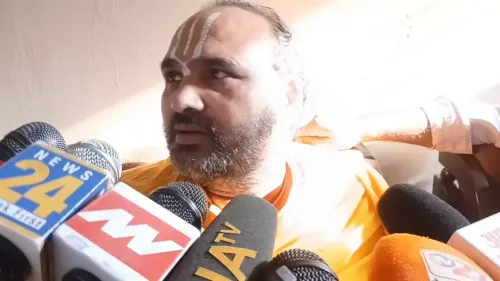
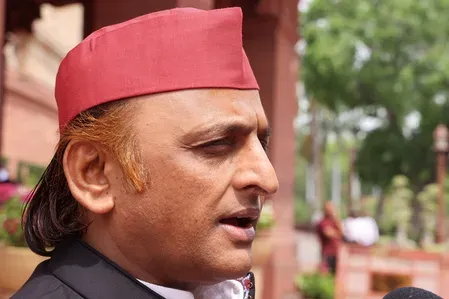
Samajwadi Party president Akhilesh Yadav on Sunday, 7 June 2026 called the alleged disappearance of crores of rupees from Ram Mandir offerings a matter of deep shame for the temple trust, demanding that the Supreme Court of India take suo motu cognisance of the controversy.
Context
In a post on X, Akhilesh Yadav described the development as 'bेहद संवेदनशील समाचार' (extremely sensitive news) for devotees of Lord Ram across the world. He wrote that crores of rupees from the temple's offerings had reportedly gone missing, and that no one from the trust was willing to come forward with an explanation. He characterised the silence of the government as 'suspicious.'
Yadav stated that the matter had a direct bearing on the deep faith of the global Sanatan community in Lord Ram, and that a court of law must step in given the scale of public sentiment involved. 'The government's silence is suspect,' he wrote, adding that the situation was 'extremely shameful' for the temple trust.
Policy Backdrop
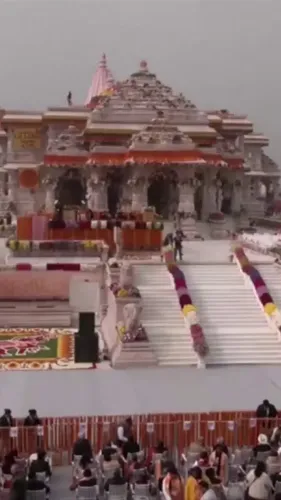
The Shri Ram Janmabhoomi Teerth Kshetra Trust was constituted in February 2020 by the central government following the Supreme Court's landmark November 2019 verdict in the Ayodhya title dispute, which awarded the contested site for temple construction. The trust was entrusted with overseeing construction, administration and management of all offerings at the site.
Prime Minister Narendra Modi performed the pran-pratishtha (consecration ceremony) of the temple on 22 January 2024, after which large-scale public donations and offerings began flowing in from devotees across India and abroad. The scale of donations since consecration has made financial oversight of the trust a matter of public interest.
Opposition parties have periodically questioned the financial transparency of special trusts created after judicial verdicts to manage major religious sites. The Ram Mandir trust, given its origins in a Supreme Court order, occupies an especially prominent position in this ongoing debate about statutory accountability at faith-based institutions.
Stakeholders and Impact
The controversy, as framed by Akhilesh Yadav, touches directly on the sentiments of millions of Hindu devotees in India and globally who contributed to the temple's construction and continue to make offerings. Any perception of financial mismanagement at a site of such religious and political significance carries the potential to erode public trust in the trust's administration.
The Uttar Pradesh government, led by Chief Minister Yogi Adityanath, and the central government have not issued any public statement in response to the allegations as of the time of this report. Trust officials have similarly not made any formal comment. Yadav's call for judicial intervention places pressure on both the trust and the government to respond publicly.
What's Next
Attention will now turn to whether the Supreme Court of India or the Allahabad High Court takes cognisance of the matter, either suo motu or through a public interest petition. Any formal audit disclosure or clarification from the Shri Ram Janmabhoomi Teerth Kshetra Trust will be closely watched by devotees, opposition parties and legal observers alike.
The episode underscores a broader pattern: as faith-based institutions with large financial flows attract increasing public scrutiny, demands for transparent, judicially supervised oversight are likely to grow louder across the political spectrum.
Point of View
He attempts to occupy moral ground that the BJP has traditionally claimed as its own. The demand for Supreme Court suo motu action is tactically shrewd: it sidesteps the state government and places accountability squarely on an institution that itself created the trust. If the judiciary responds, it validates the seriousness of the allegation; if it does not, the political narrative of official silence and cover-up is reinforced.
NationPress
29 Jul 2026
Frequently Asked Questions
What did Akhilesh Yadav say about Ram Mandir offerings going missing?
Akhilesh Yadav alleged on 7 June 2026 that crores of rupees from Ram Mandir offerings had reportedly gone missing, calling it extremely shameful for the temple trust and saying no one was coming forward to explain the matter.
Which trust manages the Ram Mandir and its offerings?
The Shri Ram Janmabhoomi Teerth Kshetra Trust, constituted by the central government in February 2020 following the Supreme Court's November 2019 Ayodhya verdict, is responsible for managing the temple site and its donations.
Why is Akhilesh Yadav asking the Supreme Court to take suo motu notice?
Yadav argued that the alleged missing funds are directly connected to the deep faith of the global Sanatan community in Lord Ram, making it a matter of such significance that the apex court should intervene on its own initiative without waiting for a formal petition.
Has the Ram Mandir trust or the government responded to the allegations?
As of 7 June 2026, neither the Shri Ram Janmabhoomi Teerth Kshetra Trust nor the Uttar Pradesh or central government had issued any public statement in response to the allegations raised by Akhilesh Yadav.
When was the Ram Mandir consecrated and when did large donations begin?
Prime Minister Narendra Modi performed the pran-pratishtha of the Ram Mandir on 22 January 2024, after which large-scale public offerings from devotees across India and abroad began to be collected by the trust.