Akhilesh Yadav warns organisers against 'divisive' religious storytellers
Synopsis
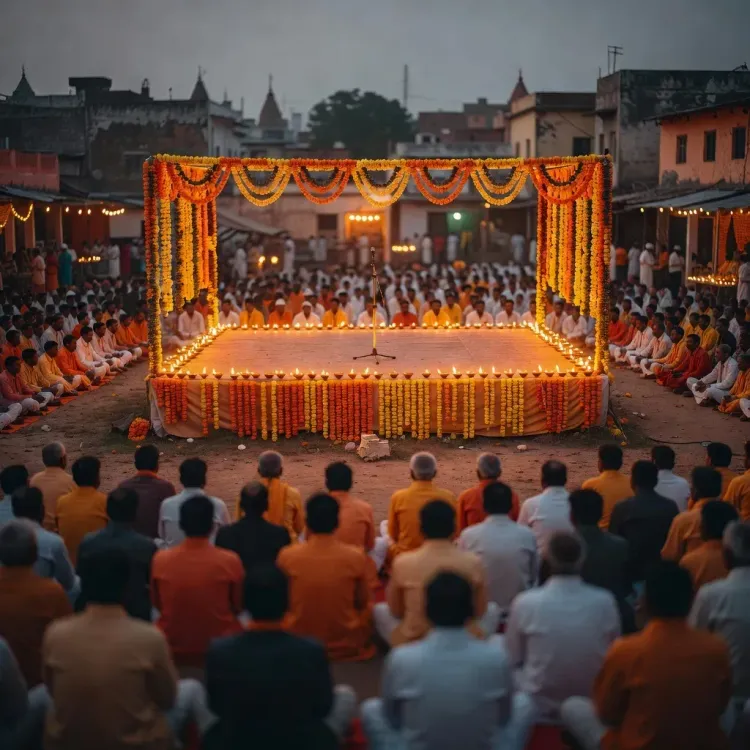
SP president Akhilesh Yadav on 5 November 2026 posted a sharp warning urging katha event organisers and sponsors in Uttar Pradesh to shun 'divisive, profit-driven' religious storytellers, cautioning that hosts — not the travelling preachers — will bear the lasting social and political fallout.
Key Takeaways
Akhilesh Yadav on 5 November 2026 posted a detailed advisory targeting unnamed 'so-called' religious storytellers he accuses of spreading social discord for commercial gain.
He argues that itinerant preachers can escape consequences by leaning on political patronage, but local organisers and sponsors who invite them cannot — they will face the public's anger directly.
Yadav warns that organisers risk being permanently branded as 'anti-religion and anti-God' in their communities, with severe social, economic, and political damage.
He uses the Hindi phrase 'lene ke dene pad jayenge' to predict that any local influence such hosts hope to gain will instead be completely lost.
The post calls on organisers to instead invite genuine Vedic and epic-tradition scholars who, in his words, are 'oceans of wisdom and Himalayas of epic values.' The Samajwadi Party has historically used statements on communal harmony and religious authenticity as part of its secular, social-justice brand positioning in Uttar Pradesh.
When a politician tells the people who book religious events that they will pay a steeper social and political price than the preachers themselves, that is not a routine advisory — it is a pointed warning with electoral teeth. Samajwadi Party president Akhilesh Yadav issued exactly that on Thursday, 5 November 2026, posting a lengthy charge-sheet on X against what he called 'tathakathit kathakar' — so-called religious storytellers — who, he argued, spread social discord for profit and cheap popularity.
The charge: commerce dressed as devotion
Yadav's post does not name individuals, but its language is surgical. He describes a category of 'dushmukhi' (double-tongued) religious narrators who 'look like storytellers in their speech and dress, but katha and pravachan are merely their business.' Their real currency, he writes, is material — 'dhan hi inका dharma hota hai' (wealth alone is their religion). He accuses them of periodically staging or sponsoring vulgar displays of personal wealth and of routinely making 'anargal baatein' — baseless, inflammatory remarks — to harvest cheap fame.
The Samajwadi Party chief reserves his sharpest argument not for the preachers but for those who platform them. Organisers and sponsors, he reasons, cannot hide behind political patronage the way itinerant speakers can. 'These people will say anything, pocket political shelter, and escape,' he writes, 'but the organisers and sponsors have to live among the same public in the same city.' When sentiment turns, he warns, the faithful will hold the hosts equally responsible — reading their invitation as an endorsement of the offensive words.
A direct economic and political threat to local hosts
Yadav frames the risk in bluntly transactional terms: anyone who invites such figures to 'establish local dominance' will instead suffer 'social, economic and political damage' and be stamped in public memory as anti-religion and anti-God. The Hindi idiom he deploys — 'lene ke dene pad jayenge' — translates roughly as 'you will end up worse off than when you started,' a colloquial way of saying the entire exercise will backfire catastrophically, with 'all their politics reduced to nothing.'
The post calls this a matter of protecting samaj-sanatan — society and the Sanatan tradition — from an artificially created chasm. 'Do not water this poisonous vine,' Yadav urges, 'and do not become a party to blasphemy, or you will have to bear the punishment for their verbal sins as well.'
Who Yadav says should fill the void
The post ends on an aspirational note, pointing to what he calls genuine 'vichar-vachak' — thinker-speakers — who are, in his words, 'as deep as the Pacific Ocean in Vedic and Upanishadic wisdom and as high as the Himalayas in the messages of the epics.' He asks organisers to invite such 'warm-hearted, well-spoken, discerning people' instead, framing it as a moral act: 'earn the merit of making human life better.'
The Samajwadi Party has long positioned itself as a guardian of communal harmony in Uttar Pradesh, and periodic public statements distinguishing legitimate religious discourse from politically weaponised religiosity are a recurring feature of that positioning. With a dense calendar of religious festivals and katha events across the state, the choice of which speakers get platformed carries real social weight — and, as Yadav's post makes explicit, real political consequences for every name on the invitation card.
The question now is whether organisers, navigating pressure from multiple political directions in UP's charged religious landscape, will treat this as a warning worth heeding — or one more statement that dissolves into the noise.
Point of View
Yadav effectively builds a grassroots deterrent that does not require state action. The timing, ahead of a dense festival-and-katha season in Uttar Pradesh, maximises the practical impact of the advisory on actual booking decisions. If even a handful of prominent organisers publicly distance themselves from such speakers, the SP will have shifted the cultural ground without filing a single complaint.
NationPress
5 Nov 2026
Frequently Asked Questions
What did Akhilesh Yadav say about religious storytellers?
On 5 November 2026, Akhilesh Yadav posted that certain 'so-called' religious storytellers use katha and pravachan purely as a commercial enterprise, make inflammatory statements for cheap popularity, and create social divisions — and he urged all organisers and sponsors to stop platforming them.
Who did Akhilesh Yadav target in his post about preachers?
Yadav did not name specific individuals; he described a category of 'dushmukhi' (double-tongued) so-called kathakar who display their wealth ostentatiously, make baseless remarks, and seek political protection to escape accountability.
Why did Akhilesh Yadav warn event organisers specifically?
Yadav argued that travelling preachers can flee controversy by hiding behind political patronage, but local organisers and sponsors must continue living in the same community and will be seen by the public as endorsing any offensive words spoken at their events.
What political impact does Akhilesh Yadav predict for organisers who ignore his warning?
Yadav predicted that organisers who continue inviting such speakers will suffer social, economic, and political damage, be permanently labelled anti-religion in public perception, and lose all the local influence they hoped to gain — using the idiom 'lene ke dene pad jayenge' (ending up worse than before).
What kind of religious speakers does Akhilesh Yadav recommend instead?
Yadav recommended genuine 'vichar-vachak' — thinker-speakers well-versed in Vedic, Upanishadic, and epic traditions — describing them as 'oceans of wisdom as deep as the Pacific and Himalayas of epic values,' and urged organisers to invite them to uplift rather than divide communities.