Amit Shah Awards President's Colour to Chandigarh Police at Diamond Jubilee
Synopsis
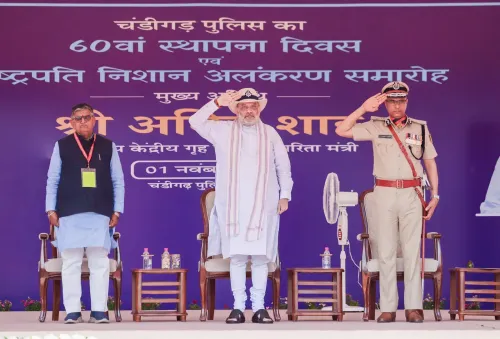
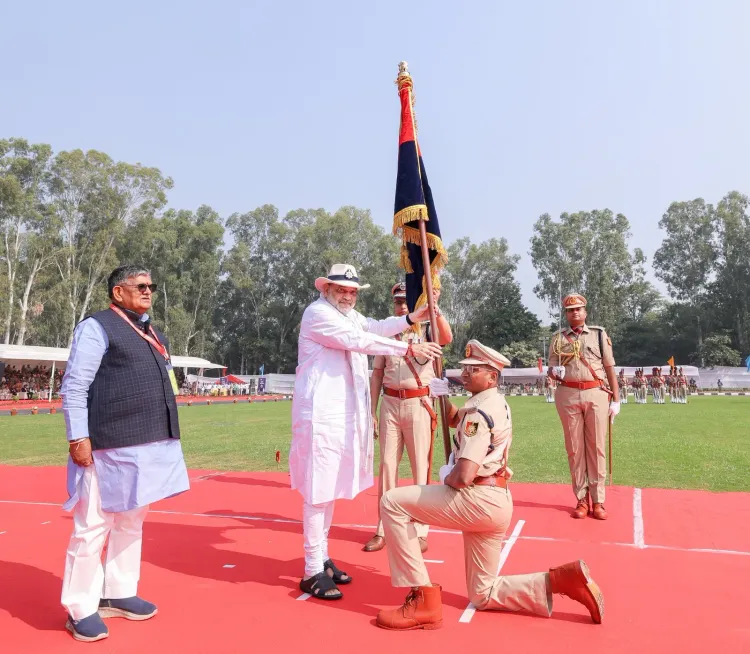
Union Home Minister Amit Shah conferred the President's Colour — India's highest honour for a uniformed force — on Chandigarh Police at its Diamond Jubilee celebration on 1 November 2026, saluting six decades of service that carried the city from insurgency to model urban safety.
Key Takeaways
Chandigarh Police received the President's Colour (Rashtrapati Nishan) at its Diamond Jubilee ceremony on 1 November 2026 .
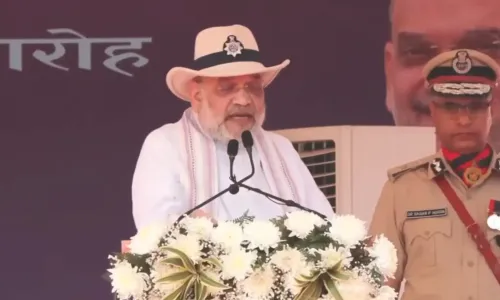
Union Home Minister Amit Shah personally conferred the honour, calling valour, service and good governance the force's defining identity.
Chandigarh Police was constituted in 1966 under the Punjab Reorganisation Act as a Union Territory force under the Ministry of Home Affairs.
Shah highlighted the force's transformation of a city 'once scorched by terrorism' into one of India's most secure territories.
The President's Colour is the highest institutional honour the Indian state can award a police or military unit for sustained exemplary service.
The ceremony aligns with MHA's broader pattern of recognising UT forces that demonstrate measurable security improvements over decades.
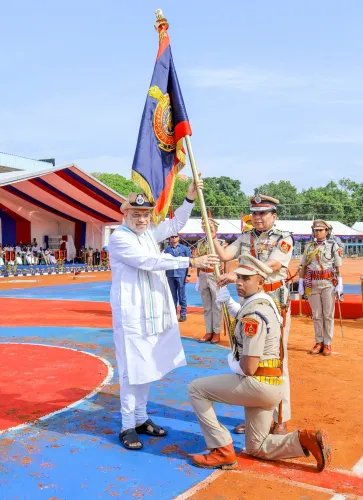
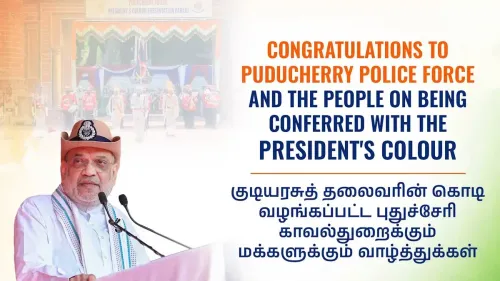
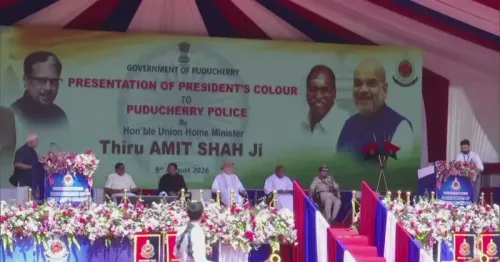
Sixty years after its founding, Chandigarh Police received the nation's highest honour for a uniformed force — the President's Colour (Rashtrapati Nishan) — at a Diamond Jubilee ceremony held in Chandigarh on Sunday, 1 November 2026. Union Home Minister Amit Shah conferred the award, marking a force that once patrolled streets scorched by insurgency and today guards one of India's most secure urban territories.
Posting on X, Shah wrote: 'Shaurya, seva aur sushasan, yahi Chandigarh Police ki pehchaan hai' — 'Valour, service and good governance: this is the identity of Chandigarh Police.' He called the President's Colour a tribute to every officer who spent six decades building safety, peace and stability in the region, and pointedly noted the force's journey: a city once 'scorched by the fire of terrorism' now ranks among the country's safest.
What the President's Colour actually means
The President's Colour is the highest institutional honour the Indian state can bestow on a police or military unit — awarded for sustained exemplary service, gallantry and distinguished contribution to national security. It is presented by or on behalf of the President of India, making it a constitutional seal of excellence rather than a routine commendation. For a Union Territory police force directly under the Ministry of Home Affairs, receiving it carries particular weight: the Centre itself is endorsing sixty years of policing under its own watch.
From 1966 to now: six decades under the Centre's direct mandate
Chandigarh Police was formally constituted in 1966 after the city became a Union Territory under the Punjab Reorganisation Act, which bifurcated the old Punjab state into Punjab and Haryana, with Chandigarh serving as joint capital of both. Unlike state police forces that answer to elected state governments, Chandigarh Police operates under the direct administrative authority of the Ministry of Home Affairs — making its performance a direct reflection of central governance.
The force's most defining test came during the Punjab insurgency of the 1980s and early 1990s, when separatist militancy pushed parts of the region into near-collapse. Chandigarh, as the administrative nerve centre, was a prime target. The city's return to normalcy — and its subsequent reputation as a model for urban safety — is the arc Shah invoked in his post.
Shah's governance narrative and MHA's pattern of recognition
The ceremony fits a deliberate pattern from the Ministry of Home Affairs: publicly elevating police forces that embody the transition from high-militancy eras to professional, metrics-driven security environments. Shah, who has positioned police modernisation and internal security as signature MHA themes since 2019, used the occasion to underscore the 'good governance' dividend — the idea that disciplined, accountable policing is as important as hard counter-terrorism operations.
The broader signal is directed at other Union Territory and state forces: institutional excellence, across decades, earns national recognition. It also anchors a political message — that the Centre's direct administration of Union Territories produces measurable security outcomes.
For the personnel of Chandigarh Police, the Rashtrapati Nishan is more than a ceremonial standard paraded on a parade ground. It is the state's acknowledgment that ordinary officers, across six decades of shifts and postings, kept a city safe through India's most turbulent internal security chapter. That is the only statistic that needed to be said.
Point of View
Shah draws a direct line from past crisis to present stability, attributing both to central administration. It reinforces the MHA's political argument that Union Territory governance, free from state-level political interference, produces professional, accountable policing. Watch for similar recognition ceremonies for other UT forces, and for MHA to leverage these events in parliamentary debates on internal security funding.
NationPress
1 Nov 2026
Frequently Asked Questions
What is the President's Colour awarded to a police force?
The President's Colour, or Rashtrapati Nishan, is the highest institutional honour conferred on a police or military unit in India for sustained exemplary service, gallantry and distinguished contribution to national security. It is presented by or on behalf of the President of India.
When was Chandigarh Police established?
Chandigarh Police was formally constituted in 1966 after Chandigarh became a Union Territory under the Punjab Reorganisation Act, which divided the old Punjab state into Punjab and Haryana.
Why did Amit Shah award Chandigarh Police the President's Colour?
Union Home Minister Amit Shah conferred the honour to mark Chandigarh Police's 60th anniversary (Diamond Jubilee) , recognising six decades of service including the force's role in stabilising the region after the Punjab insurgency of the 1980s and early 1990s.
Who administers Chandigarh Police?
Chandigarh Police falls under the direct authority of the Ministry of Home Affairs , because Chandigarh is a Union Territory governed by the Centre rather than an elected state government.
What was the Punjab insurgency mentioned in Amit Shah's post?
The Punjab insurgency refers to the period of separatist militancy that affected Punjab and adjoining areas, including Chandigarh, primarily during the 1980s and early 1990s . Chandigarh, as the administrative capital of Punjab and Haryana, was a significant flashpoint before the region was stabilised.