Amit Shah concludes Nasha Mukt Punjab Yatra in Jalandhar
Synopsis
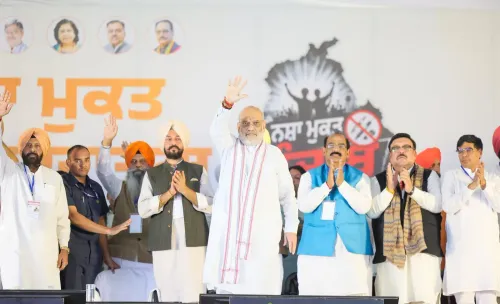
Union Home Minister Amit Shah concluded the BJP's 13-day, 4,000-km Nasha Mukt Punjab Yatra in Jalandhar on September 30, accusing the AAP government of deepening Punjab's drug crisis despite its 2022 anti-drug election pledge, and vowing to uproot the trade by December 2029.
Key Takeaways
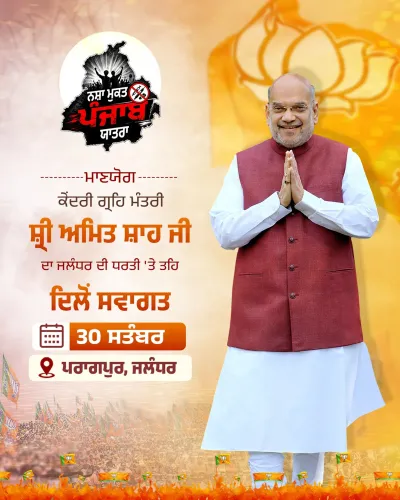
The Nasha Mukt Punjab Yatra spanned 13 days and covered 4,000 km across 117 assembly constituencies , starting in Pathankot and ending in Jalandhar .
Union Home Minister Amit Shah accused the AAP-led Punjab government of pushing the state deeper into a drug crisis despite its 2022 anti-drug campaign promise.
Shah pledged to 'uproot the drug trade by its roots' before December 31, 2029 — implicitly staking BJP's return to power in Punjab as the vehicle for that commitment.
The Nasha Mukt Bharat Abhiyan , launched by the central government in 2020 , had already identified Punjab as a priority state for narcotics awareness and rehabilitation.
Punjab's drug problem is tied to cross-border smuggling from Pakistan, giving the Home Minister a dual governance-and-security framing for his attack on the state government.
The yatra's scale and conclusion rally mark a significant escalation in BJP's election groundwork in Punjab ahead of the next assembly polls.
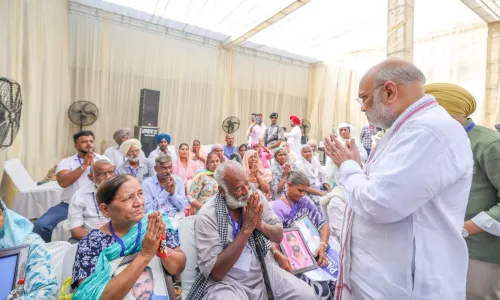
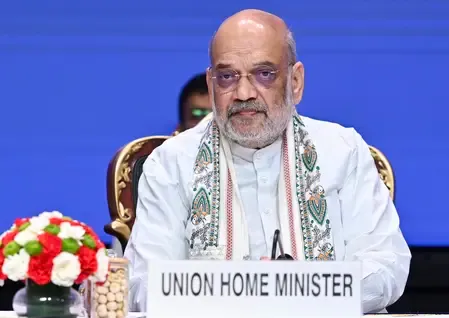
A 13-day, 4,000-kilometre yatra across 117 assembly constituencies ended in Jalandhar on Wednesday, September 30 — and Union Home Minister Amit Shah used the closing rally to mount a pointed attack on the Aam Aadmi Party government in Punjab, accusing it of burying the state deeper in the drug crisis it had promised to fix.
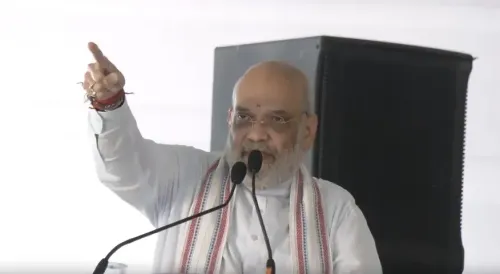
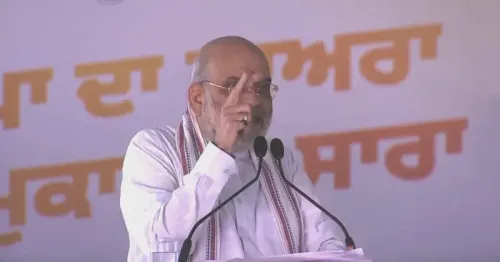
Shah's post in Punjabi was unsparing: 'Nasha mukt Punjab da naara de ke satta vich aayi 'Aap-da' sarkar ne Punjab nu nashian de daldal vich dhakk ditta hai' — 'The AAP government that rode to power on the slogan of a drug-free Punjab has pushed the state into the swamp of narcotics.' The charge strikes at the heart of what was arguably AAP's most resonant 2022 campaign promise.
Pathankot to Jalandhar: what the yatra covered
The Nasha Mukt Punjab Yatra began in Pathankot — a border town at Punjab's northern edge — and wound through villages and towns before concluding in Jalandhar. According to Shah, the campaign reached every corner of the state's 117 constituencies in under two weeks, holding awareness events at the village level. The yatra format is a familiar BJP playbook: sustained ground contact ahead of an election cycle, combining political messaging with a social-welfare frame.
Punjab's drug problem is not a manufactured controversy. The state — sharing a long border with Pakistan — has been at the epicentre of the synthetic-drug and opioid crisis for over a decade, with border districts particularly exposed to cross-border smuggling routes. The central government's own Nasha Mukt Bharat Abhiyan, launched in 2020, identified Punjab among the priority states for coordinated awareness and rehabilitation work.
AAP's broken promise — BJP's central accusation
Aam Aadmi Party swept to power in Punjab in 2022 with a historic mandate, and anti-drug eradication was front and centre in its manifesto. Shah's intervention is designed to weaponise that promise: if Punjab is still mired in narcotics four-plus years later, who is accountable? It is a question BJP intends to keep alive in public memory heading toward the next state assembly elections.
Shah also issued a deadline of his own, declaring that BJP is 'committed to uprooting this drug trade by its roots before December 31, 2029' — a pledge that implicitly signals a BJP return to power in Chandigarh as a precondition. The specificity of the date is deliberate: it benchmarks accountability and gives the party a measurable promise to campaign on.
Why Punjab's drug crisis is a national security argument
For Shah, who also holds the Union Home portfolio, the drug issue in Punjab is inseparable from border security. Cross-border narcotics smuggling — using drones, tunnels, and human carriers — is a documented challenge for central security agencies operating in the state. Framing the drug trade as a law-and-order and national-security failure of the state government allows BJP to simultaneously critique the AAP administration on governance and invoke the Home Ministry's own mandate.
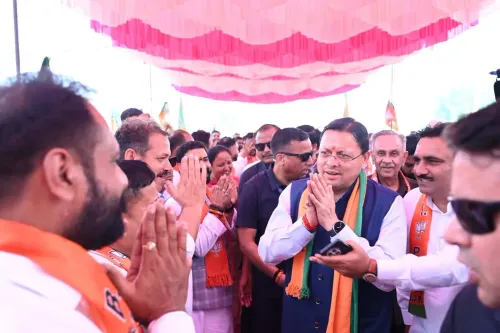
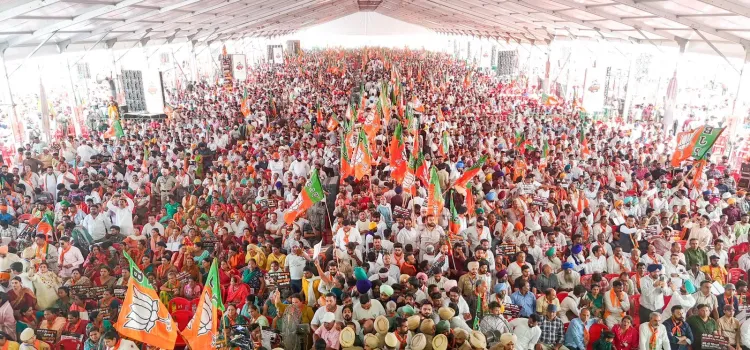
The crowds that turned out in Jalandhar, Shah said, signal that Punjab's people 'have made up their minds to remove the AAP government that is fuelling the drug trade.' Whether that energy converts to votes remains the central question — but the yatra's conclusion marks an unmistakable gear-shift in BJP's Punjab campaign machinery.
Point of View
Designed to define the terms of the next Punjab assembly battle around AAP's unfulfilled anti-drug vow. By fusing the Home Ministry's national-security mandate with state-level political accountability, Shah elevates a state issue into a central-government concern, a pattern he has deployed effectively in other opposition-ruled states. The yatra format also signals that BJP is investing in grassroots contact in Punjab well ahead of elections, countering AAP's own formidable village-level organisational reach. Whether the drug-crisis narrative gains enough traction to dislodge a government with a large mandate will be the defining test of this strategy.
NationPress
1 Oct 2026
Frequently Asked Questions
What is the Nasha Mukt Punjab Yatra?
The Nasha Mukt Punjab Yatra is a BJP-organised awareness and political campaign focused on the drug crisis in Punjab. It started in Pathankot and concluded in Jalandhar after covering 4,000 km and 117 assembly constituencies over 13 days.
What did Amit Shah say about AAP and Punjab's drug problem?
Amit Shah accused the AAP government of pushing Punjab deeper into a drug crisis despite having come to power on an anti-drug platform in 2022. He claimed the government had fuelled the drug trade rather than eliminating it.
What is Amit Shah's deadline for making Punjab drug-free?
Shah pledged that BJP is committed to uprooting Punjab's drug trade before December 31, 2029 — a deadline that implicitly presupposes a BJP government in Punjab taking over from AAP.
What is the Nasha Mukt Bharat Abhiyan?
The Nasha Mukt Bharat Abhiyan is a central government initiative launched in 2020 to coordinate anti-drug awareness and rehabilitation efforts across India, with Punjab among the priority states identified.
Why is Punjab's drug problem linked to national security?
Punjab shares a border with Pakistan and has documented cases of narcotics smuggled across via drones, tunnels, and human carriers. This gives the Union Home Ministry a direct national-security stake in the state's drug crisis, beyond just law and order.