Amit Shah targets AAP govt at Nasha Mukt Punjab Yatra close
Synopsis
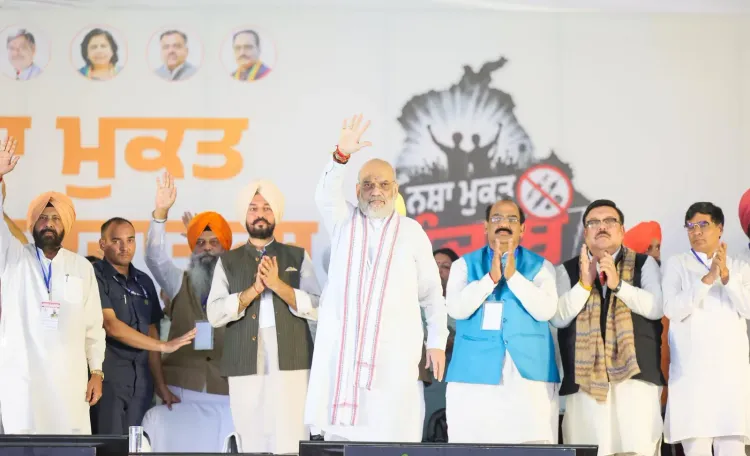
Union Home Minister Amit Shah concluded the BJP's 13-day, 4,000-km Nasha Mukt Punjab Yatra in Jalandhar on 30 September 2026, attacking the AAP government for failing to fulfil its drug-free Punjab promise and pledging to eradicate the drug trade by 31 December 2029.
Key Takeaways
The Nasha Mukt Punjab Yatra ran for 13 days , covering 4,000 km and 117 assembly constituencies from Pathankot to Jalandhar .
Union Home Minister Amit Shah accused the AAP government of deepening Punjab's drug crisis despite campaigning on a nasha mukt platform in 2022 .
Shah set a concrete deadline — the drug trade to be 'uprooted' before 31 December 2029 — framing it as a BJP electoral commitment.
The yatra was framed as a grassroots public-awareness drive, but its messaging is positioned squarely ahead of the 2027 Punjab assembly elections .
Punjab's drug problem, worsened by its location on international trafficking corridors near the India-Pakistan border , has been a dominant political issue across successive state governments.
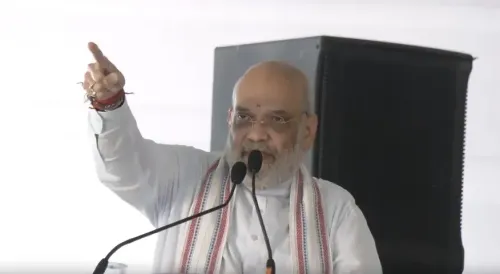
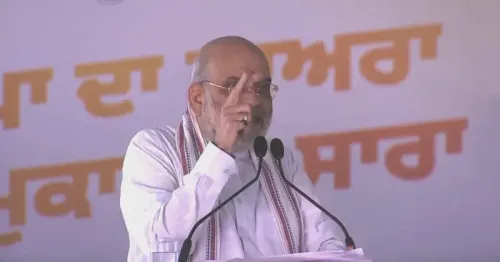
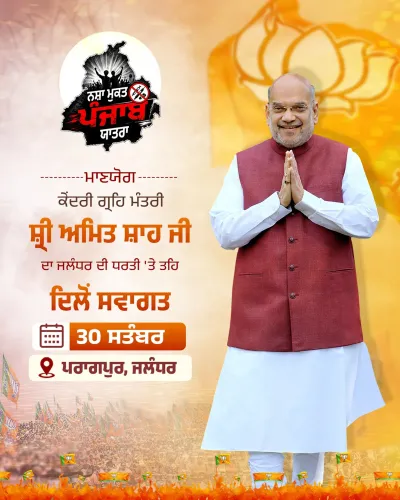
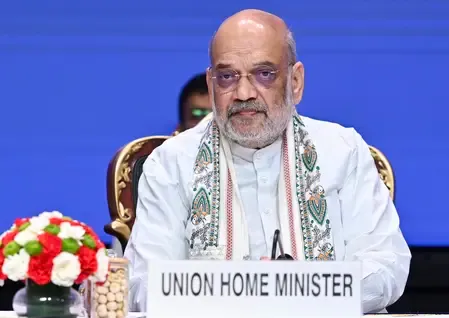
Thirteen days, 4,000 kilometres, 117 assembly segments — and a sharp political message delivered from Jalandhar on 30 September 2026. Union Home Minister Amit Shah used the conclusion of the Nasha Mukt Punjab Yatra to launch a frontal attack on the Aam Aadmi Party government in Punjab, accusing it of pushing the state deeper into a drug crisis despite riding to power on a solemn anti-drug promise.
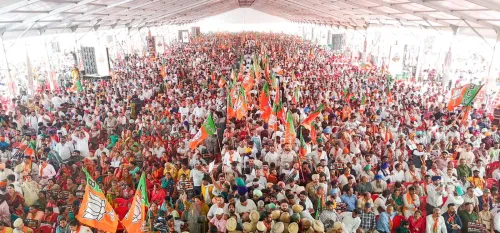
Shah declared in his post that the 'AAP-da' government — a pointed portmanteau blending the party's name with the Hindi word for 'disaster' — had 'pushed Punjab into the swamp of drugs' after winning the 2022 assembly election on a nasha mukt (drug-free) plank. 'The enthusiasm of people from across the state who gathered in Jalandhar for the conclusion of the #NashaMuktPunjabYatra shows that Punjab has made up its mind to remove this government that promotes the drug trade,' he wrote.
Pathankot to Jalandhar: What the yatra covered
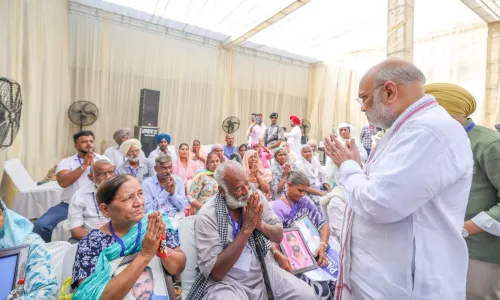
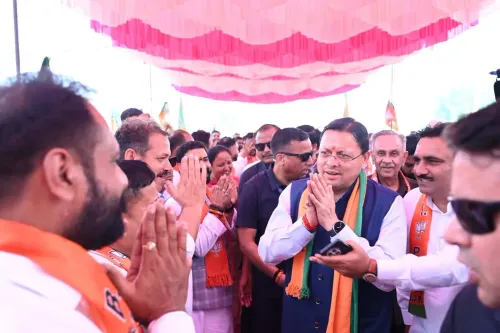
The march originated in Pathankot — a border district in Punjab that sits at the confluence of international smuggling routes — and wound through villages across the state before culminating in Jalandhar. Shah claimed the 13-day campaign touched 117 of Punjab's 117 assembly constituencies, conducting public-awareness drives against drug abuse at the grassroots level. The BJP has framed the yatra as citizen mobilisation rather than a conventional political rally, though the messaging is unambiguously electoral.
The 2029 deadline and what it signals
Shah also announced a specific commitment: the BJP is 'resolved to uproot this drug trade from its roots before 31 December 2029.' The date carries obvious electoral arithmetic — the next Punjab assembly election is due in 2027, meaning the pledge, if acted upon, would span a full term in government. Setting a named deadline transforms a vague campaign promise into a measurable contract with voters.
Punjab's drug problem and AAP's unfinished promise
Punjab has faced a documented and long-standing drug crisis, intensified by its proximity to the India-Pakistan border and its position on trafficking corridors. AAP's 2022 election manifesto had explicitly pledged to eliminate the drug menace — a promise that energised the party's historic landslide that year. Opposition parties have since argued that the problem has persisted or worsened under the Bhagwant Mann-led state government, turning the issue into the central axis of anti-incumbency sentiment the BJP hopes to weaponise before the 2027 polls.
Drug trafficking as a political battleground in Punjab is not new — successive state governments of every stripe have faced the charge. But Shah's intervention, framing it as a central government-level concern tied to internal security, signals that the BJP intends to run the 2027 campaign on this issue with national-level leadership in the lead role.
The yatra ends, but the campaign clock — counting toward both the 2027 election and the self-imposed 2029 drug-free deadline — has only just started ticking.
Point of View
With national-level ownership of a state-level issue. By attaching a hard deadline of 31 December 2029 to the drug-free promise, the BJP is consciously inverting AAP's 2022 playbook, where a similar specific promise proved electorally decisive. The move also signals that the BJP views Punjab's drug crisis as an internal-security issue amenable to central intervention, blurring the constitutional line between state policing and Union government accountability. Whether this framing wins votes will depend on whether voters hold the state government or the Centre responsible for enforcement failures — a distinction the BJP's messaging is deliberately trying to collapse.
NationPress
1 Oct 2026
Frequently Asked Questions
What is the Nasha Mukt Punjab Yatra?
The Nasha Mukt Punjab Yatra is a BJP-organised public awareness campaign against drug abuse in Punjab that covered 4,000 km and 117 assembly constituencies over 13 days , starting from Pathankot and concluding in Jalandhar on 30 September 2026 .
What did Amit Shah say about AAP and drugs in Punjab?
Amit Shah accused the AAP government in Punjab of 'pushing the state into the swamp of drugs' despite winning the 2022 election on a drug-free pledge, and claimed public gatherings at the yatra's close showed Punjab wanted to remove the government.
When is the next Punjab assembly election?
The next Punjab assembly election is expected in 2027 . The BJP's Nasha Mukt Punjab Yatra and Shah's public messaging are widely seen as early groundwork for that electoral contest.
What is Amit Shah's 2029 deadline for Punjab?
Shah pledged that the BJP is 'resolved to uproot the drug trade from its roots before 31 December 2029 ' — a date that would fall within a full term if the party wins the 2027 Punjab elections.
Why is Punjab particularly affected by drug trafficking?
Punjab's proximity to the India-Pakistan border and its position on major drug-smuggling corridors have made it a long-standing hotspot for drug trafficking and abuse, a problem that has persisted across governments of multiple parties.