Amit Shah Hails Historic Sardar Sarovar Settlement Among 4 States
Synopsis
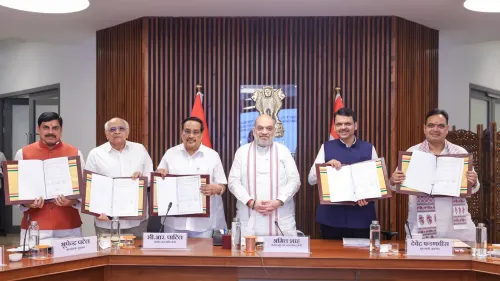
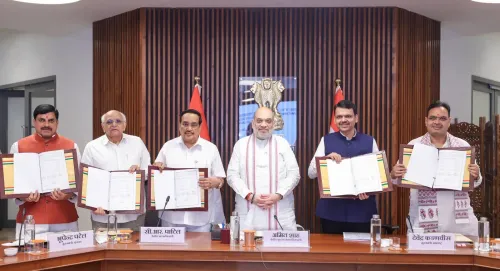
Union Home Minister Amit Shah announced on 7 July 2026 that Maharashtra, Gujarat, Rajasthan and Madhya Pradesh reached a one-time settlement in New Delhi resolving decades-old payment disputes linked to the Narmada Award under the Sardar Sarovar Project, marking what Shah called a historic step for cooperative federalism in the water sector.
Key Takeaways
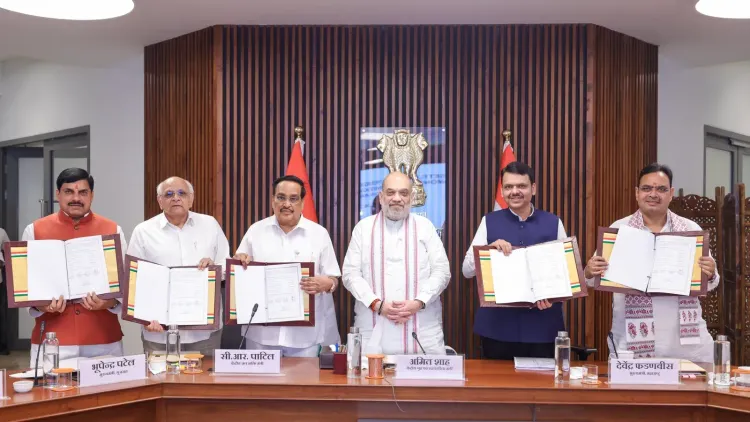
A one-time settlement was signed in New Delhi on 7 July 2026 among Maharashtra , Gujarat , Rajasthan , and Madhya Pradesh on the Sardar Sarovar Project .
The agreement resolves payment-related disputes pending for decades under the Narmada Water Disputes Tribunal award of 1979 .
Union Home Minister Amit Shah described the deal as a historic step toward water security and cooperative federalism.
The Narmada Control Authority , the statutory body overseeing inter-state coordination, is expected to follow up on water accounting and future project planning.
The settlement is expected to deepen mutual trust among the four states and facilitate cooperation on future water projects in the Narmada basin.
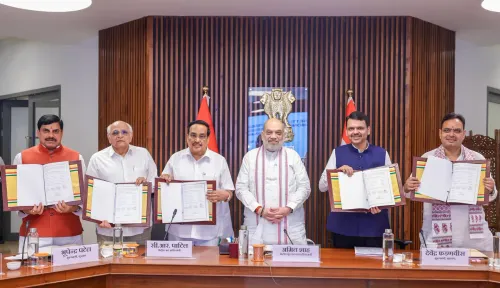
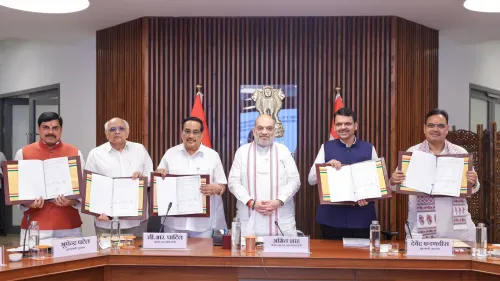
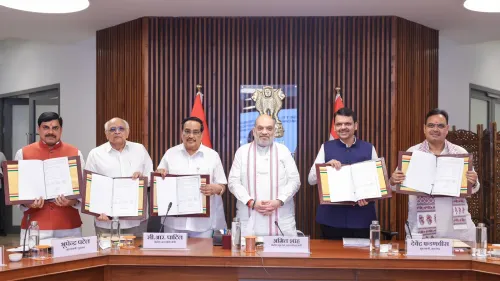
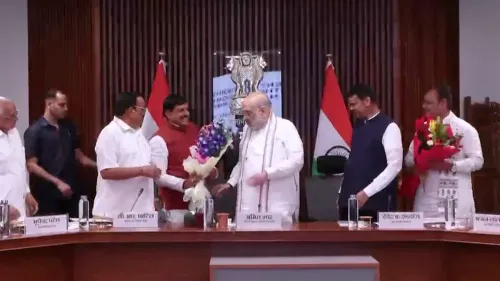
Union Home Minister Amit Shah on Tuesday, 7 July 2026, announced that a landmark inter-state agreement was reached in New Delhi on the Sardar Sarovar Project, resolving decades-old pending payment disputes linked to the Narmada Award through a one-time settlement among Maharashtra, Gujarat, Rajasthan, and Madhya Pradesh.
Context
Shah described the agreement as 'ek aitihasik kadam' (a historic step) toward strengthening water security and promoting cooperative federalism in the water sector. In his post, he stated that the settlement resolves payment-related issues pending for decades under the Narmada Award, adding that mutual trust among states will deepen and future cooperation on water projects will become easier.
The four riparian states — Gujarat, Madhya Pradesh, Maharashtra, and Rajasthan — have shared a complex financial and operational relationship over the Sardar Sarovar Project since the Narmada Water Disputes Tribunal delivered its final award in 1979.
Policy Backdrop
The Narmada Water Disputes Tribunal, constituted in 1969, allocated Narmada waters among the four states and laid down a framework for cost-sharing and benefit distribution from the Sardar Sarovar Dam on the Narmada river in Gujarat. The dam provides irrigation, hydropower, and drinking water across a vast command area spanning multiple states.
Implementation of the tribunal's award has historically been overseen by the Narmada Control Authority, a statutory body tasked with inter-state coordination. The Supreme Court in 2000 modified the award regarding dam height and rehabilitation, and the dam was eventually raised to its full height in 2017 after prolonged litigation and clearances. Legacy financial liabilities arising from cost-sharing obligations have remained a persistent sticking point among the states.
Inter-state river disputes in India have typically moved through a long cycle: tribunal award, litigation, negotiated operational settlements, and central facilitation. The emphasis on a one-time settlement aligns with broader efforts to clear such legacy liabilities and accelerate project benefits to farmers and communities in the command area.
Stakeholders and Impact
The primary beneficiaries of a clean financial settlement are the farmers and communities in the Sardar Sarovar command area across Gujarat, Rajasthan, and Madhya Pradesh, who depend on the project for irrigation and drinking water. Clearing inter-state dues is expected to ease operational cooperation and reduce friction in water accounting under the Narmada Control Authority.
Project-affected families, whose rehabilitation has been tied to the broader Narmada dispute for decades, also stand to benefit from a more stable inter-governmental framework. Shah framed the agreement as a model for cooperative federalism — a political signal that the Centre can act as an effective mediator in resource-sharing conflicts between states.
What's Next
Attention will now turn to the release of settlement amounts by the concerned states and any follow-up meetings of the Narmada Control Authority on water accounting and future project planning. The agreement could set a template for resolving similar long-pending financial disputes in other inter-state river basin projects across India, where tribunal awards have been implemented only partially due to unresolved cost-sharing issues.
Point of View
' the Modi government signals that it can move legacy disputes to closure where state-level negotiations stalled. For Amit Shah, whose ministerial portfolio spans both internal security and cooperation, brokering such an agreement reinforces the BJP's governance narrative ahead of state election cycles in the riparian states. The real test will be whether the settlement terms, once public, are accepted as equitable by all four state governments and their farming constituencies.
NationPress
8 Jul 2026
Frequently Asked Questions
What is the Sardar Sarovar Project?
The Sardar Sarovar Project is a large multipurpose dam on the Narmada river in Gujarat, providing irrigation, hydropower, and drinking water to Gujarat, Madhya Pradesh, Maharashtra, and Rajasthan. It is one of the largest water resource projects in India and has been at the centre of inter-state water disputes since the 1970s.
What is the Narmada Award and why were payments pending?
The Narmada Award refers to the final order of the Narmada Water Disputes Tribunal, delivered in 1979, which allocated Narmada waters and set cost-sharing obligations among the four riparian states. Payments related to project costs and benefits remained unresolved for decades due to disputes over implementation, litigation, and changes in project scope.
What did the 7 July 2026 agreement in New Delhi resolve?
The agreement reached on 7 July 2026 in New Delhi resolved decades-old pending payment issues among Maharashtra, Gujarat, Rajasthan, and Madhya Pradesh linked to the Narmada Award through a one-time settlement, as announced by Union Home Minister Amit Shah.
What is cooperative federalism in the context of water disputes?
Cooperative federalism in water disputes refers to the Centre facilitating negotiated agreements among states on shared river resources, rather than resolving conflicts solely through litigation or tribunal orders. The Sardar Sarovar settlement has been cited by Amit Shah as an example of this approach.
What happens after the Sardar Sarovar inter-state settlement?
Following the settlement, the four states are expected to release the agreed payment amounts, and the Narmada Control Authority is likely to hold follow-up meetings on water accounting and future project cooperation. The deal may also serve as a model for resolving similar pending disputes in other inter-state river basin projects.