Amit Shah inaugurates Ashok Singhal birth centenary in Delhi
Synopsis
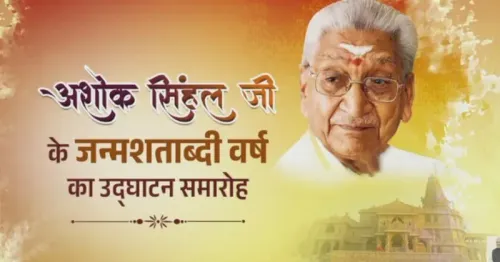
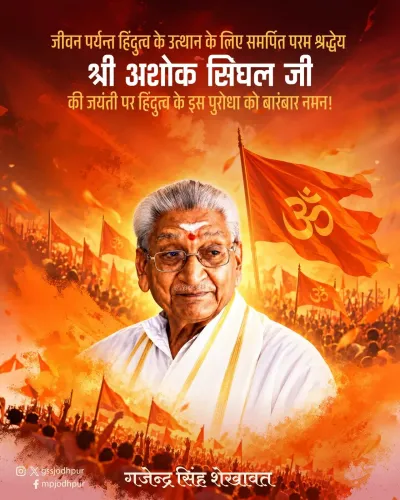
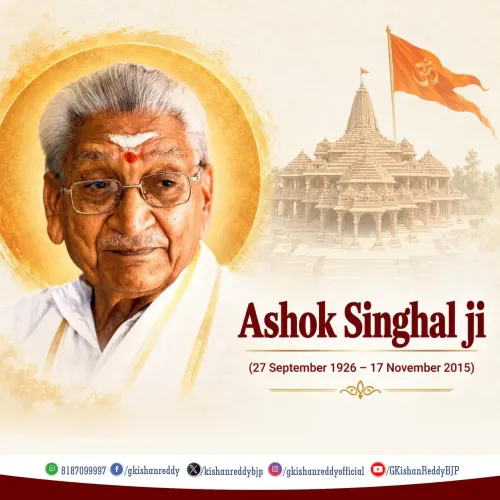
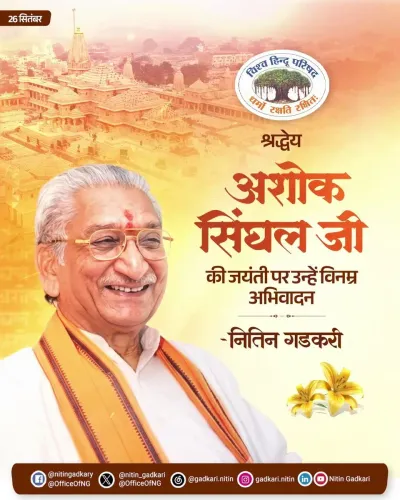
Union Home Minister Amit Shah attended the inauguration of Ashok Singhal's birth centenary year in New Delhi on 27 September 2026, marking 100 years since the birth of the VHP patriarch and Ram Janmabhoomi movement leader who died in 2015.
Key Takeaways
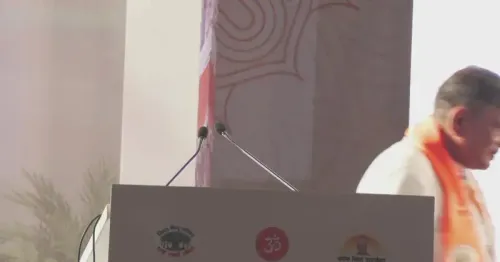
Amit Shah joined the live inauguration of Ashok Singhal's birth centenary year in New Delhi on 27 September 2026 .
Ashok Singhal was born on 27 September 1926 and served as the longtime leader of the Vishva Hindu Parishad (VHP) , founded in 1964 .
Singhal was the most prominent face of the Ram Janmabhoomi movement and remained active until his death on 14 November 2015 .
Shah described Singhal's life as a source of inspiration for every generation, devoted to 'nation, faith, and culture.' The centenary observance runs through 2026–27 , with VHP and allied groups expected to organise regional events and publications.
A life measured not in years but in movements — Union Home Minister Amit Shah joined a live broadcast from New Delhi on Sunday, 27 September 2026, to inaugurate the birth centenary year of Ashok Singhal, the late Vishva Hindu Parishad patriarch whose name became inseparable from the Ram Janmabhoomi movement. The occasion: Singhal's 100th birth anniversary, marked under the hashtag #100YearsOfAshokJi.
Shah, posting from the event's live broadcast, described Singhal's life as a source of inspiration for every generation — 'राष्ट्र, धर्म व संस्कृति के लिए संपूर्ण जीवन समर्पित' ('a life entirely devoted to nation, faith, and culture'). The phrasing was not incidental: it distils the public identity Singhal carried across more than five decades of religious-cultural mobilisation.
Who was Ashok Singhal — and why a centenary now
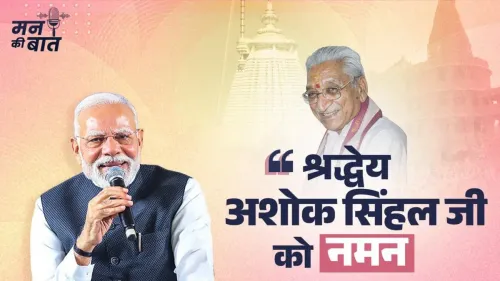
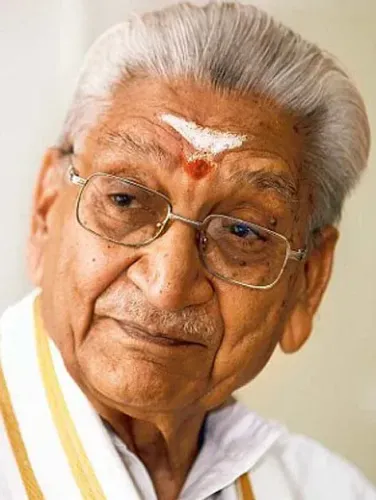
Ashok Singhal served as the longtime leader of the Vishva Hindu Parishad (VHP), the Hindu nationalist organisation founded in 1964. He was the most prominent face of the Ram Janmabhoomi campaign that reshaped Indian politics through the 1980s and 1990s, and he remained active in VHP affairs until his death on 14 November 2015. Senior BJP and RSS leaders offered tributes at the time, underlining his stature within the broader Sangh Parivar ecosystem.
Born on 27 September 1926, Singhal would have turned 100 years old today — making the date both the trigger and the symbolic centrepiece of what is envisioned as a year-long centenary observance running through 2026–27. VHP and allied organisations are expected to schedule regional events, publications, and commemorative programmes across the country over the coming months.
BJP's pattern of ideological commemoration
Sunday's inauguration fits a well-established template: BJP leaders regularly mark the birth and death anniversaries of senior RSS and VHP figures with public events and formal statements. The practice is part of how the party acknowledges and reinforces its ideological lineage — converting individual memory into collective motivation. Having the Union Home Minister anchor the centenary launch live, rather than simply issuing a written tribute, signals the significance the government attaches to this particular milestone.
For VHP workers and Sangh Parivar affiliates who worked alongside Singhal, the centenary year is both a retrospective and a rallying point. The programmes expected over the next twelve months will likely keep his name — and the causes he championed — in active public discourse well into 2027.
A hundred years after his birth, Ashok Singhal's centenary becomes, in the telling of those who revere him, not a looking-back but a marching order.
Point of View
Not merely a historical footnote. Such institutionalised commemoration serves both consolidation within the Hindu nationalist base and a broader narrative of civilisational continuity.
NationPress
27 Sept 2026
Frequently Asked Questions
Who was Ashok Singhal?
Ashok Singhal was the longtime leader of the Vishva Hindu Parishad (VHP) and the most prominent face of the Ram Janmabhoomi movement. He was born on 27 September 1926 and died on 14 November 2015.
Why is Ashok Singhal's centenary being celebrated in 2026?
2026 marks 100 years since Ashok Singhal's birth on 27 September 1926, making it his birth centenary year. The VHP and allied organisations have planned commemorative events throughout 2026–27.
What did Amit Shah say about Ashok Singhal?
Amit Shah described Singhal's life as entirely devoted to nation, faith, and culture, calling him an inspiration for every generation.
What is the Vishva Hindu Parishad (VHP)?
The Vishva Hindu Parishad is a Hindu nationalist organisation founded in 1964. Ashok Singhal was closely associated with it for decades and rose to become its most prominent leader.
What events are planned during the Ashok Singhal birth centenary year?
The centenary year running through 2026–27 is expected to include regional events, publications, and commemorative programmes organised by VHP and affiliated groups across India.