Amit Shah invokes Ashok Singhal birth centenary to reclaim youth identity
Synopsis
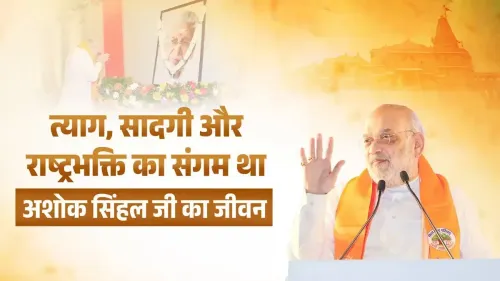
Home Minister Amit Shah used the birth centenary of VHP leader Ashok Singhal to argue that societies which forget their heroes create ideological vacuums, pushing youth toward foreign civilisations. Shah called 2026 the year to carry Singhal's ideals to every Indian household.
Key Takeaways
Amit Shah posted on X on September 27, 2026 , invoking Ashok Singhal's birth centenary.
Shah argued that forgetting indigenous heroes creates an 'ideological vacuum' that drives youth to seek role models in foreign cultures.
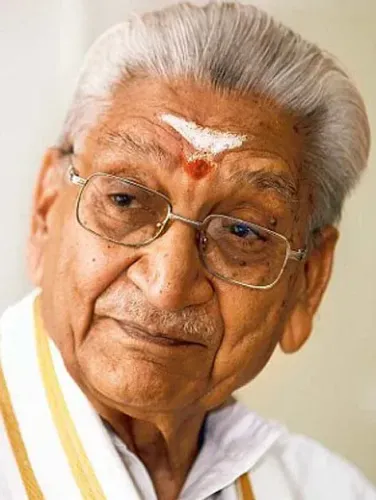
Ashok Singhal , born in 1926 , was the leading organiser of the Ram Janmabhoomi movement and a long-time head of the Vishva Hindu Parishad (VHP) .
The Home Minister framed 2026 as a year-long mission to take Singhal's ideals 'house to house' across India.
The message fits a consistent BJP-RSS pattern of using birth centenary years of ideological figures for coordinated cultural outreach.
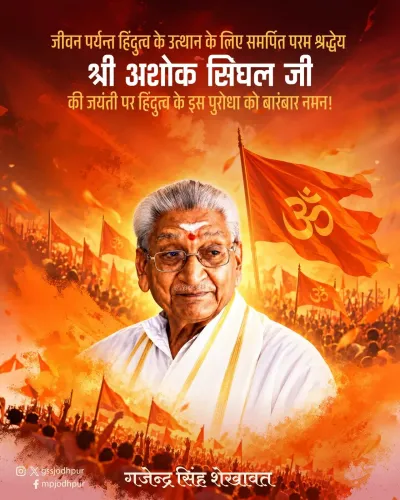
When a society forgets its heroes, Union Home Minister Amit Shah warned on Sunday, September 27, 2026, an ideological vacuum opens — and the young begin searching for role models in foreign civilisations. His message: the birth centenary year of Ashok Singhal is the moment to carry Singhal's ideals and thoughts to every household in India.
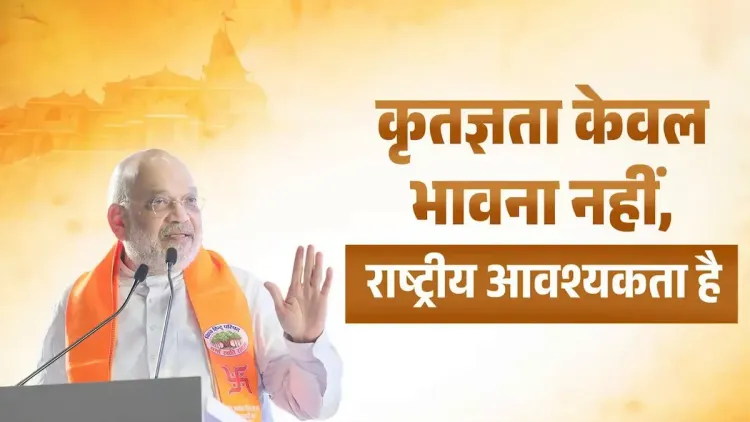
Posting in Hindi on X, Shah wrote: 'जब समाज अपने नायकों को भुला देता है, तब वैचारिक वैक्यूम पैदा होता है और युवा दूसरों की सभ्यताओं में अपने नायक ढूंढने लगते हैं।' — 'When a society forgets its heroes, an ideological vacuum is created and the youth begin searching for their heroes in other civilisations.' The remedy, Shah argued, is this centenary year itself: a deliberate, organised push to take Singhal's vision 'from home to home.'
Who was Ashok Singhal — and why 2026?
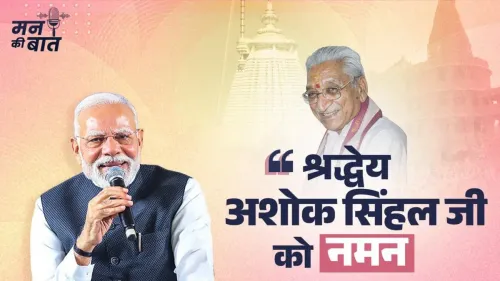
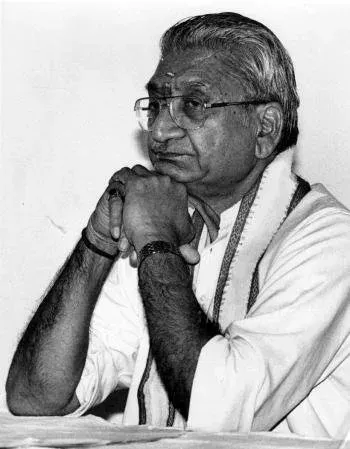
Ashok Singhal, born in 1926, rose to become the most prominent face of the Vishva Hindu Parishad (VHP), the Hindu cultural and religious organisation founded in 1964. He was the central organiser of the Ram Janmabhoomi movement across several decades, mobilising millions and shaping the political grammar of Hindu identity in independent India. His death in 2015 drew tributes from across the ideological spectrum, though his legacy remains contested. The year 2026 marks his birth centenary — a milestone that the Sangh Parivar has flagged for sustained public commemoration.
The 'ideological vacuum' argument — and the pattern behind it
Shah's framing is pointed. The 'vacuum' metaphor is not accidental: it positions cultural amnesia as an active threat to national identity, not merely a sentimental loss. If indigenous role models are absent, the argument runs, youth will be drawn to external cultural reference points — a line of reasoning that speaks directly to anxieties about Westernisation and what BJP and RSS ideologues call 'civilisational drift.'
This logic sits within a well-established pattern. Birth centenary years of ideologically significant figures — from Syama Prasad Mookerjee to Deendayal Upadhyaya — have routinely been marked with coordinated outreach, publications, and state-level events. The Singhal centenary follows that template, with the Home Minister's public messaging signalling high-level political backing for the commemoration cycle.
What the centenary year is expected to look like
Shah's post frames 2026 not as a single event but as a year-long mission: ideas and ideals carried 'घर-घर' — house to house. That phrasing echoes the ground-level mobilisation vocabulary long associated with VHP and RSS outreach. While the specific shape of centenary programmes across states has not been officially detailed in verifiable public records, the political signal from the Home Minister is clear — the commemoration has top-tier endorsement.
For India's youth — the explicit audience Shah names — the centenary push is designed to make Singhal's legacy a live reference, not an archive entry. Whether that resonates beyond already-committed ideological networks is the real question this year will answer.
Point of View
Shah elevates the centenary from a heritage event to a recruitment-of-values exercise. The 'civilisational drift' anxiety he invokes has been a recurring lever in Hindutva political communication — from Upadhyaya to Golwalkar centenary cycles — suggesting a methodical, long-game approach to cultural consolidation rather than a spontaneous tribute. The durability of this strategy will be tested by whether centenary programming succeeds in reaching genuinely new audiences beyond the already-mobilised base.
NationPress
28 Sept 2026
Frequently Asked Questions
Who is Ashok Singhal and why is 2026 significant?
Ashok Singhal, born in 1926, was the most prominent leader of the Vishva Hindu Parishad (VHP) and the chief organiser of the Ram Janmabhoomi movement. The year 2026 marks his birth centenary, which BJP and Sangh Parivar organisations are observing with public outreach programmes.
What did Amit Shah say about Ashok Singhal on X?
Amit Shah posted in Hindi that when a society forgets its heroes, an ideological vacuum emerges and youth begin seeking role models in other civilisations. He called the centenary year an opportunity to carry Singhal's ideals to every household in India.
What is the Vishva Hindu Parishad (VHP)?
The Vishva Hindu Parishad is a Hindu religious and cultural organisation founded in 1964. It is closely associated with the Sangh Parivar and played a central role in the Ram Janmabhoomi movement through leaders like Ashok Singhal.
Why does Amit Shah talk about 'ideological vacuum' and youth?
Shah's argument is that when indigenous cultural heroes are forgotten, young people are drawn to role models from foreign cultures, weakening civilisational identity. Commemorating figures like Singhal is presented as a counter-strategy to this perceived drift.
Is this the first time BJP has used a birth centenary for cultural outreach?
No. Birth centenary years of figures such as Syama Prasad Mookerjee and Deendayal Upadhyaya have previously been used for coordinated BJP-RSS outreach campaigns, publications, and state-level events — making the Singhal centenary part of an established pattern.