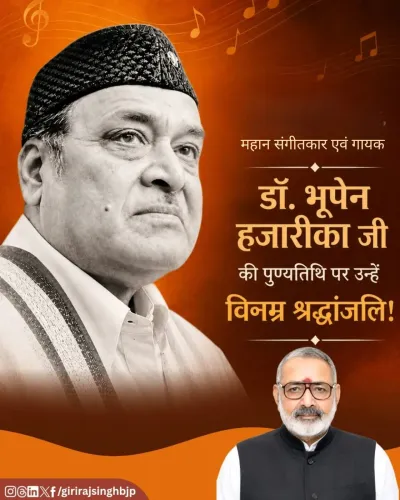
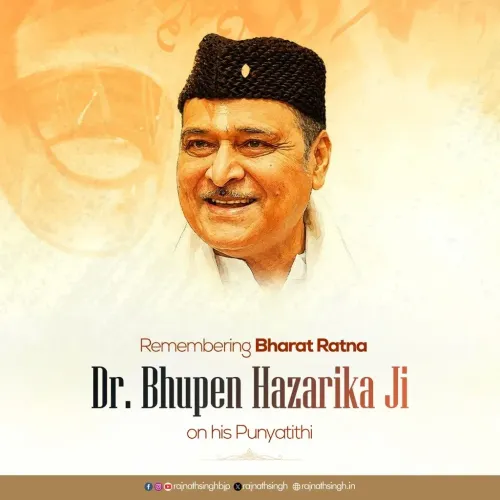
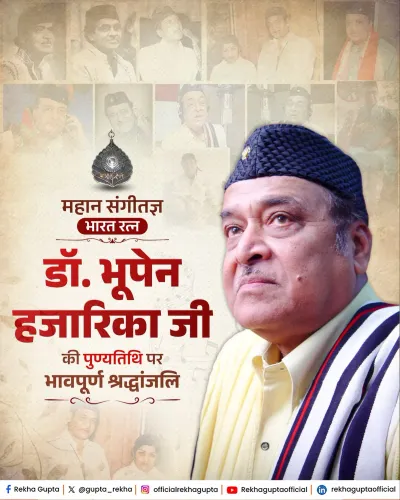
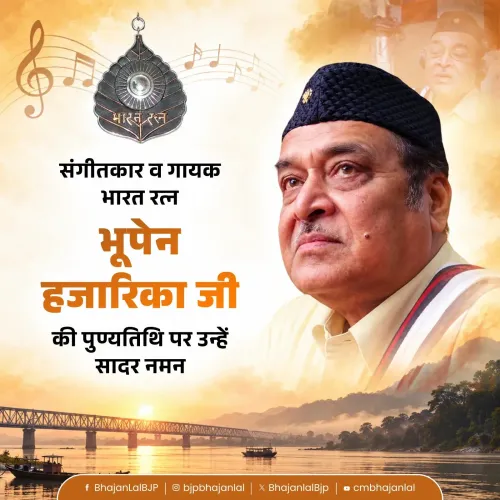
Amit Shah Pays Tribute to Bhupen Hazarika on Punyatithi

Synopsis
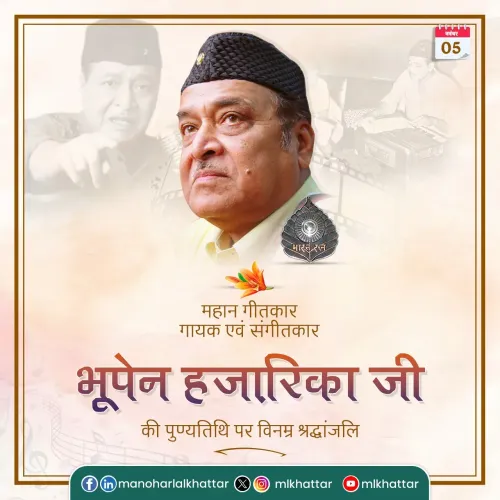
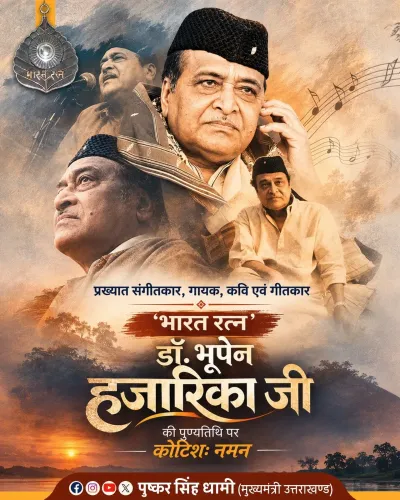
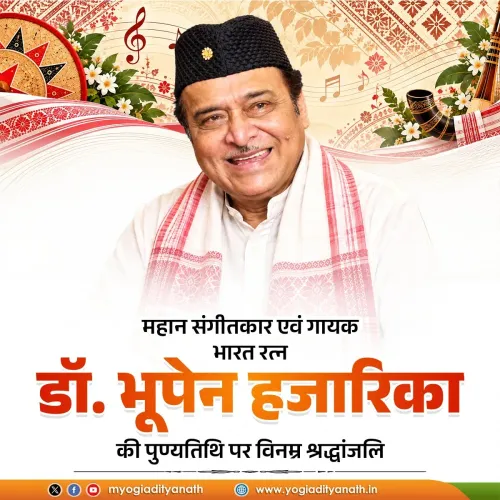
Union Home Minister Amit Shah on 5 November 2026 paid tribute to Bharat Ratna Bhupen Hazarika on his Punyatithi, honouring the legendary Assamese singer-poet as the Bard of the Brahmaputra whose message of unity continues to inspire the nation.
Key Takeaways
Union Home Minister Amit Shah posted a tribute to Bhupen Hazarika on his death anniversary, 5 November 2026 .
Hazarika is referred to as the 'Bard of the Brahmaputra' — a celebrated singer, songwriter, poet and filmmaker from Assam .
He was posthumously awarded the Bharat Ratna in 2019 for his contributions to Indian music and culture.
Shah wrote in both English and Assamese, emphasising Hazarika's legacy of unity and his role in bringing Assam global recognition.
Annual central government tributes to Hazarika reflect a broader policy of spotlighting Northeast India's cultural contributions within the national narrative.
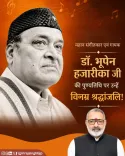
Fifty-five years of music that crossed every river, every border, every language — and still the Brahmaputra sings his name. On the death anniversary of Bharat Ratna Bhupen Hazarika, Union Home Minister Amit Shah offered homage on Thursday, 5 November 2026, saluting the legendary Assamese musician as a force that continues to place Assam on the world's cultural map.
Shah's post, written in both English and Assamese, described Hazarika as the 'Bard of the Brahmaputra' and spoke of a 'luminous legacy' that would 'enrich our culture through his timeless music.' In Assamese he wrote, 'এই মহান শিল্পীগৰাকীয়ে আমাৰ মাজত এৰি থৈ গৈছে এক উজ্জ্বল আৰু চিৰস্মৰণীয় সাংস্কৃতিক ঐতিহ্য' — 'This great artist has left behind a brilliant and eternally memorable cultural heritage.'
Who Was the Bard of the Brahmaputra
Bhupen Hazarika was one of independent India's most towering creative voices — a singer, songwriter, poet and filmmaker who shaped the cultural identity of Assam and the broader Northeast for decades. His songs, rooted in the soil and spirit of the Brahmaputra valley, carried universal themes of humanity, unity and social justice that resonated far beyond regional borders. He passed away on 5 November 2011, and his Punyatithi has since become an annual occasion for national remembrance.
The 2019 Bharat Ratna and What It Meant for the Northeast
The Government of India posthumously awarded Hazarika the Bharat Ratna in 2019 — the country's highest civilian honour — in recognition of his extraordinary contributions to Indian music and culture. The conferral was widely seen as a formal acknowledgement of the Northeast's cultural weight within the national imagination, a region whose artistic traditions had long been celebrated locally but rarely elevated to this scale at the Centre. For Assam, it was a moment of collective pride.
A Pattern of Recognition From New Delhi
Shah's tribute is part of a consistent pattern of annual homage by senior Union ministers to Hazarika — a deliberate signal from the central government that the Northeast's cultural legacy is inseparable from India's larger civilisational story. The Home Ministry, which oversees affairs of the northeastern states, has made cultural recognition a visible strand of its Northeast engagement. Hazarika's message of unity — his defining artistic theme — also lends itself naturally to that political and administrative framing.
The spirit of that message, as Shah's post put it, is one that will 'inspire humanity with the spirit of unity' — a phrase that doubles as both tribute and aspiration. For a region as diverse as the Northeast, the Bard's voice remains as necessary as the river he sang for.
Point of View
The central government signals that the Northeast is not a peripheral concern but a core part of India's civilisational identity. The choice to post in Assamese alongside English is a targeted gesture to Assam's electorate — a state where cultural pride is a powerful political currency. It also reinforces the BJP's broader Northeast strategy of aligning national honour, regional identity and administrative engagement into one coherent message. That Hazarika's own central theme — unity across difference — maps so neatly onto the government's preferred framing is a political convenience that the annual tribute cycle keeps alive.
NationPress
5 Nov 2026
Frequently Asked Questions
When did Bhupen Hazarika pass away?
Bhupen Hazarika passed away on 5 November 2011 . His death anniversary, known as Punyatithi, is observed annually with tributes from cultural organisations and government leaders across India.
Why is Bhupen Hazarika called the Bard of the Brahmaputra?
Bhupen Hazarika earned the title 'Bard of the Brahmaputra' for his decades-long career as a singer, poet and filmmaker deeply rooted in the culture and landscape of Assam and the Brahmaputra river valley, whose songs became anthems of regional identity and human unity.
When was Bhupen Hazarika awarded the Bharat Ratna?
Bhupen Hazarika was posthumously conferred the Bharat Ratna — India's highest civilian honour — in 2019 by the Government of India in recognition of his extraordinary contributions to Indian music, culture and cinema.
What did Amit Shah say about Bhupen Hazarika on his Punyatithi 2026?
Union Home Minister Amit Shah described Hazarika as the 'Bard of the Brahmaputra' and said his timeless music would continue to enrich Indian culture, bring Assam the honour it deserves on the world stage, and inspire humanity with the spirit of unity.
Why do central government ministers pay tribute to Bhupen Hazarika every year?
Annual tributes to Hazarika by Union ministers reflect the central government's consistent effort to recognise the cultural contributions of Northeast India within the national narrative, particularly after his posthumous Bharat Ratna in 2019 elevated his legacy to a pan-India symbol.