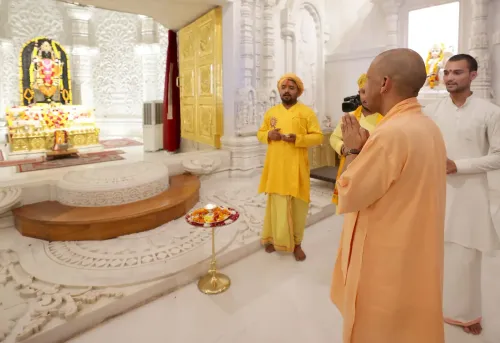
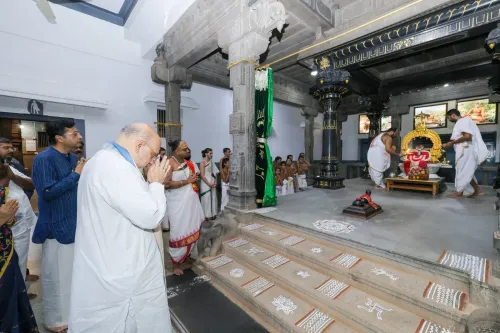
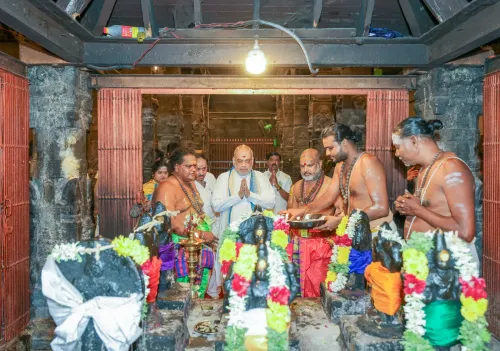
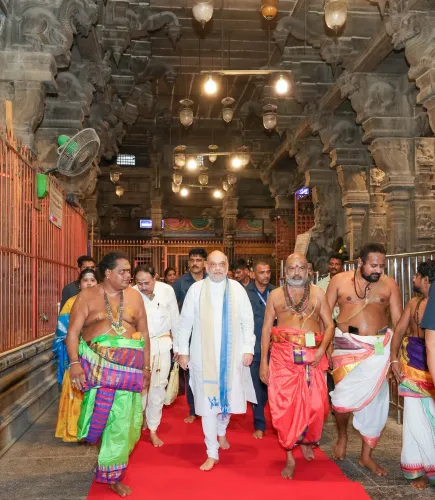
Amit Shah offers puja at Ayyappa Temple in R.K. Puram
Synopsis
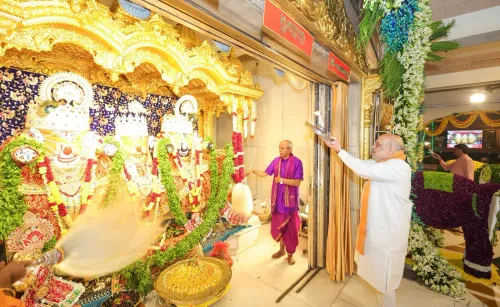
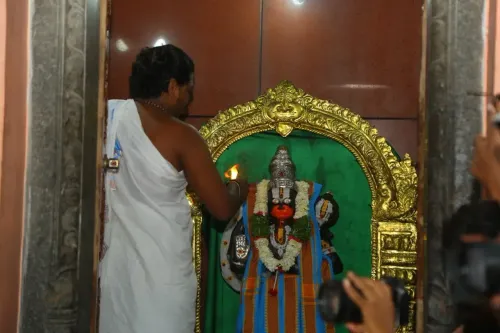
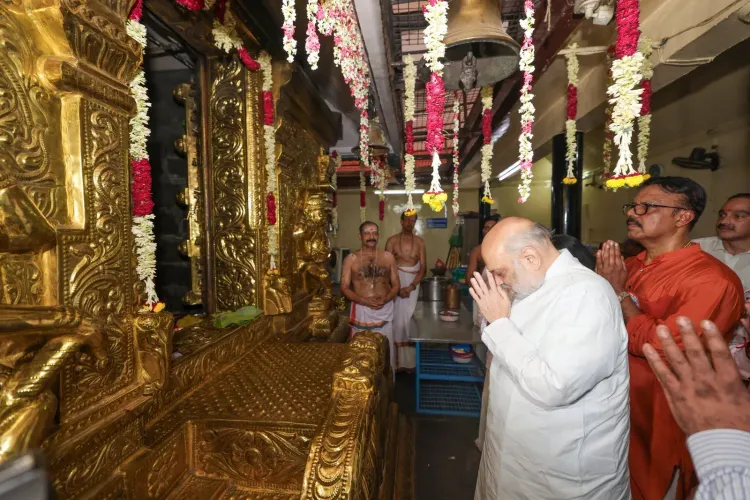
Union Home Minister Amit Shah offered puja at the Shri Ayyappa Temple in R.K. Puram, New Delhi on June 7, 2026. In a bilingual English-Malayalam post, he described Lord Ayyappa as the 'bestower of bliss' and a symbol of national unity, and said he prayed for the well-being and prosperity of all.
Key Takeaways
Union Home Minister Amit Shah offered puja at the Shri Ayyappa Temple, R.K.
Puram, New Delhi on June 7, 2026 .
Shah described Lord Ayyappa as 'the bestower of bliss and the embodiment of the sacred values that unites our nation.' He prayed for the well-being and prosperity of all citizens.
The post was published bilingually in English and Malayalam , directly addressing Kerala-linked audiences.
The visit aligns with a long-standing BJP practice of public temple visits that link religious devotion with national-unity messaging.
The gesture comes ahead of the 2026 Kerala assembly elections , where the BJP is working to strengthen its presence.
Union Home Minister Amit Shah visited the Shri Ayyappa Temple in R.K. Puram, New Delhi, on Sunday, June 7, 2026, offering puja and praying for the well-being and prosperity of all citizens.
What Shah said
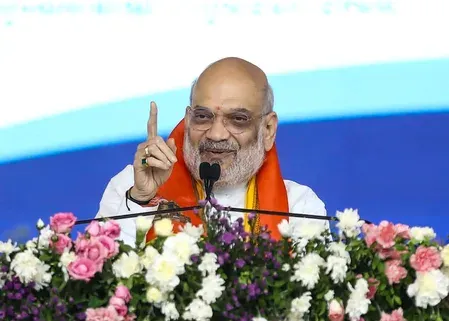
Sharing the visit in a bilingual post in English and Malayalam, Shah described himself as 'fortunate' to offer puja at the temple. He wrote that 'Bhagavan Ayyappan' — Lord Ayyappa — is 'the bestower of bliss and the embodiment of the sacred values that unites our nation,' and said he prayed to the deity for the well-being and prosperity of all.
The Malayalam portion of the post mirrored the English text, extending the message directly to Kerala-linked audiences across India and abroad.
Context
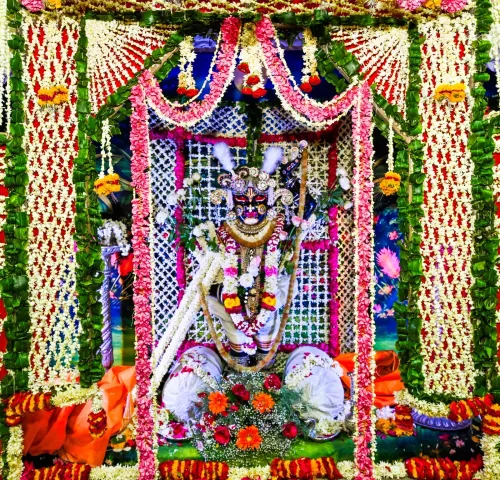
The Shri Ayyappa Temple in R.K. Puram is a prominent place of worship in southwest Delhi, particularly for the city's large Malayali community. Lord Ayyappa's principal shrine is the celebrated Sabarimala temple in Kerala, one of the most visited pilgrimage sites in the world.
Lord Ayyappa is venerated across southern India and among diaspora communities, and is associated with themes of unity and universal well-being — values Shah explicitly invoked in his post.
Policy backdrop
Senior BJP leaders have made visible temple visits a regular feature of public life since 2014, using such occasions to articulate messages of cultural nationalism and national cohesion. These visits are typically accompanied by social media posts that frame religious devotion within a broader narrative of shared Indian values.
The bilingual format of Shah's post — combining English with Malayalam, a language spoken by over 3.5 crore people — is consistent with the party's outreach strategy toward Kerala, a state where the BJP has been working to expand its electoral footprint ahead of the 2026 Kerala assembly elections.
Stakeholders and impact
Hindu devotees and the Malayali community in Delhi and across India are the primary audiences for this gesture. The Ayyappa tradition cuts across caste and regional lines, and Shah's framing of the deity as an 'embodiment of values that unites our nation' reinforces a pan-Indian cultural message.
For Kerala-origin communities settled in Delhi and other metros, a senior Union minister's temple visit carries both devotional and symbolic weight, signalling institutional recognition of their cultural identity.
What's next
Observers will watch for further temple visits by Union ministers or state-level BJP outreach events in the run-up to the 2026 Kerala assembly elections. Any follow-up messaging tied to the Sabarimala pilgrimage season — which draws tens of millions of devotees annually — could amplify this line of cultural engagement.
Point of View
He signals direct cultural affinity with Kerala's electorate — a constituency the party is actively courting ahead of the 2026 state elections. The invocation of Ayyappa as a unifying, pan-Indian deity, rather than a regional one, reflects a deliberate effort to present the party's cultural nationalism as inclusive rather than exclusionary. Such gestures, repeated consistently by senior leaders, form a cumulative soft-power campaign that operates in parallel with hard policy outreach.
NationPress
19 Sept 2026
Frequently Asked Questions
Which temple did Amit Shah visit in Delhi?
Amit Shah visited the Shri Ayyappa Temple located in R.K. Puram, southwest New Delhi, on June 7, 2026.
Who is Lord Ayyappa?
Lord Ayyappa is a Hindu deity venerated primarily in South India. His principal shrine is the Sabarimala temple in Kerala, one of the most visited pilgrimage sites in the world. He is associated with universal well-being and is worshipped across caste and regional boundaries.
Why did Amit Shah post in Malayalam?
Shah posted in both English and Malayalam to reach Kerala-origin communities in Delhi and across India, reflecting the BJP's broader outreach to Malayalam-speaking audiences ahead of the 2026 Kerala assembly elections.
What did Amit Shah pray for at the Ayyappa temple?
According to his post, Shah prayed to Lord Ayyappa for the well-being and prosperity of all citizens of India.
What is the significance of BJP leaders visiting temples?
Senior BJP leaders have made visible temple visits a regular feature of public life since 2014, using such occasions to articulate messages of cultural nationalism, shared values, and national unity — themes central to the party's political identity.