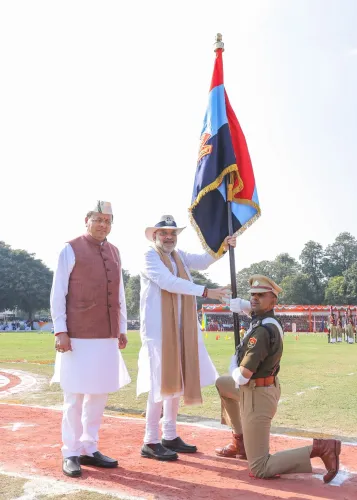
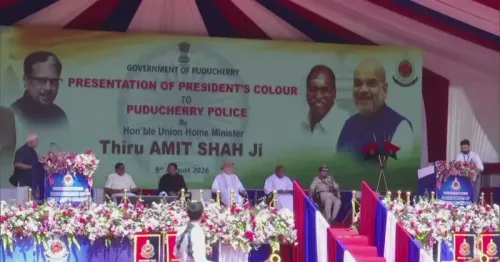
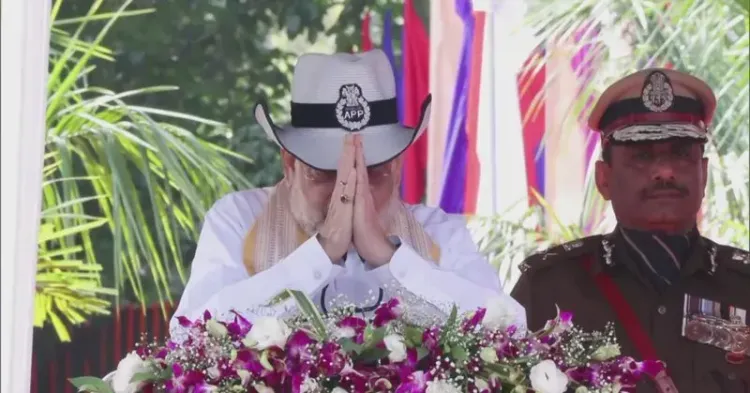
Amit Shah presents President's Colour to Arunachal Pradesh Police
Synopsis
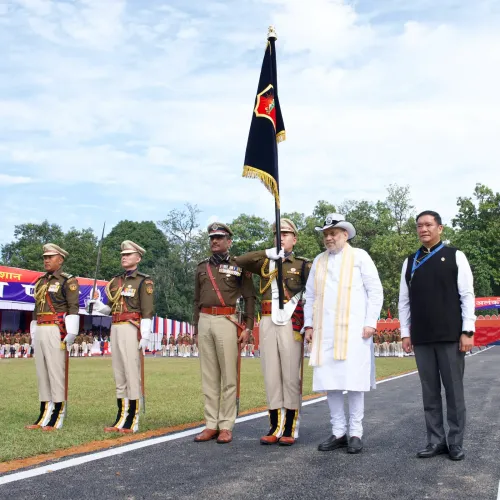
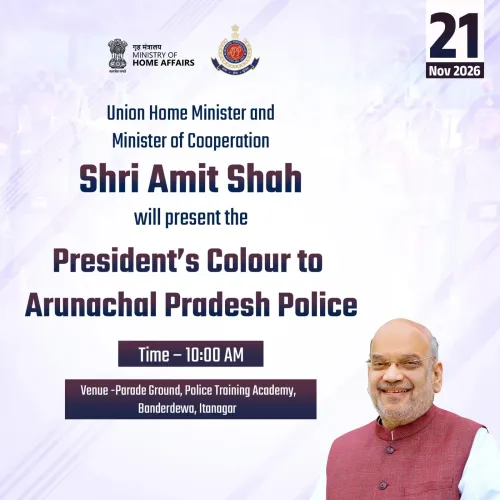
Union Home Minister Amit Shah personally attended and broadcast live the ceremony presenting the President's Colour to Arunachal Pradesh Police on 21 November 2026, honouring the border-state force's distinguished service and operational excellence.
Key Takeaways
Union Home Minister Amit Shah attended the President's Colour presentation ceremony for Arunachal Pradesh Police on 21 November 2026 .
The President's Colour is one of India's highest ceremonial honours for uniformed organisations, awarded for sustained excellence in service and discipline.
Arunachal Pradesh shares international borders with China and Bhutan , making its police force's role strategically significant.
Shah broadcast the ceremony live on X , giving the event national public visibility.
Such presentations by the Union Home Ministry are part of a periodic pattern of recognising state police forces in border and insurgency-affected regions.
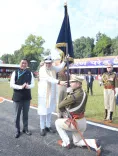
A border-state police force earned one of India's most distinguished ceremonial honours on Saturday, 21 November 2026, as Union Home Minister Amit Shah attended the ceremony to present the President's Colour to Arunachal Pradesh Police — a rare institutional recognition reserved for units that have demonstrated sustained excellence in service, discipline, and operational record.
What the President's Colour means for a police force
The President's Colour is not handed out routinely. It is among the highest ceremonial distinctions the Indian state can bestow on a uniformed organisation — military or police — and is awarded in recognition of exceptional service to the nation over an extended period. For a state police force, it signals that the unit has met the most demanding standards of discipline, operational performance, and contribution to internal security.
Arunachal Pradesh Police secures some of the most strategically sensitive terrain in the country — a state that shares international borders with China and Bhutan and has historically operated in conditions that test both personnel and command structures. The honour carries particular weight in that context.
Union Home Ministry's role in recognising border-state forces
Presentations of the President's Colour to state police contingents fall under the broader mandate of the Union Home Ministry, which has periodically extended this recognition to forces operating in border and insurgency-affected regions. The pattern reflects a deliberate policy of acknowledging internal security contributions that rarely attract public attention but are consequential to national integrity.
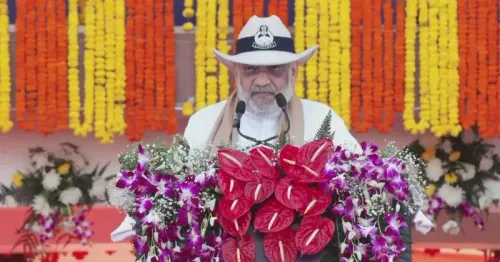
Home Minister Shah's personal presence at the ceremony — and his decision to broadcast it live on X — signals the Centre's intent to give the moment public visibility, projecting both respect for the force and a message to the region's personnel.
Arunachal Pradesh Police: a force on the frontier
Arunachal Pradesh, India's largest northeastern state by area, presents unique policing challenges: difficult terrain, sparse connectivity, and proximity to contested border zones. The state police has had to evolve alongside those pressures, coordinating with central paramilitary forces and operating in conditions far removed from those of a typical state constabulary.
Being awarded the President's Colour places Arunachal Pradesh Police in the company of an exclusive set of state and central forces that have received the distinction — a moment the force and the state's leadership will mark as an institutional milestone.
The honour is a signal from Delhi: the frontier holds, and the people guarding it are seen.
Frequently Asked Questions
What is the President's Colour award in India?
The President's Colour is one of India's highest ceremonial distinctions, awarded by the President to select military and police units that have demonstrated exceptional service, discipline, and operational excellence over an extended period.
Why did Amit Shah attend the Arunachal Pradesh Police ceremony?
As Union Home Minister, Amit Shah oversees India's internal security apparatus. His presence at the President's Colour ceremony for Arunachal Pradesh Police reflects the Centre's recognition of the force's distinguished service in a strategically critical border state.
Which countries does Arunachal Pradesh share a border with?
Arunachal Pradesh shares international borders with China to the north and northeast, and Bhutan to the west, making it one of India's most strategically sensitive frontier states.
How often is the President's Colour given to state police forces?
Presentations of the President's Colour to state police forces are periodic and not annual; they are awarded selectively to units that meet the most demanding standards, making each bestowal a significant institutional milestone.
Has the Union Home Ministry given similar honours to other state police forces?
Yes, the Union Home Ministry has periodically facilitated President's Colour presentations to various state police contingents, particularly those operating in border and insurgency-affected regions of India.