Rijiju: Home Minister Shah Presents President's Police Colour to Arunachal Police
Synopsis
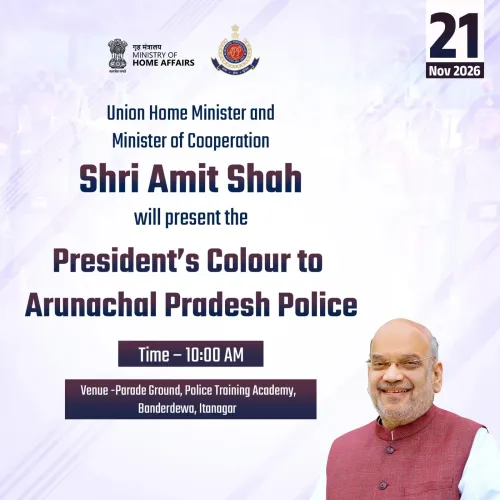
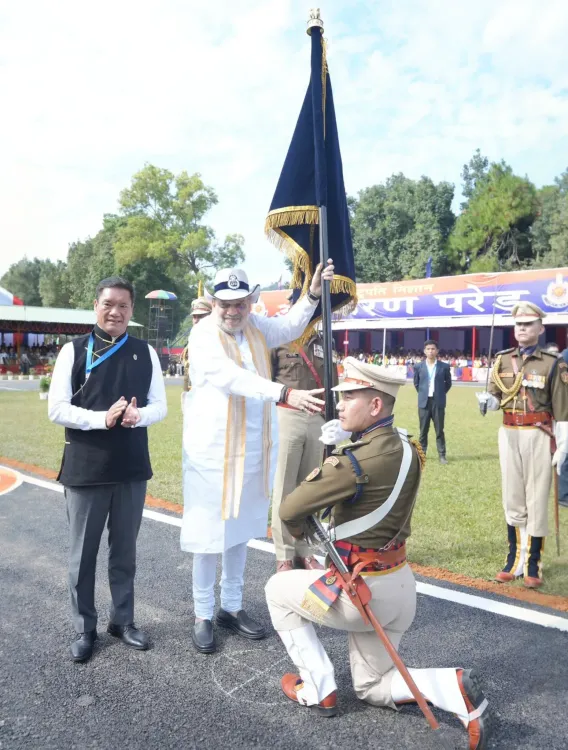
Union Home Minister Amit Shah presented the President's Police Colour — India's highest police honour — to Arunachal Pradesh Police at the Alankaran Parade in Banderdewa on November 21, 2026, in the presence of CM Pema Khandu and Deputy CM Chowna Mein. Minister Kiren Rijiju called it a proud moment for the border state.
Key Takeaways
Union Home Minister Amit Shah presented the President's Police Colour to Arunachal Pradesh Police on November 21, 2026 .
The ceremony was held at the Alankaran Parade in Banderdewa , Arunachal Pradesh.
Chief Minister Pema Khandu and Deputy Chief Minister Chowna Mein were present at the event.
The President's Police Colour is India's highest national recognition conferred on police forces for excellence and distinguished service.
Union Minister Kiren Rijiju described the honour as 'truly a proud moment for Arunachal Pradesh Police.' The recognition highlights the central government's focus on acknowledging northeastern border-state policing.
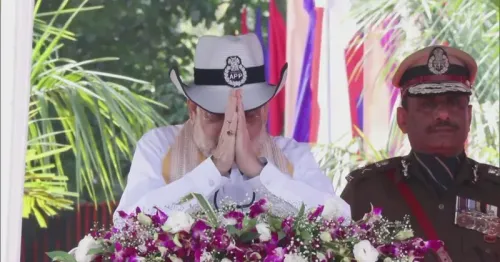
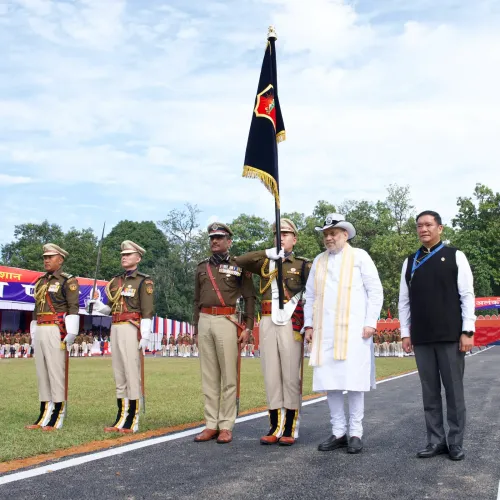
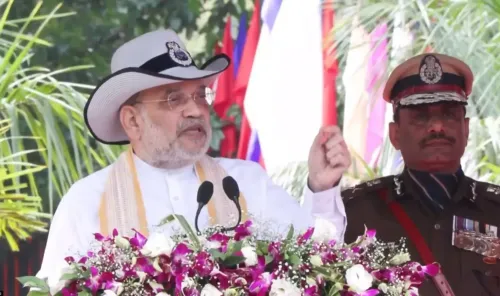
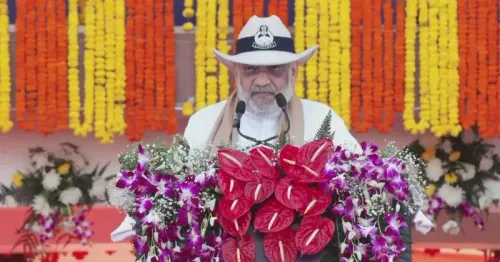
A historic honour arrived at Banderdewa, Arunachal Pradesh, on Saturday, November 21, 2026, as Union Home Minister Amit Shah presented the President's Police Colour — India's highest national recognition for a police force — to the Arunachal Pradesh Police at the Alankaran Parade. Union Parliamentary Affairs Minister Kiren Rijiju, himself from Arunachal Pradesh, hailed it as 'truly a proud moment for Arunachal Pradesh Police.'
What the President's Police Colour actually means
The President's Police Colour is not handed out lightly. It is conferred by the President of India — presented through the Home Minister — to police forces that have demonstrated sustained excellence, discipline, and distinguished service to the nation. For a border state like Arunachal Pradesh, which shares sensitive frontiers with China and Myanmar, earning this honour signals national acknowledgement of the force's role in maintaining internal security under uniquely demanding conditions.
The ceremony at Banderdewa — home to the Arunachal Pradesh Police headquarters — was held as a formal Alankaran Parade, a ceremonial review in which the force parades before the conferring authority to receive the Colour.
Shah, Pema Khandu, and Chowna Mein on the dais
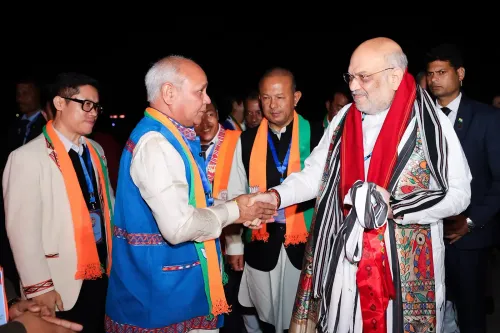
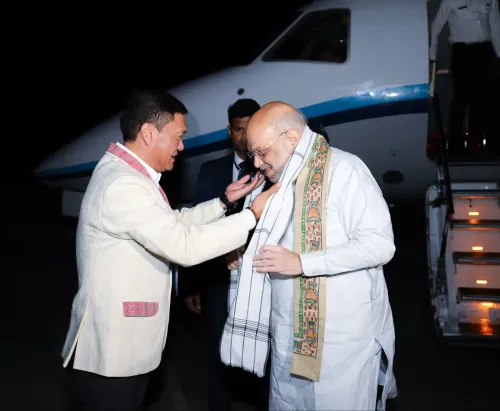
Chief Minister Pema Khandu and Deputy Chief Minister Chowna Mein were present alongside Home Minister Shah, making it a rare convergence of central and state leadership at a single ceremonial event in the northeast. The optics matter: a Union Cabinet heavyweight personally flying to a border state to confer the honour underscores the Centre's emphasis on recognising northeastern security forces.
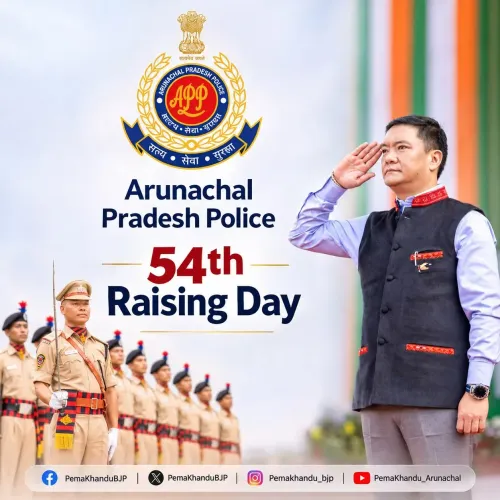
Minister Rijiju's post, shared with six photographs from the parade, amplified the moment to a national audience — lending it the weight of a senior BJP leader with deep roots in the state.
Arunachal's policing in a border-state frame
Arunachal Pradesh Police operates across one of India's most geographically challenging terrains — high-altitude passes, dense forests, and a tri-border zone that demands both conventional law-enforcement capacity and strategic alertness. Central government recognition through awards like the President's Colour has historically accompanied broader pushes for police modernisation in frontier states, including upgraded equipment, additional battalions, and improved communication infrastructure.
Saturday's ceremony is part of a pattern in which the Union Home Ministry uses high-profile award events to signal sustained investment in the northeast's security architecture — a signal as much to the region's citizens as to its neighbours.
For the men and women of the Arunachal Pradesh Police, the Colour is now theirs to carry — a banner that tells the country, and the border, exactly where they stand.
Point of View
Rather than a delegation, signals that the northeast remains a priority showcase for internal security governance. For Minister Rijiju, amplifying the moment on social media cements his identity as Arunachal's most prominent national voice. Longer term, such high-profile recognitions often precede or accompany announcements of police modernisation funds, making this event worth watching beyond the ceremony itself.
NationPress
21 Nov 2026
Frequently Asked Questions
What is the President's Police Colour and why is it significant?
The President's Police Colour is India's highest national honour awarded to a state or central police force in recognition of distinguished service, excellence, and discipline. It is conferred in the name of the President of India and is presented at a formal parade ceremony.
Which police force received the President's Police Colour in November 2026?
The Arunachal Pradesh Police received the President's Police Colour on November 21, 2026 , at the Alankaran Parade held in Banderdewa .
Who presented the President's Police Colour to Arunachal Pradesh Police?
Union Home Minister Amit Shah presented the President's Police Colour to Arunachal Pradesh Police during the Alankaran Parade at Banderdewa.
Where is Banderdewa and why was the parade held there?
Banderdewa is a town in Arunachal Pradesh that serves as the headquarters of the Arunachal Pradesh Police. It was chosen as the venue for the Alankaran Parade at which the Colour was formally conferred.
Who else attended the Alankaran Parade at Banderdewa?
Chief Minister Pema Khandu and Deputy Chief Minister Chowna Mein of Arunachal Pradesh were present at the ceremony alongside Union Home Minister Amit Shah.