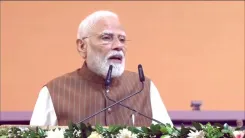
Rijiju shares PM Modi's tribute to IIT Kharagpur at 75

Synopsis
Union Minister Kiren Rijiju amplified PM Modi's speech at IIT Kharagpur's 75th anniversary, highlighting how India's oldest IIT was built on the historic Hijli Detention Camp where colonial Britain once jailed freedom fighters.
Key Takeaways
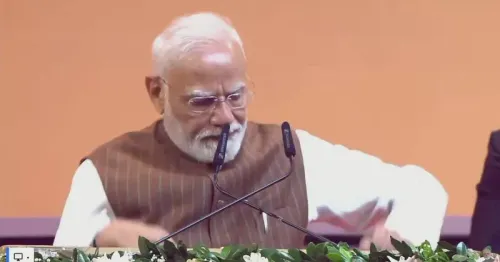
Union Minister Kiren Rijiju shared PM Narendra Modi 's remarks at the #IIT75Years celebrations on 21 November 2026 .
PM Modi described Bengal as the land 'where ideas have found strength and national movements were born.' IIT Kharagpur , founded in 1951 , is India's oldest IIT and was built on the site of the colonial-era Hijli Detention Camp .
The Hijli camp was used by British authorities to imprison Indian independence activists before Independence.
The #IIT75Years milestone is being used to link India's technical education expansion with its national heritage and independence narrative.
IIT Kharagpur anchors a network of 23 IITs that form the backbone of India's premier engineering education system.
Where freedom fighters were once imprisoned, India's brightest minds now build the future. Union Parliamentary Affairs Minister Kiren Rijiju on Saturday, 21 November 2026, shared Prime Minister Narendra Modi's powerful words at the IIT Kharagpur diamond jubilee celebrations, invoking the institute's extraordinary origin story.
Quoting the Prime Minister, Rijiju wrote: 'बंगाल की ये धरती वो धरती है, जहाँ Ideas को बल मिला है' — 'This land of Bengal is the land where ideas have found strength. Where national movements were born.' Modi underlined that the institution stands on the very ground where a British colonial detention camp once held independence fighters.
From Hijli's iron bars to India's first IIT
The site's history is extraordinary. The Hijli Detention Camp was erected by British colonial authorities to imprison Indian freedom fighters during the independence struggle. When India gained independence, the government chose this charged ground deliberately — transforming the camp into the country's first Indian Institute of Technology, inaugurated in 1951. The act was more than symbolic. It was a declaration that the chains of colonial suppression would be replaced by the tools of knowledge and self-determination.
IIT Kharagpur today anchors a network of 23 IITs across India, a system that has produced engineers, scientists, and entrepreneurs who have shaped the country's technological rise and contributed to institutions worldwide. The #IIT75Years milestone marks seven and a half decades of that journey.
Bengal's role in India's intellectual and national awakening
Modi's framing was deliberate and historically resonant. West Bengal has long been regarded as the crucible of India's modern intellectual and nationalist movements — from the Bengal Renaissance of the nineteenth century to the mass mobilisations that rattled the British Empire. Placing IIT Kharagpur within that lineage connects technical education to the broader story of national assertion.
Successive governments have drawn this same thread, framing premier technical institutes not merely as centres of learning but as living monuments to the independence movement. The #IIT75Years series of events gives that narrative a fresh, high-visibility platform.
Seventy-five years on, the message from Kharagpur is clear: the land that once held India's revolutionaries captive now sets them free — armed with degrees, not defiance alone. That is a kicker history wrote itself.
Point of View
Rijiju reinforces a carefully constructed BJP narrative that frames post-independence institution-building as the natural continuation of the freedom struggle — lending technical education a patriotic, civilisational weight beyond academic achievement. The choice of the Hijli site as a symbolic anchor is potent: it converts a site of colonial repression into a proof-point for national self-determination. At the #IIT75Years milestone, this framing serves a dual purpose — celebrating an institutional achievement while embedding it in a broader 'New India inherits the sacrifices of its founders' arc. The strategy recurs across BJP messaging on heritage sites, suggesting a deliberate, long-term effort to link governance achievements to India's independence legacy.
NationPress
21 Nov 2026
Frequently Asked Questions
Why is IIT Kharagpur historically significant?
IIT Kharagpur, founded in 1951 , is India's oldest IIT and was established on the site of the former Hijli Detention Camp , where British colonial authorities had imprisoned Indian freedom fighters during the independence struggle.
What is the Hijli Detention Camp?
The Hijli Detention Camp was a colonial-era facility in present-day West Bengal used by the British government to detain Indian independence activists. After Independence, the Indian government chose this site to establish IIT Kharagpur in 1951.
What did PM Modi say at the IIT Kharagpur 75th anniversary?
PM Narendra Modi described Bengal as 'the land where ideas have found strength and national movements were born,' and noted that IIT Kharagpur stands on the very ground where freedom fighters were once held in a detention camp.
What is #IIT75Years?
#IIT75Years marks the 75th anniversary of IIT Kharagpur and the broader IIT system, being commemorated through a series of events that celebrate India's premier engineering institutions and their national heritage significance.
Why did Kiren Rijiju post about IIT Kharagpur?
Union Parliamentary Affairs Minister Kiren Rijiju shared PM Modi's remarks from the IIT Kharagpur 75th anniversary event on 21 November 2026 , amplifying the Prime Minister's message connecting the institute's historic site to India's freedom movement.