Anurag Thakur invokes Shivaji's legacy in Ghaziabad
Synopsis
BJP MP Anurag Thakur invoked Chhatrapati Shivaji Maharaj as a 'living symbol of self-respect' at a Ghaziabad event on 27 October 2026, reflecting the party's effort to project pan-Indian historical icons beyond Maharashtra.
Key Takeaways
BJP MP Anurag Thakur paid tribute to Chhatrapati Shivaji Maharaj in Ghaziabad, Uttar Pradesh on 27 October 2026 .
He described Shivaji Maharaj as 'aatma-samman ki jeevant misal' — a living symbol of self-respect.
Ghaziabad is part of the National Capital Region , outside Maharashtra's cultural heartland, underscoring BJP's pan-Indian use of the Maratha icon.
Shivaji Maharaj founded the Maratha Empire in the 17th century and remains one of India's most widely revered historical figures.
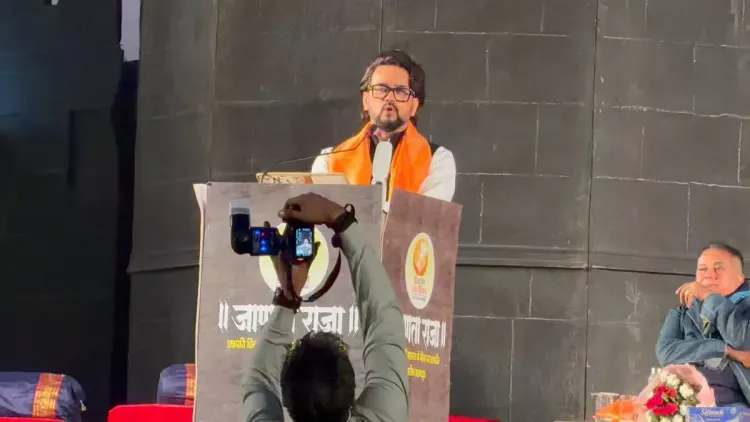
The post was accompanied by a video, suggesting a live address or public event in the city.
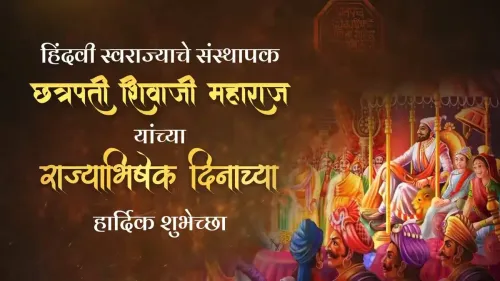
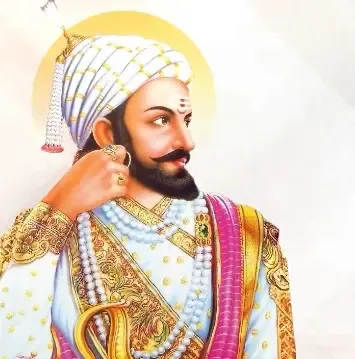
From a platform in Ghaziabad, BJP MP Anurag Thakur paid tribute to Chhatrapati Shivaji Maharaj on Tuesday, 27 October 2026, calling the 17th-century Maratha king a living example of self-respect — 'aatma-samman ki jeevant misal' (a living symbol of self-respect).
The tribute was brief, but its geography was deliberate. Ghaziabad sits in western Uttar Pradesh, well outside Maharashtra's cultural heartland — and that distance is precisely the point.
A pan-Indian icon, invoked in the NCR
Shivaji Maharaj, founder of the Maratha Empire and one of India's most venerated warrior kings, built his legacy on resisting external dominance and asserting indigenous sovereignty in the 17th century. His name carries weight far beyond the Deccan Plateau, and BJP leaders have long drawn on that weight to frame a broader national narrative around self-reliance and cultural pride.
Thakur's choice of Ghaziabad — part of the National Capital Region — as the location for this tribute fits a recognisable pattern: projecting pan-Indian historical icons into urban, non-Maratha audiences to build a common cultural vocabulary across regions.
Self-respect as a political language
The phrase aatma-samman — self-respect — is not incidental. It is one of the most resonant concepts in BJP's cultural messaging, linking Shivaji's martial defiance directly to contemporary themes of national dignity and sovereign confidence. Thakur, a former Union Minister who has represented Hamirpur, Himachal Pradesh in the Lok Sabha, is no stranger to deploying historical symbolism in political communication.
The invocation also arrives with a video attached to the post — the full context of which the post itself does not spell out — suggesting a live address or event in the city.
Shivaji Maharaj remains one of the few historical figures who commands reverence across party lines in India, making tributes to him both culturally safe and politically potent for any leader seeking to speak to a broad electorate.
A warrior king who died in 1680 still shapes the vocabulary of Indian politics in 2026 — and leaders who travel to Ghaziabad to say so are making a statement as much about the present as about the past.
Point of View
Diverse electorate signals that the party continues to use cultural hero-worship as a language of political outreach across state lines. The choice of Ghaziabad — a bellwether constituency in western Uttar Pradesh — also reflects the ongoing importance of UP in BJP's electoral calculus ahead of any state or national cycle. Tributes of this kind rarely carry a single meaning: they are simultaneously cultural statement, voter outreach, and brand reinforcement.
NationPress
27 Oct 2026
Frequently Asked Questions
Why did Anurag Thakur pay tribute to Shivaji Maharaj in Ghaziabad?
Thakur invoked Chhatrapati Shivaji Maharaj as a symbol of self-respect at a Ghaziabad event on 27 October 2026. BJP leaders regularly reference Shivaji Maharaj across India to emphasise themes of indigenous sovereignty and cultural pride beyond Maharashtra.
Who was Chhatrapati Shivaji Maharaj?
Chhatrapati Shivaji Maharaj was a 17th-century Maratha warrior king and founder of the Maratha Empire. He is widely revered across India as a symbol of martial valour, self-reliance, and resistance to external domination.
What does 'aatma-samman' mean in Thakur's post?
'Aatma-samman' is a Hindi term meaning self-respect or self-dignity. Thakur used it to describe Shivaji Maharaj's legacy, calling him a 'living symbol of self-respect.'
Where is Ghaziabad and why is it politically significant?
Ghaziabad is an industrial city in western Uttar Pradesh that forms part of the National Capital Region. It is politically significant as a bellwether urban constituency in India's most populous and electorally decisive state.
Does BJP often invoke Shivaji Maharaj outside Maharashtra?
Yes. BJP leaders routinely cite Shivaji Maharaj across India — not just in Maharashtra — as part of a broader cultural outreach that frames him as a pan-Indian symbol of sovereignty, self-respect, and martial tradition.