Land victory only tangible war factor, says Army chief General Dhiraj Seth
Synopsis
At the NDTV Defence Summit 2026, Army chief General Dhiraj Seth delivered a striking doctrinal assertion: no technology can replace the soldier who holds the ground. He coined 'wars with pause' to describe modern conflict's indefinite timelines, and issued a rarely-stated caution — that indigenous defence development risks its own obsolescence trap if not paced with global threats.
Key Takeaways
Army chief General Dhiraj Seth spoke at the NDTV Defence Summit 2026 in New Delhi on 27 September 2026 .
He called land victory the only 'tangible and useful factor of success' in any war, regardless of technological advances.
He described modern conflicts as 'wars with pause' — indefinite in timeline, with intermittent spikes of intensity.
He stressed atmanirbharta (self-reliance) as the deciding factor in prolonged crises, urging stronger indigenous capability pathways.
He warned against 'indigenous obsolescence' — domestically developed systems becoming outdated before deployment.
India's indigenous defence production reached a record ₹1.78 lakh crore in 2025-26 , up from ₹46,429 crore in 2014-15 , according to government data.
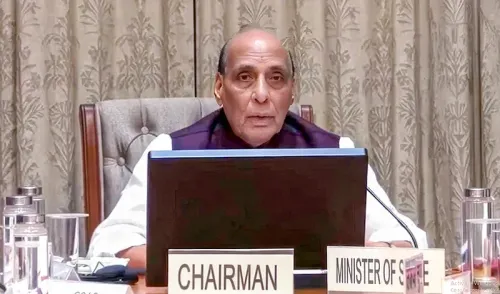
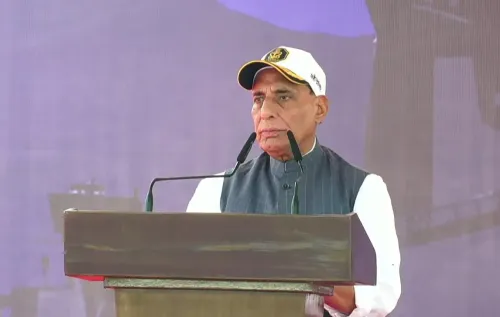
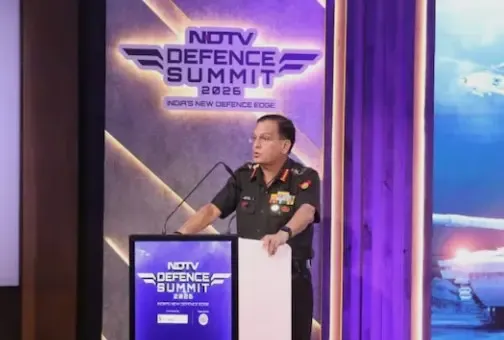
Indian Army chief General Dhiraj Seth on Sunday, 27 September 2026 declared that a land victory remains the only 'tangible factor' of success in any war, even as technological innovations continue to reshape modern defence strategy. Speaking at the NDTV Defence Summit 2026 in New Delhi, the Army chief delivered a pointed assessment of contemporary warfare, self-reliance, and the evolving nature of conflict.
Land as the Irreducible Measure of Victory
General Seth argued that no amount of information warfare or digital firepower can substitute for physical territorial control. 'We see salvo after salvo in today's social media covering warfare across the globe, where information narratives and warfare are being fired to fog the real battle picture, creating uncertainty and confusion... However, I strongly feel, through all this clutter, one reality that does not change: land will always be the one and only tangible and useful factor of success,' he said.
He further emphasised that victory is — and will remain — measured in territorial terms, and that territory 'will be occupied, secured, and defended only by the force.' At the centre of all capability development, he insisted, must be the soldier on the ground: 'Every capability must address one question: how does it help that soldier who puts his boots or tracks on the ground?'
1971 as a Defining Moment — and a Caution
The Army chief invoked a photograph taken on 16 December 1971, depicting Pakistan's surrender at the conclusion of the Bangladesh Liberation War, as an illustration of a rare, unambiguous end to conflict. 'That photo gave us a very defining moment, because that was the precise moment when the war came to an end,' he recalled. However, he warned that such clarity is increasingly rare: 'There is no demarcating moment; there is no termination point which indicates an end to the hostilities.'
Wars With Pause: The New Conflict Paradigm
General Seth cautioned that modern conflict timelines are becoming 'increasingly indefinite,' characterised by intermittent spikes of intense fighting rather than decisive conclusions. He coined a pointed phrase to describe this shift: 'These millennium wars can best be described as wars with pause. Pause, in fact, is becoming a part of military strategy, with the pause representing not the domination of conflict but merely a change in its intensity and manifestation.' He acknowledged that technology is 'certainly shortening the battles, but it is not necessarily shortening the war.'
Atmanirbharta: Self-Reliance as a Strategic Imperative
Underlining the importance of defence self-reliance, General Seth argued that when a crisis becomes prolonged, being atmanirbhar (self-reliant) could mark the difference between victory and defeat. 'Atmanirbharta must be about ensuring that we have the capability to endure without being constrained by what others can or cannot provide,' he said, calling for a hard look at India's indigenous capability pathways.
However, the Army chief also flagged the risk of what he termed 'indigenous obsolescence' — a trap where domestically developed equipment becomes outdated before it can be deployed. 'The challenge is not just to reduce dependencies on others but also to ensure that what we develop indigenously does not become outdated by the time it is dumped,' he cautioned.
This comes amid a significant expansion in India's domestic defence output. According to government data, the value of indigenous defence production rose from ₹46,429 crore in 2014-15 to a record ₹1.78 lakh crore in 2025-26. General Seth's remarks underscore that as the production base grows, the quality, relevance, and speed of indigenisation must keep pace with rapidly evolving global threats.
Point of View
But speed of production means little if the output is already a generation behind adversary capabilities. The ₹1.78 lakh crore figure is a supply-side success story; whether it translates into battlefield-ready, future-proof systems is the harder, largely unasked question. Doctrine and procurement cycles will need to converge faster than they historically have.
NationPress
27 Sept 2026
Frequently Asked Questions
What did Army chief General Dhiraj Seth say at the NDTV Defence Summit 2026?
General Dhiraj Seth declared that land victory is the only tangible and useful factor of success in war, arguing that no technological innovation changes the fundamental reality that territory must be physically occupied and defended. He also introduced the concept of 'wars with pause' to describe modern conflicts that lack clear end-points.
What does General Seth mean by 'wars with pause'?
'Wars with pause' refers to General Seth's characterisation of modern conflicts as increasingly indefinite, with intermittent spikes of intense fighting rather than decisive conclusions. He argued that technology shortens battles but not wars, and that pauses in fighting represent a change in intensity — not the end of hostilities.
Why did General Seth invoke the 1971 Bangladesh Liberation War?
He cited a photograph of Pakistan's surrender on 16 December 1971 as one of the last clear, unambiguous endpoints of a war — a defining moment that marked the precise instant hostilities ceased. He used it to contrast with today's conflicts, which rarely offer such a demarcating termination point.
What is 'indigenous obsolescence' as described by the Army chief?
Indigenous obsolescence, as coined by General Seth, is the risk that domestically developed defence equipment becomes technologically outdated by the time it is ready for deployment. He cautioned that reducing import dependency is not enough — what India builds at home must also remain relevant against evolving global threats.
How much has India's indigenous defence production grown?
According to government data cited at the summit, India's indigenous defence production grew from ₹46,429 crore in 2014-15 to a record ₹1.78 lakh crore in 2025-26 — a near four-fold increase over roughly a decade, reflecting the push toward atmanirbharta in defence manufacturing.