Rajnath Singh: AI will shape future wars, but soldiers and resolve will win them
Synopsis
At the commissioning of INS Mahendragiri, Defence Minister Rajnath Singh delivered a pointed message: AI will fight tomorrow's wars, but it will not win them alone. Invoking Operation Sindoor as proof, he argued India's edge lies in mastering both — and warned that nations seduced by technology at the cost of conventional strength have historically paid a steep price.
Key Takeaways
Defence Minister Rajnath Singh spoke at the commissioning of INS Mahendragiri in Visakhapatnam on 11 July .
Singh asserted that future wars may involve Artificial Intelligence but will be won through national resolve, trained soldiers, and credible military power .
He cited Operation Sindoor as evidence of India's ability to integrate conventional and modern military capabilities.
Singh described warship construction as creating an entire industrial ecosystem, generating employment for lakhs of people .
The government is advancing Maritime India Vision 2030 , backed by the Maritime Development Fund , Shipbuilding Financial Assistance Scheme , and Shipbuilding Development Scheme .
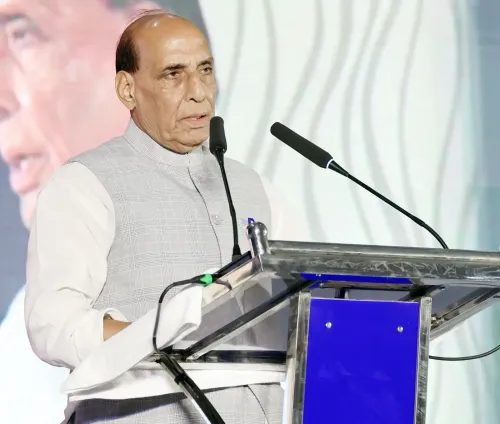
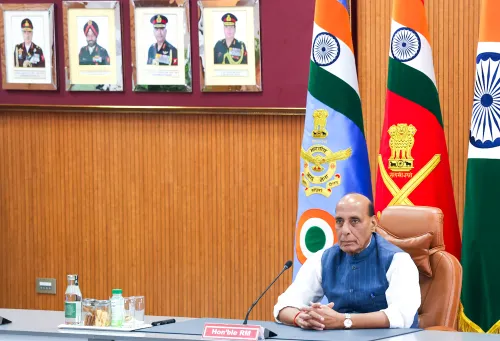
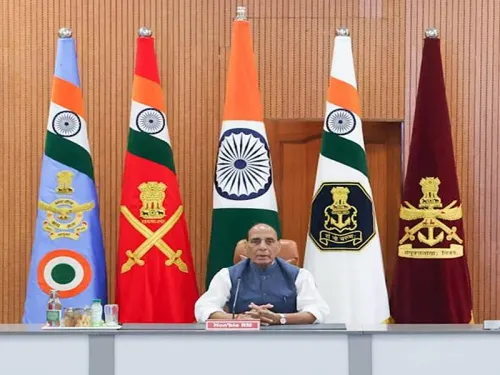
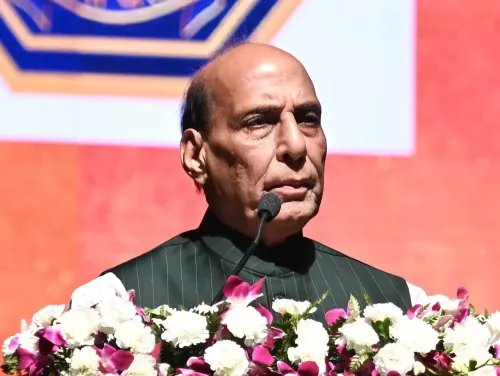
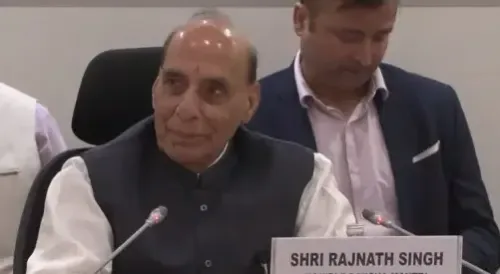
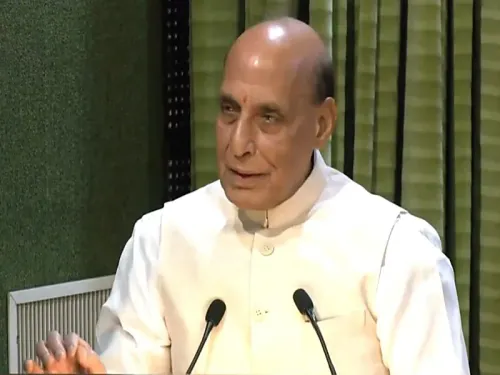
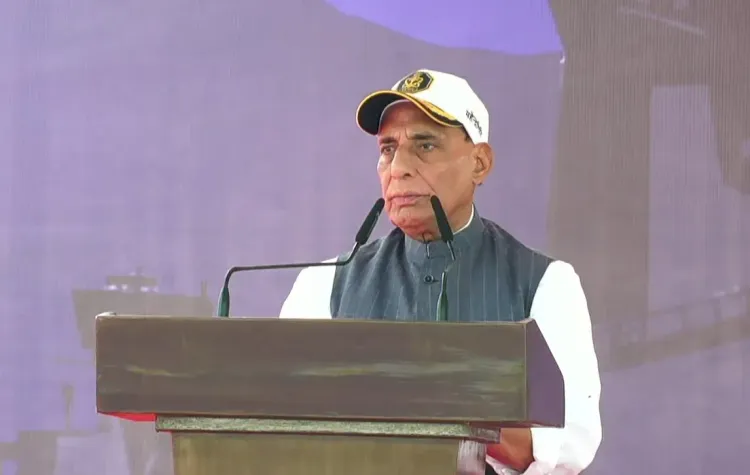
Defence Minister Rajnath Singh on Saturday, 11 July declared that while technologies like Artificial Intelligence are fundamentally reshaping modern warfare, conventional military power remains irreplaceable — and that future conflicts, however technology-driven, will ultimately be decided by national resolve, trained soldiers, and credible military strength. Singh made the remarks at the commissioning ceremony of INS Mahendragiri into the Indian Navy in Visakhapatnam, Andhra Pradesh.
Key Remarks at INS Mahendragiri Commissioning
Addressing the gathering, Singh said, 'While new technologies have certainly transformed the nature of warfare, they have not diminished the importance of conventional warfare capabilities. Strong conventional capabilities remain just as essential today as ever for fulfilling the fundamental principles of warfare. Future wars may be fought with Artificial Intelligence, but they will still be won through national resolve, trained soldiers, and credible military power.'
He underscored that technology and traditional platforms are not in competition but are complementary forces. 'A conventional platform is incomplete without new technology, and a conventional platform is weakened without it,' he said, warning that 'nations which neglected their conventional strength, lured by the appeal of new technology, had to pay a heavy price.'
India's Dual-Track Defence Strategy
Singh articulated India's approach as a deliberate balance between investing in cutting-edge technologies and continuously strengthening conventional capabilities. 'We will invest in future technologies while continuously honing our conventional capabilities. INS Mahendragiri stands as a symbol of this very resolve and commitment,' he said.
The minister pointed to Operation Sindoor as a recent demonstration of this integrated approach. 'During that operation, our armed forces demonstrated that India is fully capable not only of self-defence but also of delivering a decisive response and completely eliminating the enemy when the need arises,' he stated.
Economic Case for Indigenous Shipbuilding
Singh highlighted the broader industrial and economic significance of building warships domestically. 'The construction of a warship is not merely the building of a vessel; it entails the creation of an entire industrial ecosystem,' he said, noting that shipbuilding drives progress across steel, electronics, sensors, propulsion systems, software, precision engineering, and logistics, generating employment for lakhs of people.
'When we build a ship, we not only strengthen our Navy but also infuse new energy into India's economic prowess,' Singh added. He described every new vessel as 'a long-term investment in India's maritime future.'
Maritime India Vision 2030 and Policy Push
Looking ahead, Singh said the government has an ambitious pipeline of naval projects aimed at positioning India as a global hub for shipbuilding and maritime defence innovation. He cited the Maritime Development Fund, the Shipbuilding Financial Assistance Scheme, and the Shipbuilding Development Scheme as key policy instruments underpinning this push.
'Driven by this vision, our government is working rapidly on the Maritime India Vision 2030. We aim to move forward in collaboration with domestic industries, the private sector, MSMEs, startups, innovators, and our global partners,' he said. The commissioning of INS Mahendragiri is seen as a milestone in that broader ambition.
Point of View
Even as the full details of that operation remain officially guarded. The deeper tension Singh is navigating is real — defence budgets are finite, and every rupee allocated to high-tech systems is a rupee not spent on manpower or conventional platforms. Whether India can genuinely excel in both domains simultaneously, rather than trade one off against the other, is the strategic question his speech raises but does not fully answer.
NationPress
10 Oct 2026
Frequently Asked Questions
What did Rajnath Singh say about AI and future wars?
Defence Minister Rajnath Singh said that while Artificial Intelligence is transforming the nature of warfare, future wars will still be won through national resolve, trained soldiers, and credible military power — not technology alone. He made these remarks at the commissioning ceremony of INS Mahendragiri in Visakhapatnam on 11 July.
What is INS Mahendragiri and why was it commissioned?
INS Mahendragiri is a warship newly commissioned into the Indian Navy at Visakhapatnam, Andhra Pradesh. Singh described it as a symbol of India's resolve to maintain a balance between advanced technologies and conventional military capabilities.
How did Rajnath Singh reference Operation Sindoor?
Singh cited Operation Sindoor as a recent demonstration of India's ability to integrate conventional and modern military capabilities effectively. He said the operation showed India is capable of self-defence as well as delivering a decisive response when required.
What is Maritime India Vision 2030?
Maritime India Vision 2030 is a government initiative aimed at positioning India as a global centre for shipbuilding and maritime defence innovation. It is supported by policy instruments including the Maritime Development Fund, the Shipbuilding Financial Assistance Scheme, and the Shipbuilding Development Scheme.
What is India's stated approach to balancing AI and conventional defence?
According to Singh, India's approach is to excel in both advanced technologies and conventional military capabilities simultaneously, treating them as complementary rather than competing priorities. He warned that nations which prioritised new technology at the expense of conventional strength have historically suffered for it.