Tharoor backs Air Quality Emergency call amid India pollution debate
Synopsis
Congress MP Dr. Shashi Tharoor on 11 July 2026 backed the #AirQualityEmergency call, spotlighting India's unresolved air pollution crisis and mounting opposition pressure on the government's NCAP and GRAP enforcement record.
Key Takeaways
Shashi Tharoor publicly endorsed the #AirQualityEmergency hashtag on 11 July 2026 .
India's National Clean Air Programme (NCAP) , launched in 2019 , targeted a 20-30 per cent reduction in PM2.5 and PM10 across 131 non-attainment cities by 2024 .
The Commission for Air Quality Management (CAQM) was constituted under a 2020 Act to coordinate pollution control in Delhi-NCR and adjoining states.
The Graded Response Action Plan (GRAP) , first notified in 2017 and revised in 2022 , provides tiered emergency responses to deteriorating AQI levels.
Independent assessments indicate uneven compliance with air quality targets and limited year-round improvement despite successive central and state interventions.
Next winter's GRAP implementation and potential fresh NCAP funding in the 2027-28 Union Budget are the immediate policy milestones to watch.
Congress MP Dr. Shashi Tharoor on Saturday, 11 July 2026 publicly endorsed a call for declaring an air quality emergency in India, amplifying the hashtag #AirQualityEmergency on social media and signalling growing opposition pressure on the government over its pollution control record.
Context
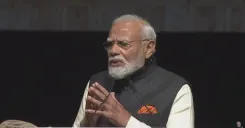
Tharoor's post — a pointed 'Couldn't agree more!' accompanied by two images and the hashtag #AirQualityEmergency — is a direct endorsement of an existing call circulating on the platform. While the original content he was responding to could not be independently verified, his amplification places the air quality debate firmly in the mainstream political conversation. The Thiruvananthapuram MP has a consistent record of using parliamentary and digital platforms to flag environmental and governance concerns.
The #AirQualityEmergency hashtag has become a recurring rallying point for civil society groups, health professionals and opposition politicians who argue that India's urban air crisis demands emergency-level state intervention rather than incremental policy measures.
Policy Backdrop
India's framework for tackling air pollution rests on several pillars. The National Clean Air Programme (NCAP), launched in 2019 by the Ministry of Environment, Forest and Climate Change, set a target of reducing PM2.5 and PM10 concentrations by 20-30 per cent by 2024 across 131 non-attainment cities. Independent assessments have pointed to uneven compliance and limited year-round improvement since the programme's inception.
The Commission for Air Quality Management in National Capital Region and Adjoining Areas (CAQM), constituted under a 2020 Act of Parliament, was designed to bring statutory teeth to coordination among Delhi-NCR and neighbouring states. The Graded Response Action Plan (GRAP), first notified in 2017 and revised in 2022, provides a tiered emergency-response mechanism that kicks in as AQI levels deteriorate. Critics argue enforcement of GRAP stages remains inconsistent.
Stakeholders and Impact
Urban residents across northern India — particularly in the Delhi-NCR belt — bear the sharpest health burden of seasonal and year-round air pollution. State pollution control boards are the primary enforcement arms, though inter-state disputes over stubble burning in Punjab and Haryana have repeatedly complicated coordinated action. Peak pollution episodes, typically recorded between October and February, have been documented for over two decades without a sustained reversal in trend.
Opposition MPs, including Tharoor, have used both parliamentary questions and social media to press for stronger enforcement, dedicated funding and binding inter-state protocols on industrial emissions and agricultural burning. A senior figure with Tharoor's international profile — as a former UN Under-Secretary-General and former Union Minister of State for External Affairs and Human Resource Development — lending explicit support to an 'emergency' framing carries weight beyond a routine political statement.
What's Next
Attention will now turn to the implementation of revised GRAP stages ahead of the next winter season and any fresh funding allocations for the NCAP in the 2027-28 Union Budget. If the #AirQualityEmergency narrative gains further traction in Parliament and on social media, it could sharpen pressure on the government to announce measurable interim targets or a revised NCAP timeline before the next pollution season begins.
Point of View
He raises the rhetorical stakes for the government ahead of another winter pollution season. The post fits a broader opposition pattern of using high-visibility social media moments to demand accountability on NCAP targets that the government has so far not been pressed to formally audit. If the hashtag sustains momentum into the parliamentary session, it could force a debate or a written ministerial response on NCAP compliance data.
NationPress
11 Jul 2026
Frequently Asked Questions
What is the #AirQualityEmergency hashtag about?
The #AirQualityEmergency hashtag is used by civil society groups, health professionals and politicians to demand that India treat its chronic urban air pollution crisis as a public health emergency requiring urgent, coordinated state action rather than incremental measures.
What is India's National Clean Air Programme?
The National Clean Air Programme (NCAP) is a central government scheme launched in 2019 that aims to reduce PM2.5 and PM10 pollution levels by 20-30 per cent by 2024 across 131 non-attainment cities identified as failing to meet national ambient air quality standards.
What is GRAP and how does it work?
The Graded Response Action Plan (GRAP) is a tiered emergency-response framework first notified in 2017 and revised in 2022 . It prescribes progressively stricter restrictions on vehicles, construction, industries and other pollution sources as the Air Quality Index in the Delhi-NCR region worsens through defined threshold stages.
What is the Commission for Air Quality Management?
The Commission for Air Quality Management in National Capital Region and Adjoining Areas (CAQM) is a statutory body set up under a 2020 Act of Parliament to coordinate and enforce air pollution control measures across Delhi, Haryana, Punjab, Rajasthan and Uttar Pradesh .
Why does Shashi Tharoor comment on air quality issues?
Dr. Shashi Tharoor , Congress MP from Thiruvananthapuram and a former UN Under-Secretary-General , regularly engages on national and global policy issues — including environment, health and governance — through Parliament and social media, using his international profile to draw attention to domestic policy gaps.