Is the Government Downplaying the Health Effects of Air Pollution?
Synopsis
As air pollution continues to be a critical health issue in India, the Congress party alleges that the government is downplaying its effects. With alarming statistics from the CREA report, calls for reform and increased funding for clean air initiatives are being made to combat this escalating crisis.
Key Takeaways
The Congress party is raising concerns over the government's handling of air pollution.
A CREA report shows alarming levels of PM2.5 in numerous Indian cities.
Calls for reform and increased funding for clean air initiatives are being made.
Only a fraction of polluted cities are being addressed under current programs.
Legislative changes to air quality standards are necessary for better public health outcomes.
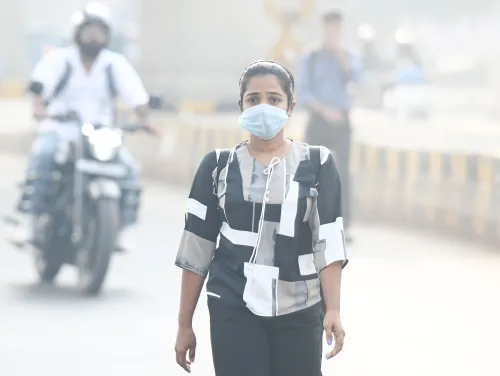
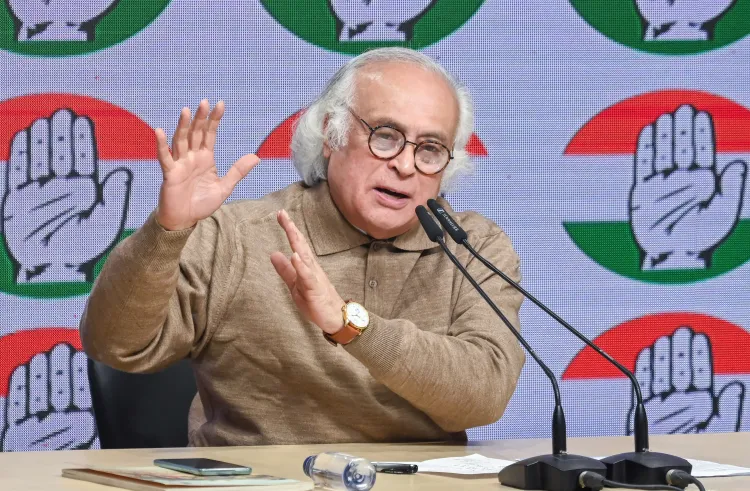
New Delhi, Jan 11 (NationPress) The Congress party on Sunday accused the government of attempting to minimize the health repercussions of air pollution, asserting that it is trying to mask the extent of its "incompetence" and "negligence" regarding this critical issue.
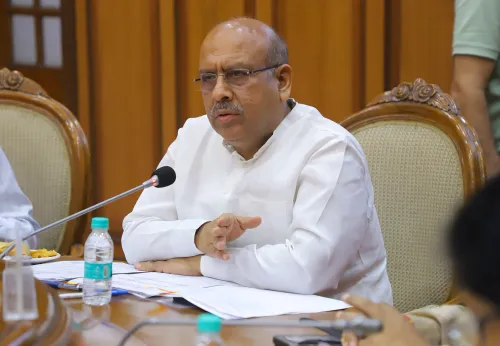
Jairam Ramesh, MP and General Secretary (Communications) of the All India Congress Committee, highlighted the health impacts of air pollution by referencing a recent study conducted by the Centre for Research on Energy and Clean Air (CREA). He urged for reforms to begin by recognizing the public health emergency associated with air pollution.
He further advocated for providing legal support to the National Clean Air Programme (NCAP) and enhancing the leading air quality agency's capacity for enforcement and comprehensive data monitoring across every Indian city, not just those identified as "non-attainment" cities.
The Congress leader insisted that the autonomy of the National Green Tribunal needs to be reinstated, and the unfavorable amendments to environmental laws introduced over the last decade should be reversed.
Ramesh stated, "A new analysis from the Centre for Research on Energy and Clean Air (CREA) has confirmed what has long been India's worst-kept secret – that air quality represents a nationwide structural crisis, and the government's response has been woefully ineffective and insufficient."
He noted, "The government has made two attempts in Parliament – on July 29, 2024, and December 9, 2025 – to downplay the health repercussions of air pollution. The government is not oblivious to the reality; it is merely attempting to obscure its incompetence and negligence."
The CREA study, which utilized satellite data, revealed that nearly 44 percent of Indian cities—1,787 out of 4,041 assessed statutory towns—are grappling with chronic air pollution, where annual PM2.5 levels have consistently surpassed the national standard for five years (2019–2024, excluding 2020).
Ramesh, a former Union Environment Minister, emphasized that the report also underlined the ineffectiveness of the NCAP.
He remarked, "Despite the severity of the issue (1,787 towns), only 130 cities fall under the National Clean Air Programme (NCAP). Among these, 28 cities lack continuous ambient air quality monitoring stations (CAAQMS). Out of 102 cities equipped with monitoring infrastructure, 100 reported PM10 levels at 80 percent or higher. Overall, NCAP currently addresses a mere 4 percent of India’s chronically polluted cities."
Ramesh criticized the NCAP, saying it should be more accurately termed the "Notional Clean Air Programme."
To address these challenges, he suggested, "We must revisit and thoroughly reform both the Air Pollution (Control and Prevention) Act of 1981 and the National Ambient Air Quality Standards (NAAQS) established in November 2009."
He stated, "According to the NAAQS, the allowable concentration of fine particulate matter is 60 µg/m3 for 24 hours, and 40 µg/m3 annually – in contrast to the WHO guidelines of less than 15 µg/m3 for 24 hours and 5 µg/m3 annually."
Ramesh called on the government to significantly increase funding allocated under the NCAP, noting, "The current budget, including NCAP funding and the 15th Finance Commission's grants, amounts to approximately Rs 10,500 crore, covering only 131 cities! Our urban areas require at least 10-20 times more funding – NCAP should be expanded to a Rs 25,000 crore initiative covering the 1,000 most polluted towns in the nation."
He urged that the NCAP adopt PM2.5 level measurements as a performance metric and shift its focus towards key emission sources, including the burning of solid fuels, vehicle emissions, and industrial discharges.
Ramesh reiterated the need for a comprehensive overhaul of both the Air Pollution (Control and Prevention) Act of 1981 and the National Ambient Air Quality Standards (NAAQS) set in November 2009.
Point of View
The Congress party's accusations against the government highlight a significant national concern regarding air quality. Acknowledging the health crisis and advocating for reforms is essential for the well-being of citizens. It’s crucial for the government to address these issues transparently and effectively.
NationPress
16 Sept 2026
Frequently Asked Questions
What is the main accusation made by the Congress party?
The Congress party accuses the government of attempting to downplay the health effects of air pollution, seeking to cover up its incompetence and negligence.
What does the CREA report reveal?
The CREA report indicates that approximately 44% of Indian cities face chronic air pollution, with PM2.5 levels exceeding national standards.
What reforms are being suggested?
Reforms include legal backing for the National Clean Air Programme, restoration of the National Green Tribunal's independence, and increased funding for air quality initiatives.
How many cities are currently covered under the NCAP?
Currently, only 130 cities are included under the National Clean Air Programme, with many lacking adequate air quality monitoring.
What are the recommended changes to air quality standards?
It is suggested to revamp the Air Pollution Control Act and the National Ambient Air Quality Standards to align with WHO guidelines for particulate matter concentration.