Tharoor Questions Data Centre Boom Amid Water, Power Strain
Synopsis
Congress MP Dr. Shashi Tharoor has publicly questioned India's accelerating data-centre construction boom, flagging the sector's heavy water and electricity demands. His remark reignites debate over whether the country's digital infrastructure push adequately accounts for environmental and energy costs.
Key Takeaways
Shashi Tharoor posted on June 22, 2026 , questioning the pace of data-centre construction in India.
His post highlighted two specific concerns: high water consumption and heavy electricity use by data centres.
India's data-centre boom is driven by the Digital India programme launched in 2015 and data-localisation rules.
The Ministry of Electronics and IT granted infrastructure status to data-centre parks via draft policy in 2020 , spurring private investment.
Several Indian states hosting data centres already face periodic power shortfalls and groundwater stress.
Parliamentary scrutiny of environmental clearance norms for data centres is expected to intensify.
Congress MP Dr. Shashi Tharoor on Monday, June 22, 2026, raised pointed questions about the environmental cost of India's rapid data-centre expansion, suggesting the country may need to reconsider the pace at which such facilities are being built given their heavy consumption of water and electricity.
Context
In a terse but pointed post on X, Dr. Tharoor wrote: 'Perhaps we need to slow down on building so many water-guzzling power-burning data centres then?' The remark, framed as a rhetorical question, signals growing unease among legislators about the environmental trade-offs of India's digital infrastructure drive. The Thiruvananthapuram MP has consistently engaged with technology-policy debates, drawing on his background as a former Union Minister of State for External Affairs and former UN Under-Secretary-General.
Policy Backdrop
India's data-centre sector has expanded sharply over the past decade, propelled by the government's Digital India programme — launched in 2015 — and data-localisation mandates that require certain categories of user data to be stored domestically. The Ministry of Electronics and Information Technology issued draft Data Centre Policy guidelines in 2020, granting infrastructure status to data-centre parks and signalling that private investment would be actively courted. Global cloud providers and domestic hyperscalers have since announced large capacity additions across states including Maharashtra, Tamil Nadu, Telangana, and Uttar Pradesh.
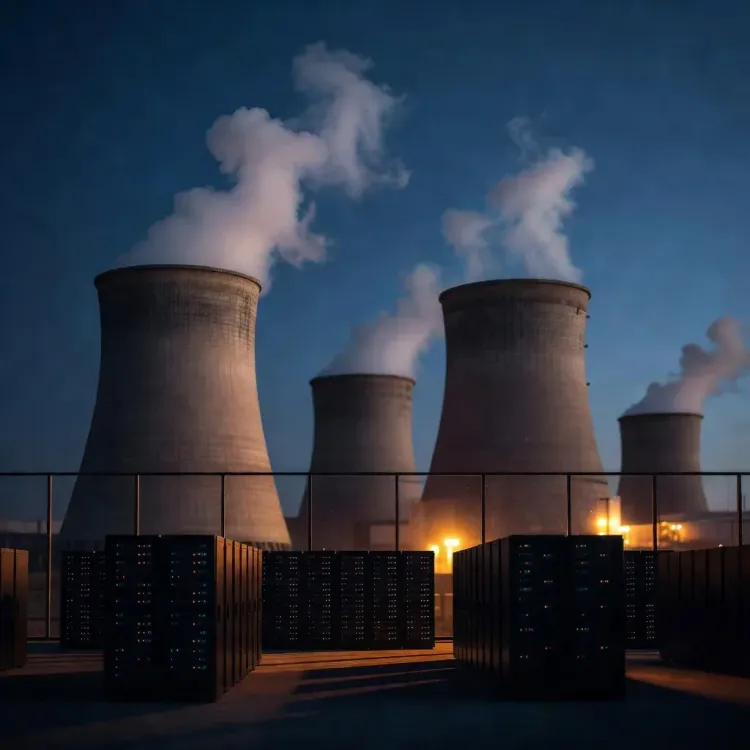
The environmental footprint of these facilities, however, has drawn increasing scrutiny. Large data centres consume significant volumes of water for cooling systems and draw heavily on local power grids, at a time when several Indian states still experience periodic electricity shortfalls and groundwater stress is acute in many regions hosting such facilities.
Stakeholders and Impact
Technology firms — both global hyperscalers and domestic cloud providers — stand to be most directly affected by any policy rethink on data-centre approvals or environmental clearance norms. State power utilities in regions with high data-centre density already face pressure to supply uninterrupted, high-quality power to these energy-intensive campuses, sometimes at subsidised industrial tariffs. Environmental groups have argued that the sector's water withdrawal, particularly in water-stressed districts, warrants stricter regulation and mandatory disclosure of consumption metrics.
For ordinary citizens, the tension is tangible: the same electricity grid that powers homes and farms is increasingly shared with server halls running artificial-intelligence workloads and cloud storage for global corporations. Dr. Tharoor's question implicitly asks whether that trade-off has been adequately debated in public policy forums.
What's Next
Parliamentary committees overseeing technology and environment portfolios are expected to examine data-centre sustainability standards in the coming months. Any revision to environmental clearance norms — such as mandatory water-recycling requirements or renewable-energy procurement obligations for new data-centre parks — would reshape the investment calculus for operators already in the pipeline. Dr. Tharoor's intervention adds a legislative voice to what has so far been a largely industry-led conversation, potentially accelerating calls for a greener, more resource-conscious framework for India's digital infrastructure ambitions.
Point of View
Arriving as India's AI and cloud investment narrative is at its loudest. By framing it as a rhetorical aside rather than a formal demand, he invites public and legislative reflection without committing to a specific policy position — a calibrated move from an MP who sits on the opposition benches but carries cross-party credibility on technology matters. The remark fits a broader pattern of Indian legislators beginning to push back on the assumption that digital infrastructure growth is inherently green or socially neutral. If parliamentary committees take up the thread, it could shift the terms of the next round of data-centre policy from pure capacity targets toward mandatory sustainability benchmarks.
NationPress
20 Sept 2026
Frequently Asked Questions
Why is Shashi Tharoor concerned about data centres in India?
Dr. Tharoor flagged that data centres consume large volumes of water for cooling and draw heavily on electricity grids, raising questions about whether India's rapid expansion of such facilities is sustainable given existing power shortfalls and groundwater stress.
How much water do data centres use in India?
Specific consumption figures for Indian data centres are not uniformly disclosed, but large hyperscale facilities globally can use millions of litres of water daily for cooling — a concern that environmental groups in India have raised as the sector expands into water-stressed regions.
What is India's data centre policy?
The Ministry of Electronics and Information Technology issued draft Data Centre Policy guidelines in 2020, granting infrastructure status to data-centre parks to attract private investment and support India's data-localisation requirements under the Digital India programme.
Which states in India have the most data centres?
Maharashtra, Tamil Nadu, Telangana, and Uttar Pradesh are among the leading states for data-centre capacity, attracting investment from global cloud providers and domestic operators seeking proximity to major enterprise and consumer markets.
Can India's power grid support growing data centre demand?
India's grid has expanded significantly, but several states still experience periodic electricity shortfalls. Data centres, which require uninterrupted high-quality power, add pressure to local utilities, prompting debate about whether subsidised industrial tariffs for such facilities are justified.