Tharoor Speaks to Indo-Thai News Service on Soft Power
Synopsis
Congress MP Dr. Shashi Tharoor spoke to the newly launched Indo-Thai News Service about India's soft power, the promise of Indo-Thai bilateral relations, and the strategic role of the Indian diaspora — framing media and people-to-people ties as essential pillars of India's Act East outreach.
Key Takeaways
Shashi Tharoor gave a wide-ranging interview to the Indo-Thai News Service on 31 May 2026 .
Topics covered included India's soft power , the potential of Indo-Thai relations , and the Indian diaspora's role.
India's Act East Policy , launched in 2014 , frames deeper engagement with ASEAN nations including Thailand .
India and Thailand have had a Comprehensive Economic Cooperation Agreement since 2003 .
The Indo-Thai News Service is described as a 'fledgling' platform, gaining early prominence through Tharoor's participation.
Diaspora networks and bilateral media are seen as soft-power force multipliers complementing formal diplomatic frameworks.
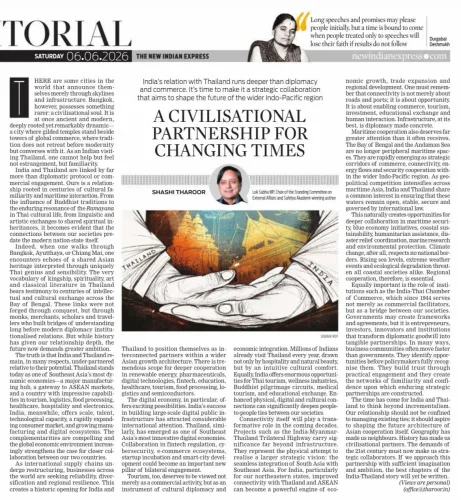
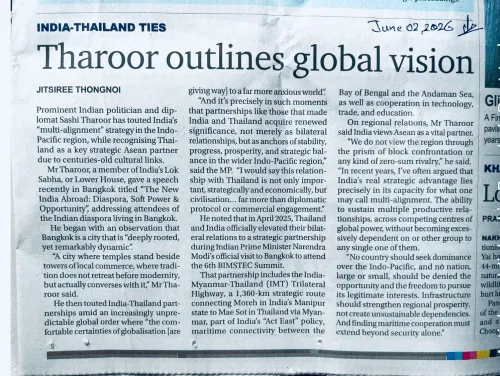
Congress MP Dr. Shashi Tharoor gave a wide-ranging interview to the fledgling Indo-Thai News Service on Saturday, 31 May 2026, covering India's soft power, the potential for deeper Indo-Thai relations, and the role of the Indian diaspora in strengthening bilateral ties.
Context
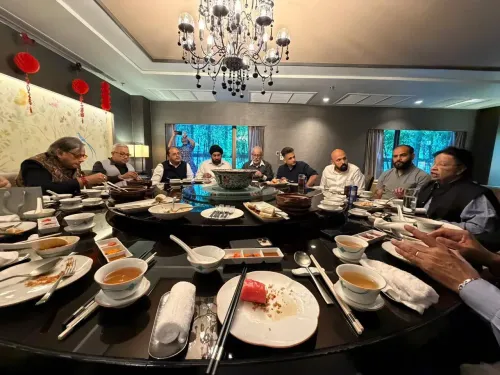
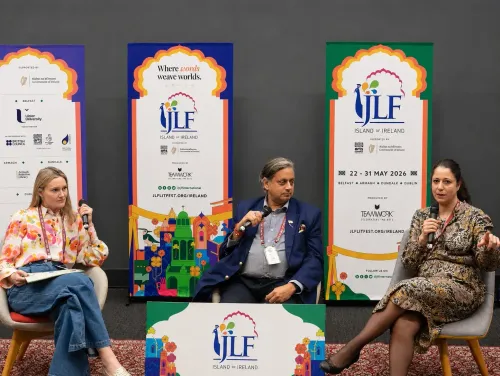
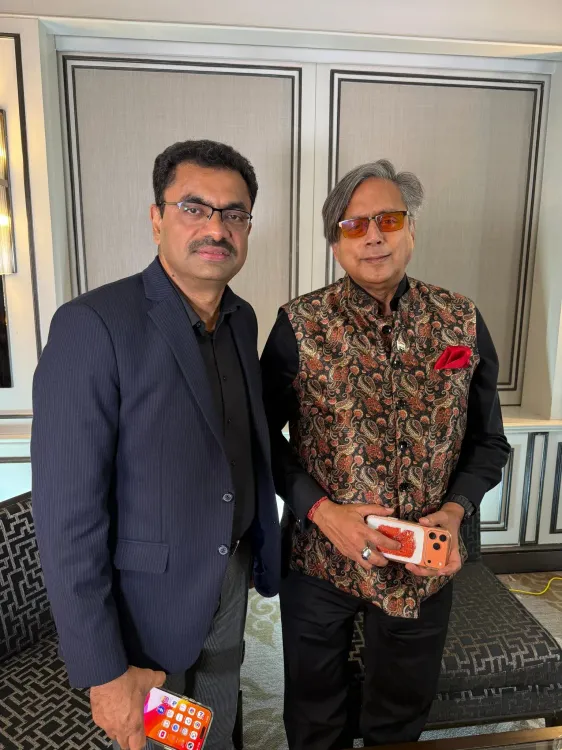
Dr. Tharoor, a Congress MP from Thiruvananthapuram and former UN Under-Secretary-General, has long been one of India's most prominent voices on foreign policy and cultural diplomacy. His engagement with a nascent bilateral media platform signals the growing appetite for people-to-people communication channels between India and Thailand. The interview, conducted the morning after an unspecified engagement, was accompanied by photographs shared on his social media.
The Indo-Thai News Service, described as 'fledgling', represents the kind of media and diaspora-driven initiative that analysts see as a soft-power force multiplier alongside formal diplomatic frameworks. Dr. Tharoor's participation lends the platform early visibility and credibility.
Policy Backdrop
India launched its Act East Policy in 2014, deepening strategic, economic and cultural engagement with ASEAN nations, with Thailand occupying a central position given the two countries' shared Buddhist heritage and longstanding trade ties. The two countries had earlier signed a Comprehensive Economic Cooperation Agreement in 2003, laying the groundwork for expanded bilateral commerce and investment.
Soft-power instruments — cultural exports, Buddhist heritage diplomacy and diaspora networks — have consistently complemented these formal frameworks. Media platforms that bridge the two countries fit squarely within this broader Indo-Pacific engagement strategy, amplifying people-to-people contact beyond government-to-government channels.
Stakeholders and Impact
The Indian diaspora in Thailand stands to benefit most directly from elevated bilateral attention, gaining greater visibility and a dedicated media voice. Indo-Thai trade bodies and cultural organisations are also stakeholders, as increased media coverage can catalyse business and tourism exchanges between the two nations.
For a platform like the Indo-Thai News Service, an interview with a figure of Dr. Tharoor's stature — a published author on Indian foreign policy, a former senior UN official and a sitting parliamentarian — provides an early editorial benchmark. His fluency on soft power and diaspora issues makes him a natural interlocutor for such an initiative.
What's Next
The next round of the India-Thailand Joint Commission and forthcoming cultural-exchange initiatives will be closely watched to see whether media and diaspora linkages receive formal institutional support. Platforms such as the Indo-Thai News Service could serve as informal bridges ahead of any such official engagement.
As India continues to project soft power across Southeast Asia, the role of diaspora communities and bilateral media in shaping public narratives is likely to grow. Dr. Tharoor's interview is a small but telling indicator of how parliamentarians and public intellectuals are engaging with that effort at the grassroots level.
Point of View
It needs precisely these kinds of informal amplifiers. The interview is a small data point, but it reflects a deliberate effort by Indian political figures to cultivate Southeast Asian public opinion ahead of what could be a more institutionalised phase of India-Thailand engagement.
NationPress
14 Oct 2026
Frequently Asked Questions
What did Shashi Tharoor say in his Indo-Thai News Service interview?
Dr. Tharoor discussed India's soft power, the potential for stronger Indo-Thai bilateral relations, and the role of the Indian diaspora — though specific quotes from the interview have not been publicly released beyond his social media post.
What is India's Act East Policy and how does it relate to Thailand?
India's Act East Policy, launched in 2014, aims to deepen strategic, economic and cultural ties with ASEAN nations. Thailand is a key partner given shared Buddhist heritage and a Comprehensive Economic Cooperation Agreement signed in 2003.
Who is Shashi Tharoor?
Dr. Shashi Tharoor is the Congress MP from Thiruvananthapuram, a former Union Minister of State for External Affairs and Human Resource Development, and a former UN Under-Secretary-General. He is widely regarded as a leading voice on Indian foreign policy.
What is the Indo-Thai News Service?
The Indo-Thai News Service is a fledgling bilateral media platform focused on coverage bridging India and Thailand. Dr. Tharoor's interview is among its early high-profile engagements.
Why is the Indian diaspora important for India-Thailand relations?
The Indian diaspora in Thailand acts as a cultural and economic bridge, fostering people-to-people ties, supporting bilateral trade, and amplifying India's soft-power presence — complementing formal diplomatic and trade frameworks.