Tharoor's India-Thai Chamber Speech Gets Bangkok Coverage
Synopsis
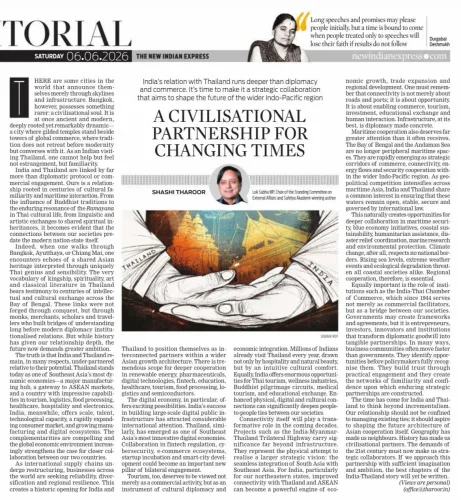
Congress MP Dr. Shashi Tharoor highlighted on June 2, 2026 that a prominent Bangkok-based English daily covered his address at the India-Thai Chamber of Commerce event, spotlighting India-Thailand bilateral commerce and the Act East Policy's role in deepening ASEAN economic ties.
Key Takeaways
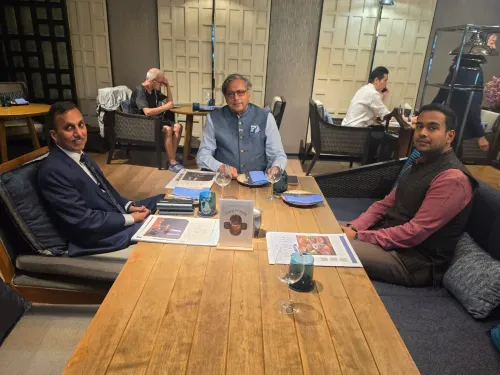
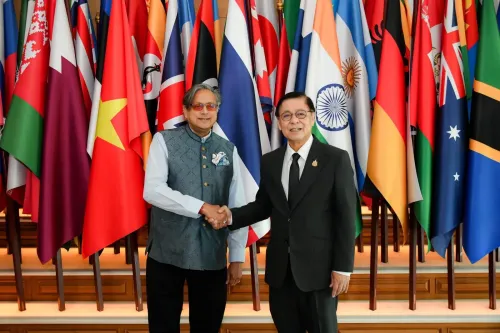
Shashi Tharoor , Congress MP from Thiruvananthapuram , addressed the India-Thai Chamber of Commerce event in the week preceding June 2, 2026 .
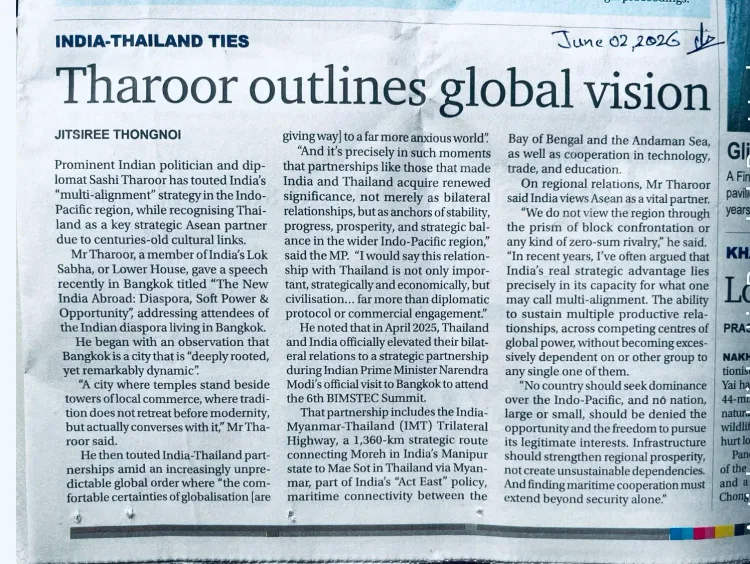
A major Bangkok -based English-language daily published coverage of his speech, as noted by Tharoor on X .
The India-Thai Chamber of Commerce is a bilateral body promoting trade, investment, and economic cooperation between India and Thailand .
India and Thailand signed a Framework Agreement on Comprehensive Economic Cooperation in 2003 , with a bilateral FTA as a long-term goal.
India's Act East Policy (launched 2014 ) continues to drive commercial diplomacy with ASEAN nations, including through chamber-of-commerce engagements.
Key sectors in India-Thailand commerce include gems, textiles, pharmaceuticals, services, tourism, and connectivity.
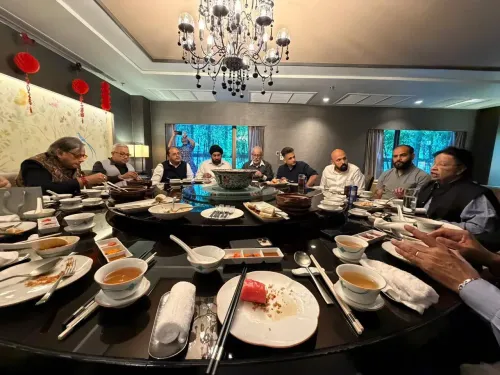
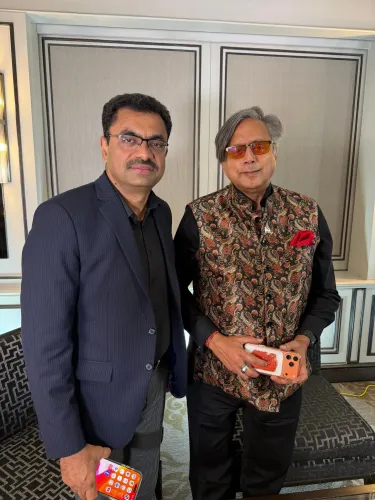
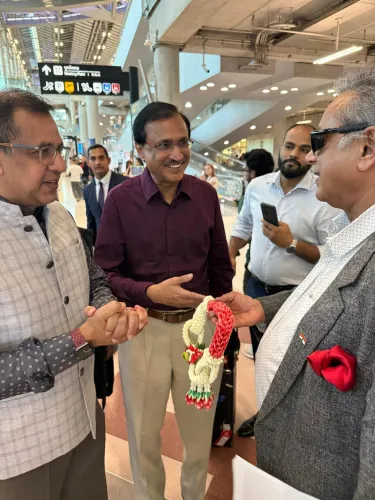
Congress MP Dr. Shashi Tharoor on Tuesday, June 2, 2026, shared that a major Thailand-based English-language daily had published coverage of his address at the India-Thai Chamber of Commerce event held the previous week, drawing attention to the bilateral trade and commerce dialogue he participated in.
Context
Tharoor, the Congress MP from Thiruvananthapuram and a former UN Under-Secretary-General, has long been an active voice on India's foreign policy and economic diplomacy. His participation in the India-Thai Chamber of Commerce event placed him at the intersection of parliamentary outreach and bilateral commercial engagement, a role he has frequently assumed given his international background.
The India-Thai Chamber of Commerce is a bilateral business body that promotes trade, investment, and economic links between India and Thailand. Such chambers serve as key non-governmental platforms where policymakers, legislators, and business leaders exchange views on expanding commercial ties.
Policy Backdrop
India and Thailand have a longstanding economic relationship anchored by the Framework Agreement on Comprehensive Economic Cooperation, signed in 2003, which was intended to pave the way for a bilateral free trade agreement. The two countries also operate within the broader ASEAN-India Free Trade Agreement framework, which governs goods trade across the region.
India's Act East Policy, launched in 2014, gave fresh impetus to deepening economic, strategic, and cultural engagement with ASEAN member states, including Thailand. Commercial diplomacy through chambers of commerce events has been a consistent feature of this outreach, covering sectors such as gems, textiles, pharmaceuticals, services, tourism, and connectivity.
Stakeholders and Impact
The primary stakeholders in India-Thailand commerce include Indian businesses operating in Thailand and Thai investors with interests in India. Events convened by the India-Thai Chamber of Commerce provide a structured forum for these communities to engage with Indian legislators and officials on regulatory, tariff, and market-access concerns.
Coverage of Tharoor's speech in a prominent Bangkok-based English-language publication signals that the address resonated beyond the immediate audience, potentially amplifying the diplomatic and commercial messaging to a wider regional readership across Southeast Asia.
What's Next
Attention will now turn to the next round of India-Thailand trade negotiations and any forthcoming review of the ASEAN-India FTA, where the themes raised at such chamber events often find their way into formal bilateral discussions. Parliamentary or ministerial follow-up on the economic partnership is also a possibility, particularly if the chamber engagement produces specific recommendations or joint statements.
As India continues to position itself as a preferred economic partner for ASEAN nations, the visibility generated by legislator-level participation in bilateral commerce forums — and the media attention it attracts across the region — is likely to remain a feature of India's commercial diplomacy playbook.
Point of View
Lending parliamentary credibility to what might otherwise be viewed as purely industry-driven events. For India's trade negotiators, such public visibility can build soft pressure toward advancing stalled FTA discussions with Thailand. The regional media pickup also reflects growing Southeast Asian interest in India's economic trajectory and its ASEAN outreach.
NationPress
16 Oct 2026
Frequently Asked Questions
What did Shashi Tharoor speak about at the India-Thai Chamber of Commerce event?
The exact content of Dr. Shashi Tharoor's speech at the India-Thai Chamber of Commerce event has not been officially disclosed, but the forum typically focuses on bilateral trade, investment opportunities, and economic cooperation between India and Thailand.
What is the India-Thai Chamber of Commerce?
The India-Thai Chamber of Commerce is a bilateral business body that promotes trade, investment, and economic links between India and Thailand, serving as a platform for legislators, officials, and business leaders to engage on commercial issues.
What is India's Act East Policy and how does it relate to Thailand?
India's Act East Policy, launched in 2014, aims to deepen economic, strategic, and cultural engagement with ASEAN countries including Thailand, and has driven a series of chamber-of-commerce events and high-level visits to expand bilateral commerce.
What is the current status of the India-Thailand free trade agreement?
India and Thailand signed a Framework Agreement on Comprehensive Economic Cooperation in 2003 to pave the way for a bilateral FTA, but a comprehensive agreement remains under negotiation; both countries also trade under the broader ASEAN-India FTA framework.
Why is Shashi Tharoor involved in India-Thailand commerce diplomacy?
As Congress MP from Thiruvananthapuram and a former UN Under-Secretary-General, Dr. Tharoor has an extensive background in international affairs and frequently participates in foreign policy and bilateral commerce forums as part of parliamentary outreach.