Tharoor Meets India's Ambassador-designate to Thailand Over Tea
Synopsis
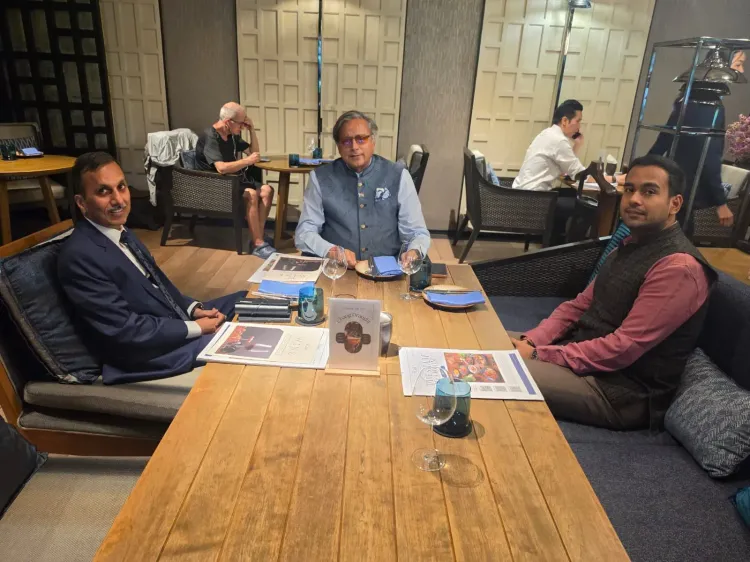
Congress MP Dr. Shashi Tharoor has revealed that India's Ambassador-designate to Thailand, Puneet Agrawal, could not join his official meetings because he is yet to present his credentials — a Vienna Convention requirement. The two met informally over tea, with Tharoor noting the envoy's familiarity with the bilateral landscape.
Key Takeaways
Shashi Tharoor visited Thailand and met India's Ambassador-designate Puneet Agrawal informally over tea on May 30, 2026 .
Agrawal could not attend Tharoor's official meetings or public events because he has not yet presented his credentials to the Thai government.
Under the Vienna Convention on Diplomatic Relations , presenting credentials to the host head of state is a formal prerequisite for an envoy to undertake official functions.
India and Thailand have maintained diplomatic ties since 1947 , with engagement deepened under the Act East Policy launched in 1991 and upgraded in 2014 .
Tharoor's informal exchange with the envoy reflects a wider practice of Indian parliamentarians sharing diplomatic insights with serving mission chiefs.
The credential presentation ceremony for Puneet Agrawal remains the key next step before bilateral official engagements can formally proceed.
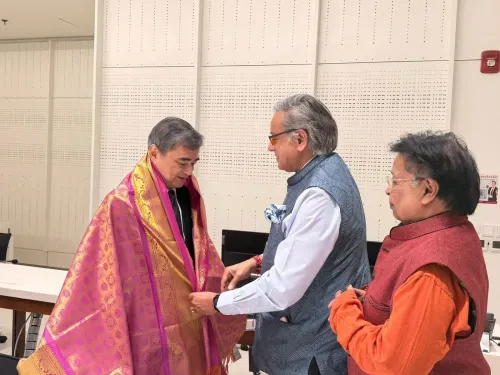
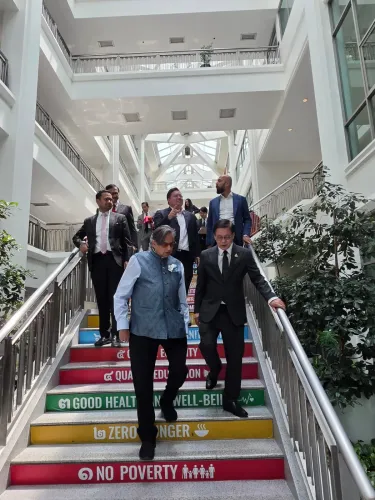
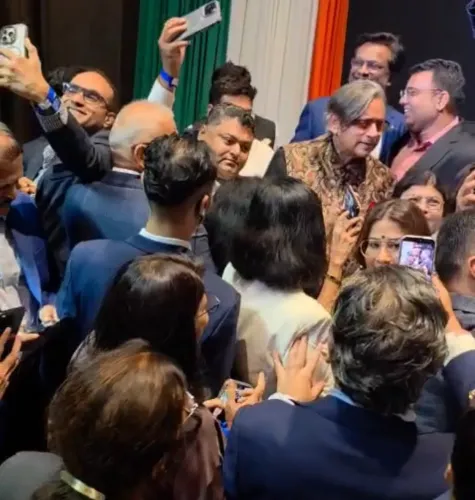
Congress MP Dr. Shashi Tharoor on Saturday, May 30, 2026, revealed that India's Ambassador-designate to Thailand, Puneet Agrawal, was unable to participate in any of his official meetings or public events during his visit to Thailand — because Agrawal has yet to formally present his credentials to the Thai government.
Context
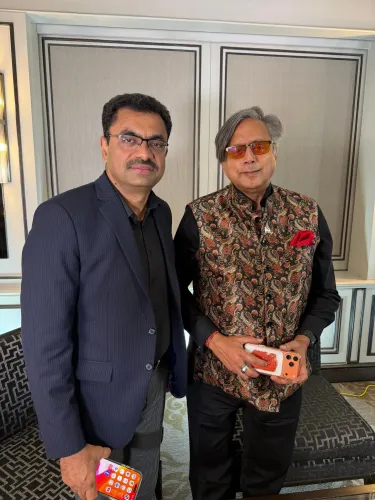
Tharoor disclosed the detail in a post on X, noting that despite the protocol constraint, the two did manage to meet informally. 'We did catch up over a cup of tea and exchange notes and insights,' he wrote, adding that the envoy 'knows the' — a reference that appeared to trail off, likely pointing to Tharoor's familiarity with Agrawal's grasp of the bilateral landscape.
Under the Vienna Convention on Diplomatic Relations, an ambassador-designate cannot formally represent their government or participate in official state functions until credentials — a letter signed by the sending head of state — are formally accepted by the host country's head of state. This is standard protocol observed by New Delhi across all its diplomatic missions.
Policy Backdrop
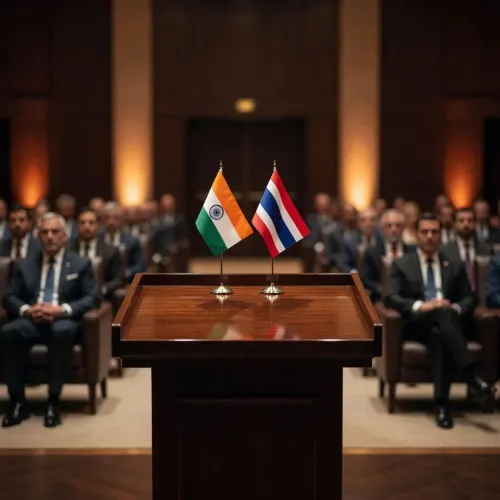
India and Thailand have maintained formal diplomatic ties since 1947, and the relationship has deepened considerably under India's Act East Policy, first articulated as the Look East Policy in 1991 and upgraded in 2014. Thailand is a key ASEAN partner for India, with bilateral cooperation spanning trade, connectivity, defence, and people-to-people ties.
India routinely rotates ambassadors across ASEAN capitals as part of steady diplomatic outreach. The appointment and eventual credential presentation of Puneet Agrawal as the new envoy to Bangkok fits within this broader pattern of institutional continuity in India's Southeast Asia engagement.
Stakeholders and Impact
For the diplomatic community, the episode underscores the practical constraints that credential protocols impose even on seasoned Indian Foreign Service officers. Until Agrawal formally presents his credentials, his ability to engage in government-to-government functions — attending official bilateral meetings, signing documents, or representing India at state events — remains restricted.
Tharoor, a former UN Under-Secretary-General and former Union Minister with deep familiarity with multilateral diplomacy, represents a category of parliamentary figures whose overseas engagements complement but remain formally distinct from government-to-government diplomacy. His informal exchange with Agrawal reflects a well-established practice of Indian MPs sharing on-ground insights with serving diplomats.
What's Next
The immediate milestone to watch is Puneet Agrawal's credential presentation ceremony at the Thai Royal Court, after which he will be empowered to carry out the full range of ambassadorial functions. Once credentials are presented, bilateral trade and security consultations — areas of growing importance under the Act East framework — are expected to resume their regular cadence. Tharoor's informal briefing of the envoy may well inform early priorities for the new mission chief as he settles into his posting in Bangkok.
Point of View
However casual in tone, implicitly highlights a continuity risk in diplomatic postings: until credentials are presented, the host capital effectively has no functioning Indian envoy for official purposes. For India's Act East ambitions, where ASEAN relationships require continuous high-level attention, delays in credential presentation — however routine — carry quiet strategic costs. The informal tea meeting also illustrates how parliamentary diplomacy increasingly functions as a soft bridge, keeping bilateral channels warm when formal mechanisms are temporarily constrained.
NationPress
14 Oct 2026
Frequently Asked Questions
Why could India's Ambassador to Thailand not attend Tharoor's official meetings?
India's Ambassador-designate to Thailand, Puneet Agrawal, had not yet presented his credentials to the Thai government, which under the Vienna Convention is a mandatory step before an envoy can participate in official functions or represent India at state events.
What is credential presentation and why does it matter for ambassadors?
Credential presentation is a formal ceremony in which a newly appointed ambassador hands a letter of credence — signed by their head of state — to the host country's head of state. Until this ceremony takes place, the envoy cannot officially represent their government or attend bilateral meetings.
Who is Puneet Agrawal and what is his role?
Puneet Agrawal is an Indian Foreign Service officer appointed as India's Ambassador-designate to Thailand. He has been posted to Bangkok but is yet to complete the formal credential presentation that would allow him to begin full ambassadorial duties.
What is India's Act East Policy and how does Thailand fit in?
India's Act East Policy, upgraded from the Look East Policy in 2014, aims to deepen economic, strategic, and cultural ties with Southeast and East Asian nations. Thailand, as a founding ASEAN member and a close neighbour in the Bay of Bengal region, is a central partner in this framework.
What was Shashi Tharoor doing in Thailand?
Tharoor conducted official meetings and public events in Thailand, though the specific nature of his engagements has not been fully detailed in the available information. He is a Congress MP from Thiruvananthapuram with a long background in international diplomacy.