Tharoor Meets Ex-Thailand PM Abhisit at Parliament
Synopsis
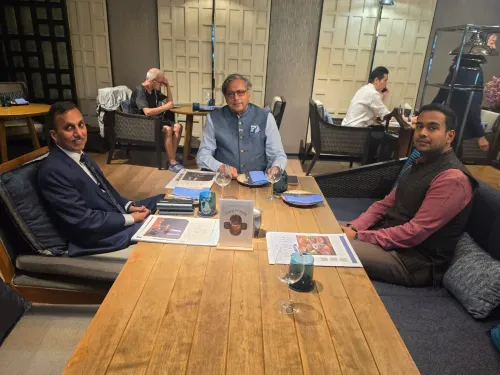
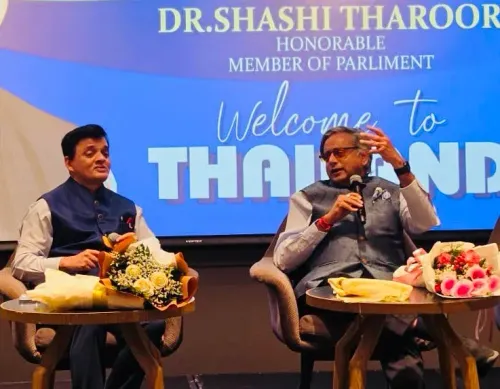
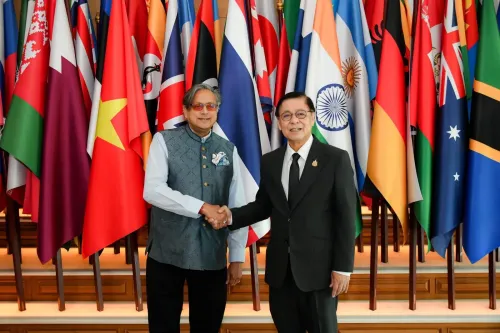
Congress MP Dr. Shashi Tharoor hosted former Thai Prime Minister Abhisit Vejjajiva at Parliament on 30 May 2026 for wide-ranging talks, highlighting India's parliamentary-level diplomacy with ASEAN political figures amid Abhisit's return to active politics after a decade-long absence.
Key Takeaways
Shashi Tharoor met former Thai PM Abhisit Vejjajiva at Parliament of India on 30 May 2026 .
Abhisit served as Thailand's Prime Minister from 2008 to 2011 and leads the Democrat Party , founded in 1946 .
Abhisit returned to active politics approximately six months ago after more than a decade of self-imposed political exile.
The meeting reflects India's tradition of sustaining parliamentary-level diplomacy with ASEAN nations independent of official government channels.
Both India and Thailand are members of overlapping regional frameworks including ASEAN and BIMSTEC .
Tharoor's foreign-policy background as a former UN Under-Secretary-General and Union Minister adds institutional weight to such informal engagements.
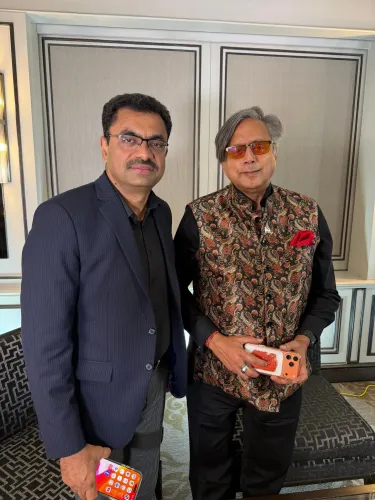
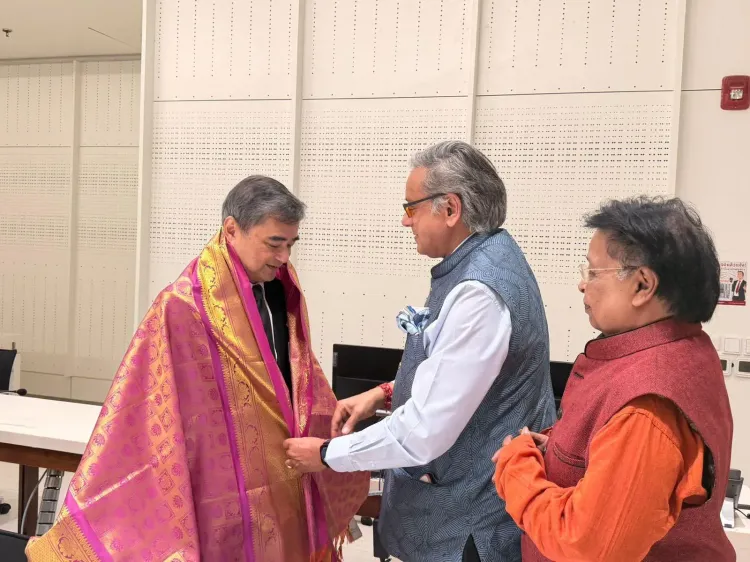
Congress MP Dr. Shashi Tharoor met former Prime Minister of Thailand Abhisit Vejjajiva at the Parliament of India on Saturday, 30 May 2026, for what Tharoor described as a 'wide ranging discussion.' The meeting underscores the tradition of Indian legislators maintaining informal diplomatic contact with political figures from ASEAN nations independent of official government channels.
Context
Abhisit Vejjajiva served as Prime Minister of Thailand from 2008 to 2011 as the leader of the Democrat Party, Thailand's oldest political party founded in 1946. His tenure came during a period of significant political turbulence in Bangkok following the 2006 coup. After leaving office, Abhisit stepped back from frontline politics for more than a decade before returning to active political life.
Tharoor noted in his post that Abhisit had gone into a 'self-imposed political exile' after losing office, returning approximately six months ago to work on reviving his party. The Democrat Party is historically associated with conservative and royalist positions and is one of the most institutionally significant parties in Thai political history.
Policy Backdrop
India and Thailand share longstanding ties rooted in trade, cultural exchange, Buddhist heritage links, and regional security cooperation. Both countries are part of overlapping multilateral frameworks including ASEAN and BIMSTEC, which serve as platforms for coordinating regional connectivity and economic integration.
Parliamentary-level exchanges of this kind allow Indian legislators to sustain bilateral relationships that complement formal government-to-government diplomacy. Dr. Tharoor, a former UN Under-Secretary-General and former Union Minister of State for External Affairs, brings considerable foreign-policy experience to such engagements. The Indian National Congress has a tradition of maintaining informal diplomatic outreach alongside official channels.
Stakeholders and Impact
For Thailand, Abhisit's re-engagement with international political networks signals the Democrat Party's intent to rebuild its profile ahead of future electoral cycles. Meetings with respected figures from allied democracies lend credibility to that effort. For India, the interaction reinforces New Delhi's broad-based engagement with political actors across the Thai spectrum, not only with whichever party holds government at a given moment.
Indian businesses and diaspora communities with interests in Thailand — particularly in sectors such as tourism, pharmaceuticals, and digital services — benefit from stable and multi-layered bilateral relationships that persist across changes in government in either country.
What's Next
Observers will watch for any follow-up statements or structured dialogue emerging from this meeting, particularly as the regional calendar approaches upcoming ASEAN and BIMSTEC summits where India-Thailand coordination carries practical weight. Developments within the Democrat Party under Abhisit's renewed leadership will also determine how consequential this parliamentary-level contact proves over time. The meeting adds a quiet but meaningful data point to the broader arc of India-Southeast Asia parliamentary diplomacy.
Point of View
The symbolism of engaging with a senior Indian legislator of Tharoor's stature carries a signal of international re-legitimisation as he attempts to rebuild the Democrat Party. For India, such contacts ensure that relationships with key ASEAN partners do not hinge entirely on whichever party controls government in Bangkok at any given moment. The timing, ahead of potential ASEAN and BIMSTEC engagements, suggests this is less ceremonial and more strategically calibrated than it might appear.
NationPress
14 Oct 2026
Frequently Asked Questions
Who is Abhisit Vejjajiva and why is he visiting India?
Abhisit Vejjajiva is the former Prime Minister of Thailand who led the country from 2008 to 2011 as head of the Democrat Party. He visited Parliament of India and met Congress MP Dr. Shashi Tharoor for bilateral discussions on 30 May 2026, as part of his re-engagement with international political networks after returning to active politics.
What did Shashi Tharoor and Abhisit Vejjajiva discuss?
Dr. Tharoor described it as a 'wide ranging discussion,' though no specific agenda items were publicly detailed. Given both leaders' backgrounds, topics likely spanned India-Thailand relations, regional cooperation, and political developments in their respective countries.
What is Thailand's Democrat Party?
The Democrat Party is Thailand's oldest political party, founded in 1946, and is historically associated with conservative and royalist positions. Abhisit Vejjajiva leads the party and returned to active politics approximately six months before this meeting to help revive it.
Why does India hold parliamentary-level meetings with foreign political figures?
India uses parliamentary exchanges to maintain bilateral relationships with ASEAN and other nations independent of formal government-to-government diplomacy. These meetings help sustain ties across changes in government and allow Indian legislators with foreign-policy expertise, like Dr. Tharoor, to contribute to informal diplomacy.
What is the significance of India-Thailand relations?
India and Thailand share strong ties in trade, tourism, cultural exchange, and regional security. Both are members of ASEAN and BIMSTEC frameworks, making sustained bilateral engagement important for regional connectivity and economic integration initiatives.