Tharoor Meets Thai FM Sihasak on Trade, Regional Ties
Synopsis
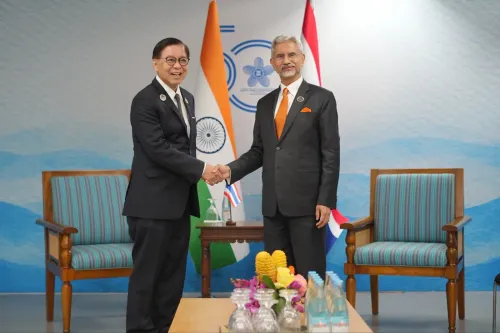
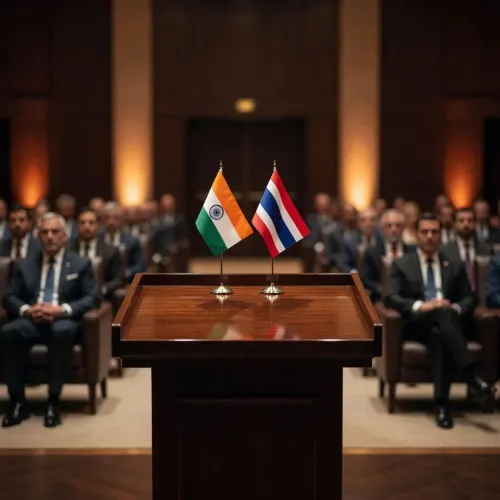
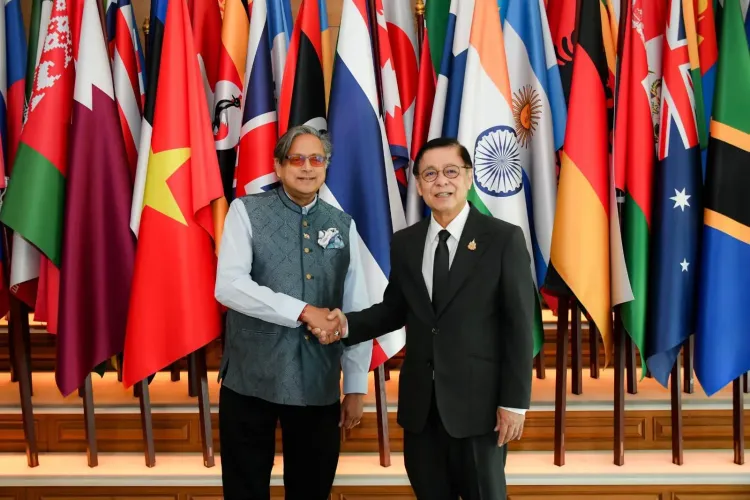
Congress MP Dr. Shashi Tharoor met Thai Foreign Minister and Deputy PM Sihasak Phuangketkeow at the latter's request on Friday, covering trade prospects, regional developments, and the full spectrum of India-Thailand bilateral ties within the Act East Policy framework.
Key Takeaways
Shashi Tharoor held an hour-long meeting with Thai FM and Deputy PM Sihasak Phuangketkeow on Friday, May 29, 2026 .
The meeting was convened at the Thai minister's request, signalling Bangkok's proactive interest in India ties.
Discussions covered the regional situation, increased trade prospects, and broader bilateral cooperation.
India and Thailand have maintained diplomatic relations since 1947 and are linked by the ASEAN-India FTA (in force since 2010 ) and a bilateral FTA framework signed in 2003 .
The engagement fits within India's Act East Policy and BIMSTEC frameworks for deepening Southeast Asian partnerships.
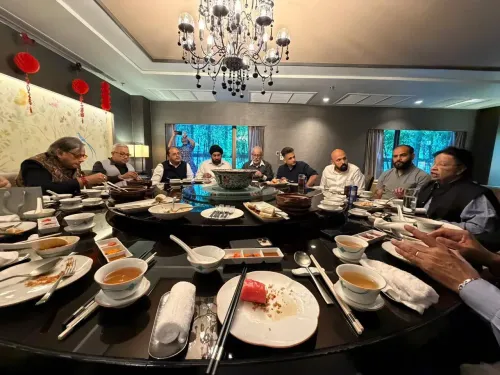
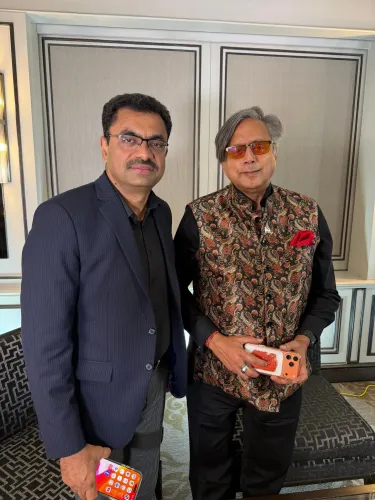
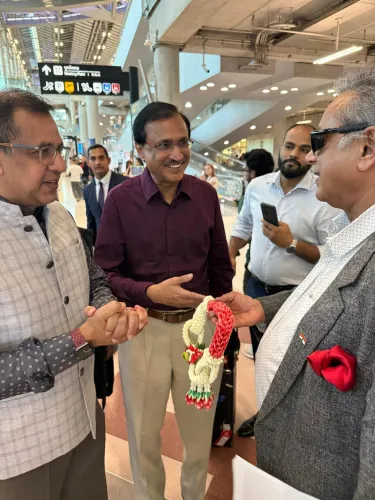
Congress MP Dr. Shashi Tharoor held an hour-long meeting with Thai Foreign Minister and Deputy Prime Minister Sihasak Phuangketkeow on Friday, May 29, 2026, covering a wide range of bilateral and regional issues. The meeting, held at the Thai minister's request, addressed trade prospects, regional developments, and the broader scope of India-Thailand cooperation.
Context
Tharoor, whose post noted the meeting kicked off 'a busy Friday,' described the discussions as spanning 'a vast range of aspects of our relationship, including the situation in the region, the prospects for increased trade and cooperation.' The Thai side's initiative in requesting the meeting signals Bangkok's active interest in deepening ties with Indian political leadership. Tharoor's background as a former UN Under-Secretary-General and former Union Minister of State for External Affairs lends diplomatic weight to such engagements beyond his current parliamentary role.
Policy Backdrop
India and Thailand have maintained diplomatic relations since 1947, with economic engagement formalised through a bilateral Framework Agreement for an India-Thailand Free Trade Area signed in 2003. The broader ASEAN-India Free Trade Agreement, in force since 2010, provides the tariff architecture that governs much of their trade. India's Act East Policy — upgraded from the original Look East Policy launched in 1991 — treats Thailand as a pivotal partner in building supply-chain resilience and maritime connectivity across the Indo-Pacific.
Thailand also participates in BIMSTEC (the Bay of Bengal Initiative for Multi-Sectoral Technical and Economic Cooperation), a grouping that India has increasingly used to advance connectivity and security cooperation with its eastern neighbourhood. These frameworks form the institutional backbone against which bilateral conversations like Friday's meeting are conducted.
Stakeholders and Impact
Indian exporters stand to benefit from any forward movement on trade facilitation, particularly in sectors such as pharmaceuticals, textiles, and engineering goods where bilateral volumes have room to grow. Regional diplomats watching Southeast Asia will note that discussions touching on 'the situation in the region' come at a time of continued fluidity in the broader Indo-Pacific strategic environment. The engagement also underscores the role senior opposition parliamentarians play in India's diplomatic ecosystem, particularly those with established foreign-policy credentials.
What's Next
The immediate follow-up to watch is the next convening of the India-Thailand Joint Commission, the primary institutional mechanism for reviewing bilateral cooperation across trade, culture, and security. Any outcomes from Friday's conversation could feed into ASEAN or BIMSTEC-level discussions on connectivity and investment. Tharoor's continued engagement with visiting foreign dignitaries is likely to keep India-Southeast Asia ties in the parliamentary spotlight.
Point of View
Especially when visiting ministers seek them out. Tharoor's hour-long engagement with a sitting foreign minister and deputy prime minister reflects the continued international currency of his UN and ministerial background. The conversation's breadth — from regional security to trade — mirrors the multi-track nature of India-Thailand ties under the Act East framework. Whether the exchange produces any concrete follow-up within BIMSTEC or the India-Thailand Joint Commission will determine its policy significance beyond optics.
NationPress
14 Oct 2026
Frequently Asked Questions
Why did Thailand's Foreign Minister meet Shashi Tharoor?
Thai Foreign Minister and Deputy PM Sihasak Phuangketkeow requested the meeting with Dr. Tharoor, who has extensive foreign-policy experience as a former UN Under-Secretary-General and former Union Minister of State for External Affairs.
What did Tharoor and the Thai FM discuss?
According to Tharoor's post, the two covered a wide range of topics including the regional situation, prospects for increased trade and cooperation, and the broader India-Thailand bilateral relationship.
What is the current state of India-Thailand trade relations?
India and Thailand are linked by the ASEAN-India Free Trade Agreement, in force since 2010, and a bilateral Framework Agreement for an India-Thailand Free Trade Area signed in 2003, forming the basis for ongoing trade discussions.
What is India's Act East Policy and how does Thailand fit in?
India's Act East Policy, upgraded from the Look East Policy of 1991, aims to deepen economic, connectivity and security ties with ASEAN nations. Thailand is a key partner in this framework, also participating in BIMSTEC.
What is BIMSTEC and does India-Thailand cooperation fall under it?
BIMSTEC is the Bay of Bengal Initiative for Multi-Sectoral Technical and Economic Cooperation. Both India and Thailand are members, making it one of the institutional platforms for their bilateral and regional engagement.