Tharoor Makes Case for Stronger India-Thailand Ties
Synopsis
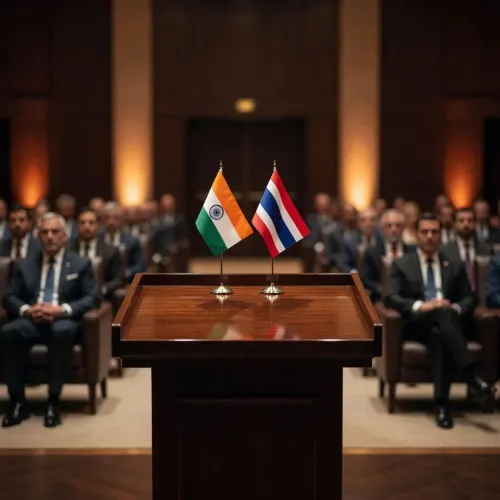
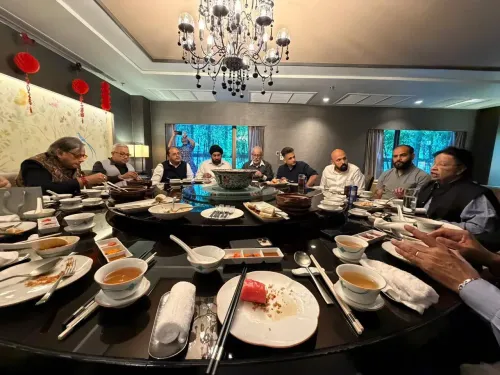
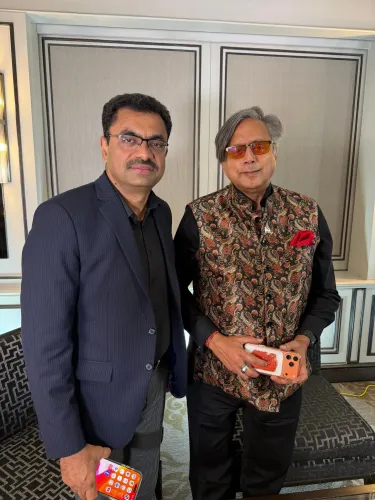
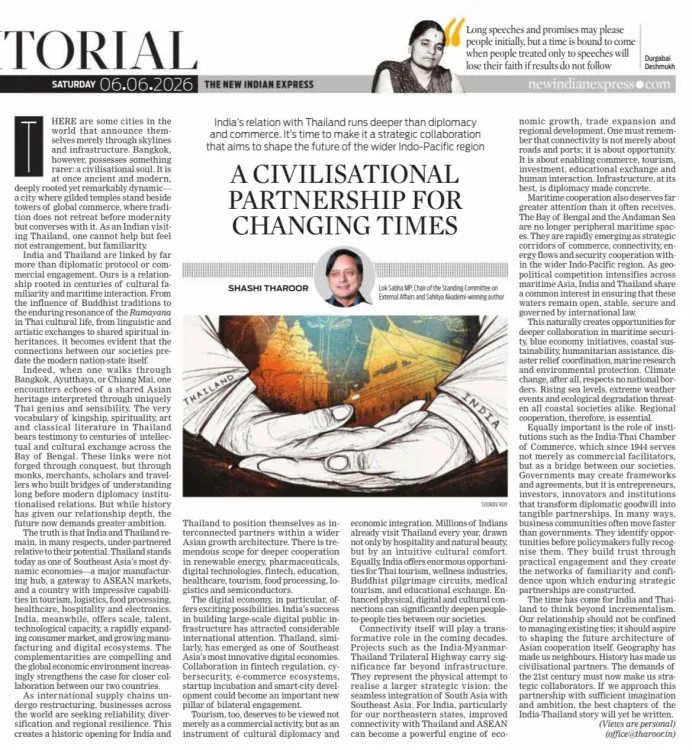
Congress MP Dr. Shashi Tharoor has written an article calling for deeper India-Thailand engagement, tagging External Affairs Minister Dr. S. Jaishankar, as global and regional tensions mount. The piece draws on his recent visit to Thailand and situates the bilateral relationship within India's Act East Policy framework.
Key Takeaways
Shashi Tharoor published an article on June 7, 2026 advocating for stronger India-Thailand bilateral ties.
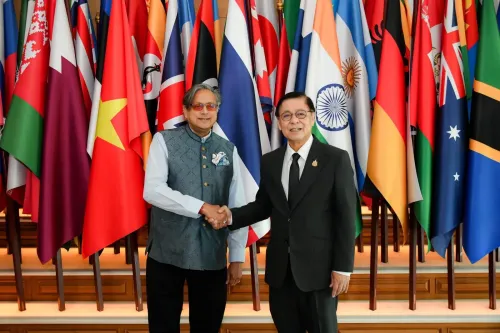
Tharoor cited his recent personal visit to Thailand as the prompt for the piece.
The article was shared tagging External Affairs Minister Dr.
Jaishankar and Indian diplomatic handles.
India's Act East Policy (announced 2014 ) and the India-Thailand Framework FTA (signed 2003 ) form the institutional backbone of the bilateral relationship.
Thailand is a founding ASEAN member and a strategic node in India's maritime outreach through the Andaman Sea .
The advocacy comes amid rising global and regional turbulence, with India-ASEAN Summit outcomes expected to test bilateral momentum.
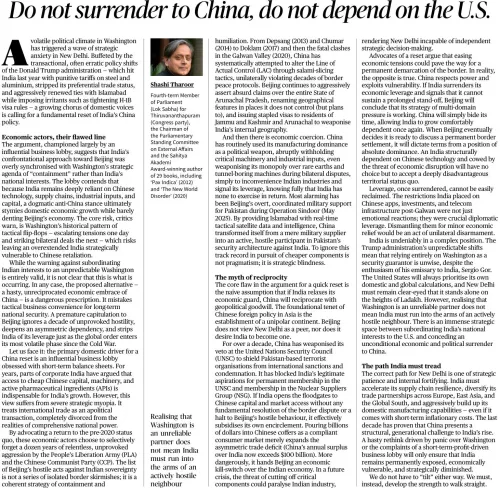
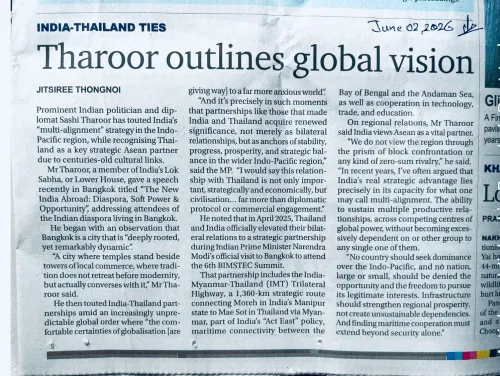
Congress MP Dr. Shashi Tharoor on Sunday, June 7, 2026, published an article arguing for deeper engagement between India and Thailand, drawing on a recent visit to the country and framing the case against a backdrop of rising global and regional turbulence.
Context
Tharoor, who represents Thiruvananthapuram in the Lok Sabha and previously served as a UN Under-Secretary-General, shared the article on social media, tagging External Affairs Minister Dr. S. Jaishankar and handles associated with Indian diplomacy and Thai leadership. His post states the piece 'makes a case for its strengthening at a time of greater turbulence in world and regional affairs.'
The intervention comes at a moment when multilateral trade arrangements and regional security architectures face renewed stress, prompting several democracies to revisit and reinforce bilateral partnerships.
Policy Backdrop
India's engagement with Thailand and the broader ASEAN region has deep institutional roots. The Look East Policy, launched in 1991, first oriented Indian diplomacy toward Southeast Asia, and a Framework Agreement for Establishing the India-Thailand Free Trade Area was signed in 2003 to liberalise bilateral commerce.
The policy was significantly upgraded when the Act East Policy was announced in 2014, intensifying connectivity, defence, and economic cooperation with ASEAN partners. Thailand, as a founding ASEAN member and a key node in India's maritime outreach through the Andaman Sea, occupies a strategic position within this framework.
India and ASEAN hold a Comprehensive Strategic Partnership, upgraded in 2022, which provides a multilateral scaffold for deeper bilateral ties with individual member states such as Thailand.
Stakeholders and Impact
The constituencies most directly affected by the India-Thailand relationship include Indian exporters, particularly those in pharmaceuticals, textiles, and engineering goods, as well as ASEAN businesses seeking Indian market access. Defence establishments on both sides have also explored avenues for cooperation given shared interests in the stability of the Bay of Bengal and Andaman Sea corridors.
Tharoor's public advocacy, directed explicitly at Dr. Jaishankar and diplomatic handles, signals that opposition lawmakers are actively engaging on foreign-policy questions — a dynamic that can add legislative momentum to executive-led diplomatic initiatives.
India has increasingly pursued diversified partnerships across Southeast Asia to enhance economic resilience and strategic autonomy amid great-power competition, and a strengthened New Delhi–Bangkok axis would contribute to stabilising regional supply chains and security architectures.
What's Next
Attention will now turn to whether the article and the broader advocacy translate into formal diplomatic follow-up, including trade negotiations or defence dialogue between New Delhi and Bangkok. Upcoming India-ASEAN Summit outcomes will serve as a key indicator of whether bilateral momentum with Thailand gains institutional expression.
With geopolitical uncertainty reshaping regional alignments, Tharoor's intervention underscores a growing bipartisan recognition in India that Southeast Asian partnerships are not peripheral but central to the country's long-term strategic posture.
Point of View
Southeast Asian middle powers like Thailand become swing nodes in India's connectivity and supply-chain calculus. That an opposition MP with a UN pedigree is making this case publicly also signals a rare area of foreign-policy convergence across the aisle, lending the argument bipartisan credibility. The article thus functions simultaneously as intellectual advocacy, parliamentary signalling, and diplomatic outreach.
NationPress
25 Oct 2026
Frequently Asked Questions
Why is Shashi Tharoor writing about India-Thailand relations?
Tharoor wrote the article following a recent personal visit to Thailand, arguing that bilateral ties deserve strengthening given rising turbulence in global and regional affairs.
What is India's Act East Policy and how does it relate to Thailand?
India's Act East Policy, announced in 2014, deepened connectivity, defence, and economic cooperation with ASEAN nations. Thailand, as a founding ASEAN member and a maritime gateway via the Andaman Sea, is a key partner under this framework.
Has India and Thailand signed a free trade agreement?
India and Thailand signed a Framework Agreement for Establishing a Free Trade Area in 2003, laying the groundwork for liberalised bilateral trade, though a comprehensive FTA has been a long-running work in progress.
Why did Tharoor tag S. Jaishankar in his post?
By tagging External Affairs Minister Dr. S. Jaishankar, Tharoor directed his advocacy explicitly at the official responsible for India's bilateral diplomacy, signalling a call for executive action on the India-Thailand relationship.
What is India's broader relationship with ASEAN?
India and ASEAN share a Comprehensive Strategic Partnership. India's engagement with the bloc dates to the Look East Policy of 1991 and has since expanded to cover trade, defence, and connectivity across ten Southeast Asian nations.