Has the Government Agreed to Discuss Air Pollution? Priyanka Gandhi Responds
Synopsis
In a significant parliamentary session, Congress leader Priyanka Gandhi Vadra confirmed that there is a consensus on discussing air pollution, emphasizing the need for an actionable plan. With alarming air quality levels impacting millions, her call for unity in addressing this urgent crisis resonates across party lines.
Key Takeaways
Consensus on air pollution: All political parties acknowledge the need for discussions.
Health impacts: Air pollution is severely affecting children and the elderly.
Call for action: A comprehensive action plan is essential for improvement.
Government's role: The government is urged to take immediate steps to address the issue.
Parliamentary discussions: An urgent discussion in Parliament is sought to tackle the crisis.
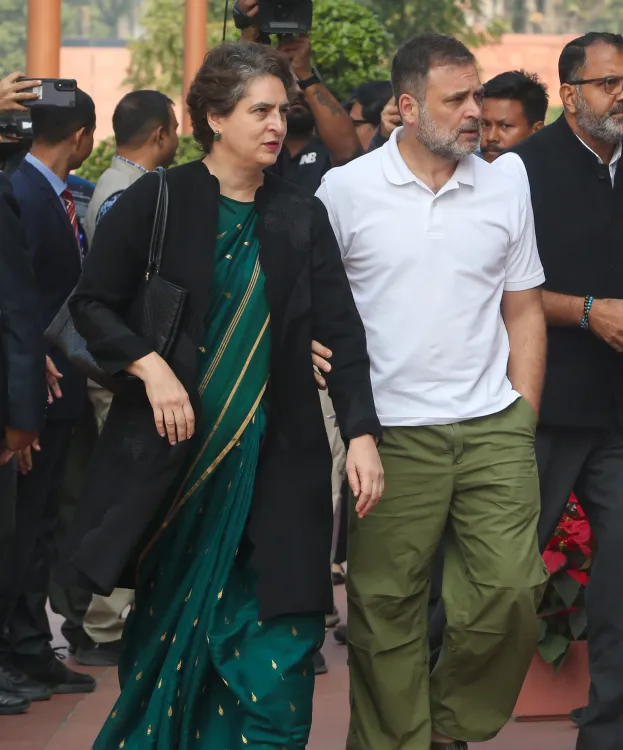
New Delhi, Dec 12 (NationPress) Following the Leader of Opposition's remarks on air pollution in the Lok Sabha, Congress MP Priyanka Gandhi Vadra stated that there is a consensus, including from the government, to initiate discussions regarding this critical issue.
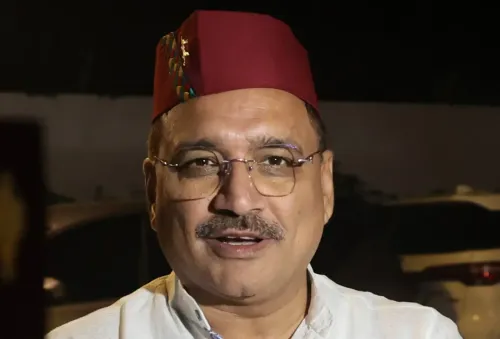
Addressing the media outside the Parliament, Priyanka Gandhi Vadra remarked, “There is a clear agreement on this matter. The government has also expressed its willingness to engage in dialogue. An actionable plan is necessary. The time has come to address the escalating pollution levels. While various topics are discussed, it is imperative to include this one as well. Concrete outcomes are essential, and it would be beneficial for the government to devise and execute an action plan.”
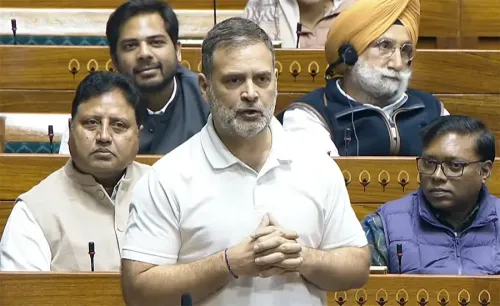
Rahul Gandhi emphasized, “I brought up the pollution crisis in the House. This is a concern that transcends party lines, as it affects children and leads to diseases like cancer. I proposed a unified discussion, free from blame, with expert insights, to demonstrate that we can collaborate effectively.”
Earlier, Rahul Gandhi highlighted the air quality crisis in the Lok Sabha, urging the government to develop a comprehensive, time-sensitive strategy to enhance air quality in cities across India.
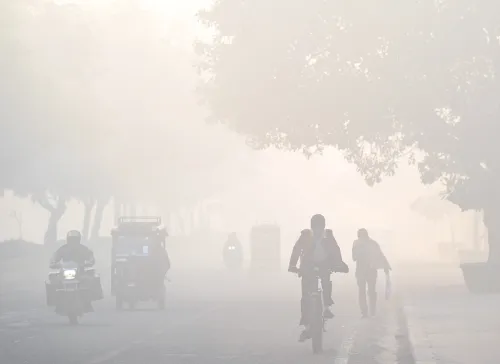
“Our cities are enveloped in hazardous air. Millions of children suffer from respiratory ailments, many are diagnosed with cancer, and the elderly face severe breathing difficulties,” Gandhi noted, underscoring the serious health ramifications of polluted air.
He pointed out that this issue is a shared concern among all political factions.
“There is unanimous agreement between the government and the opposition regarding this issue,” he stated, offering full support in crafting a collaborative action plan.
Gandhi called for an immediate parliamentary discussion, asserting, “The Prime Minister should unveil a plan for each city detailing how we can achieve meaningful improvements in the next five to ten years, even if we cannot fully solve the problem at once.”
As reported, Delhi's Air Quality Index (AQI) soared to 331 at 7 a.m., categorizing the city as 'very poor' according to the Central Pollution Control Board (CPCB). Jahangirpuri was identified as the most severely impacted area, with an AQI of 405, placing it in the 'severe' category.
Point of View
Our commitment is to present the facts impartially. The consensus on discussing air pollution highlights the urgency of this issue, affecting countless lives. It is crucial for governmental and opposition parties to come together and develop a strategic plan to combat this crisis effectively.
NationPress
19 Sept 2026
Frequently Asked Questions
What was discussed regarding air pollution in the Lok Sabha?
The issue of air pollution was raised by the Leader of Opposition, Rahul Gandhi, who urged the government to create a comprehensive action plan to tackle the escalating problem.
What did Priyanka Gandhi state about the government's stance on pollution?
Priyanka Gandhi Vadra indicated that there is a consensus among all parties, including the government, to engage in discussions about air pollution and formulate a concrete action plan.
What is the current air quality status in Delhi?
Delhi's Air Quality Index (AQI) has reached 331, categorizing it as 'very poor', with Jahangirpuri being the most severely affected area at an AQI of 405.