How Will Local Body Poll Results Strengthen BJP's Position in Kerala?
Synopsis
The results from Kerala's local body elections are crucial as they shape the strategies leading to the 2026 Assembly polls. With BJP gaining momentum, the political landscape is shifting, marking a potential turning point in Kerala's governance.
Key Takeaways
BJP is gaining ground in Kerala's political arena.
The local body elections reflect a shift towards the United Democratic Front (UDF) .
Prime Minister Narendra Modi has campaigned extensively for BJP candidates.
There is noticeable anti-incumbency sentiment against the Left Democratic Front (LDF) .
The upcoming 2026 Assembly polls will be crucial for all parties.
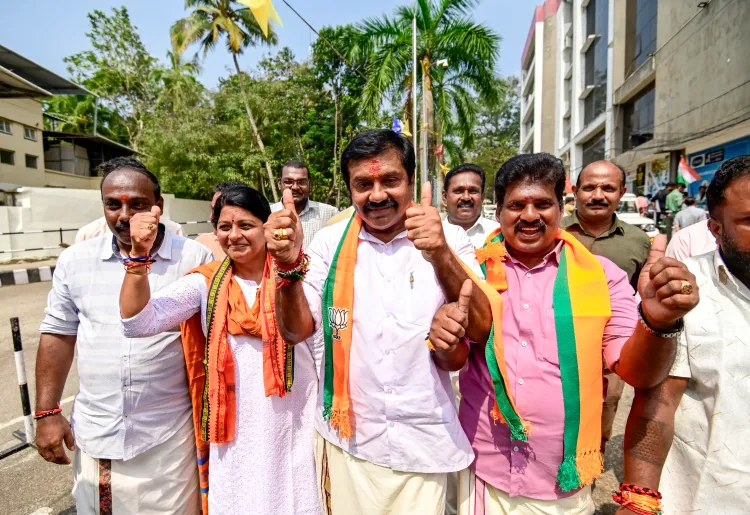
New Delhi, Dec 13 (NationPress) The results from the local body elections in Kerala are set to influence political tactics as we approach the 2026 Assembly elections. The current ruling Left coalition will confront a revitalized Congress-led Opposition, while the Bharatiya Janata Party (BJP) is emerging as a potential third force following a significant breakthrough in Thiruvananthapuram.
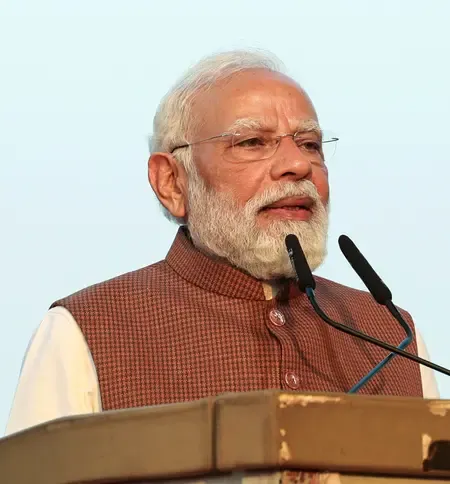
Prime Minister Narendra Modi expressed his appreciation to the citizens of Kerala for supporting BJP and NDA candidates in the recent local body elections. He stated, "Kerala is tired of UDF and LDF. They view NDA as the sole alternative capable of providing effective governance and fostering a #VikasitaKeralam for everyone," in a post on X.
In Thiruvananthapuram, the BJP has consistently pushed Left candidates to the third position in the last three Lok Sabha elections, where Shashi Tharoor of Congress has held his seat since 2009.
Tharoor began his journey by defeating P. Ramachandran Nair from the Communist Party of India by nearly one lakh votes. In 2014, the BJP's O. Rajagopal came close, losing by only about 15,000 votes. However, in 2019, Tharoor solidified his position, winning by a margin similar to that of 2009.
In the latest parliamentary elections, BJP candidate Rajeev Chandrasekhar lost by a narrow margin of 16,000 votes, with a vote swing of over 4.2 percent largely at the expense of Tharoor.
Interestingly, in the 2021 Vidhan Sabha elections, the BJP did not secure any of the seven Assembly seats in this parliamentary constituency, yet in the Lok Sabha elections last year, the party led in three of these segments.
In the Thrissur Lok Sabha constituency, BJP’s Suresh Gopi triumphed in 2024 with a margin of approximately 74,700 votes over his Left rival, while previously he had finished a distant third.
Notably, the BJP candidate led in six of the seven Assembly segments during the 2024 Lok Sabha polls, even though the party did not win any of these Vidhan Sabha seats.
This year’s Thrissur Corporation elections saw the BJP’s Muslim candidate, Mumtaz, winning the Kannankulangara ward, taking the seat from Congress.
Overall, the 2025 Kerala local body elections indicate a substantial consolidation by the BJP across Village, Block, and District Panchayats, along with Municipalities and Corporations.
Meanwhile, the Congress-led United Democratic Front (UDF) has emerged as the leading force, securing a majority of local bodies statewide, while the ruling Left Democratic Front (LDF) has lagged behind.
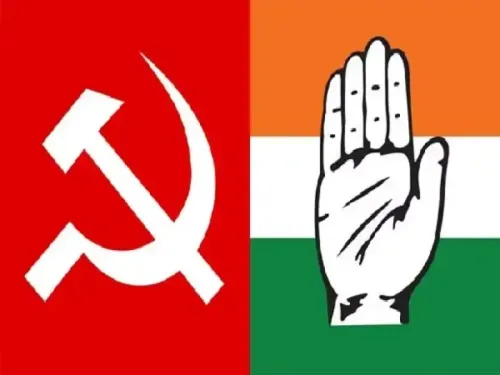
In Kerala, the Congress and the Left are engaged in competition despite their affiliation with the Indian National Developmental Inclusive Alliance (INDIA) at the national level.
The overall scenario from the state’s 2025 local body elections suggests a distinct anti-incumbency trend against the LDF and a robust comeback for the UDF, while the NDA is gradually solidifying its presence on the state's political landscape.
Once the final results are confirmed, the patterns of vote transfer between UDF and NDA will reveal shifts in both urban and rural wards, as well as performance in Muslim-majority and coastal areas. It will also be crucial to determine if BJP's gains stem from vote shifts or fragmentation among the opposition.
Point of View
I emphasize that the evolving political landscape in Kerala reflects the electorate's desire for change. The BJP's emergence as a viable alternative, alongside the Congress and Left's ongoing rivalry, highlights the dynamic nature of regional politics. The upcoming Assembly elections will be crucial in determining the future direction of governance in the state.
NationPress
11 Oct 2026
Frequently Asked Questions
What impact do local body elections have on future Assembly polls?
Local body elections often serve as a barometer for public sentiment, influencing strategies and alliances ahead of the bigger Assembly elections.
How has BJP's performance changed in Kerala?
BJP has shown significant improvement, positioning itself as a serious contender in Kerala's political landscape, especially in urban areas.
What role did Prime Minister Modi play in these elections?
Prime Minister Modi actively campaigned for BJP candidates, emphasizing good governance and development as key messages to voters.
What does the anti-incumbency trend indicate?
The anti-incumbency trend suggests dissatisfaction with the current ruling coalition, indicating a potential shift in voter preferences.
How will vote transfer patterns affect the upcoming elections?
Vote transfer patterns will provide insights into shifting loyalties and can significantly impact the outcomes of future elections.