Eastern Army Commander reviews Manipur situation with Spear Corps, Assam Rifles
Synopsis
Over three years into Manipur's ethnic conflict — with more than 306 dead and thousands displaced — the Eastern Army Commander flew in personally to assess strategy with Spear Corps and Assam Rifles officers, even as fresh retaliatory killings and arson in Kangpokpi and Tamenglong signal the violence is far from over.
Key Takeaways
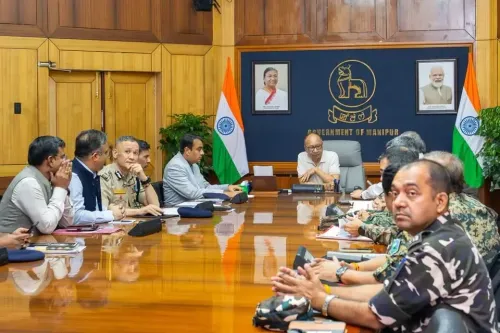
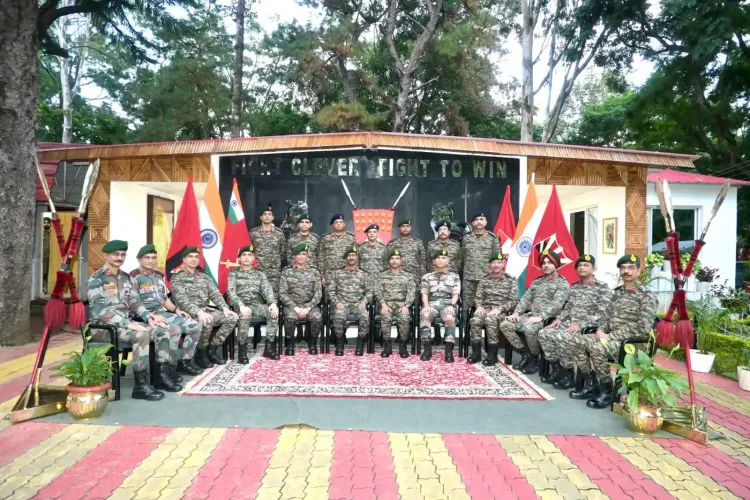
Lt Gen VMB Krishnan , GOC-in-C, Eastern Command , met senior officers of Spear Corps and Assam Rifles in Manipur on 24 September 2026 .
A Kuki man was killed on Wednesday , triggering the burning of 24 houses in two Naga villages in Kangpokpi and Tamenglong districts.
The conflict has claimed more than 306 lives over three years, with thousands still living in displacement camps.
Militant groups NSCN(IM) and Kuki National Army are reportedly involved in the ongoing violence.
Security forces are pursuing a dual strategy: counter-militant operations and dialogue with Naga and Kuki-Zo community leaders.
Meitei groups have demanded an NRC and pressed the government to halt census operations in the state.
Lieutenant General VMB Krishnan, General Officer Commanding-in-Chief (GOC-in-C) of Eastern Command, visited Manipur on 24 September 2026 to hold detailed discussions with senior officers of Spear Corps and Assam Rifles units, reviewing ground-level strategies amid continuing ethnic violence in the state. The visit underscores the Army's heightened operational focus on a conflict that has now claimed more than 306 lives over three years.
Latest Violence: Retaliatory Killings and Arson
The most recent casualty was a Kuki man killed on Wednesday morning, triggering the torching of nearly 24 houses across two Naga villages in what witnesses described as a retaliatory attack. The killing itself was reportedly a response to the death of a Naga youth a day earlier. Just days before, four people — including three women — had been killed in separate incidents. The latest flare-up was concentrated in the hill districts of Kangpokpi and Tamenglong.
Militant organisations including the NSCN(IM) and Kuki National Army are reportedly involved in the ongoing violence, complicating the security calculus for forces deployed on the ground.
What the Eastern Army Commander Assessed
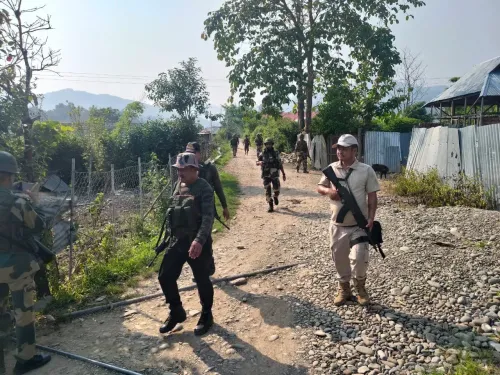
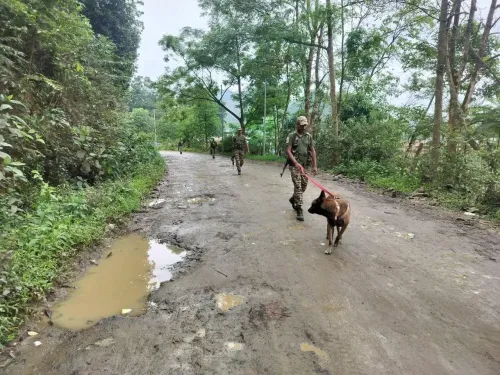
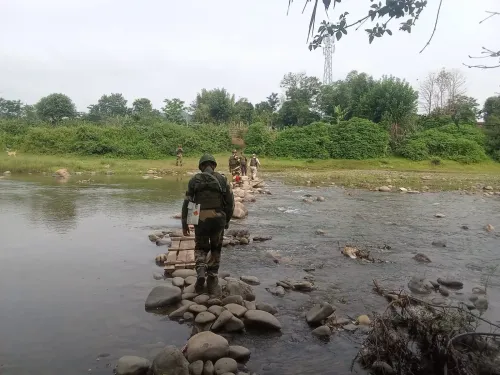
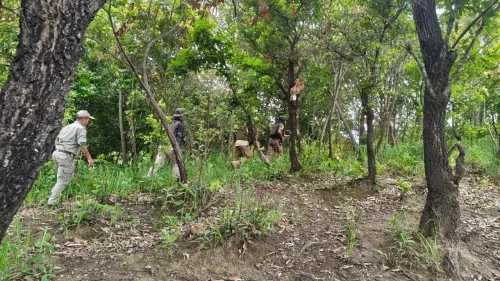
According to a senior official, Lt Gen Krishnan 'held detailed discussions with officers on strategies adopted and outcomes.' He also interacted directly with deployed troops, several of whom received commendation cards and medals for their service. The Assam Rifles, alongside other security agencies, has intensified operations to seize weapons and apprehend militants active in the region.
Notably, senior officers recently convened a meeting with Naga and Kuki-Zo community leaders, urging them to adopt a neutral stance and halt violence that officials say is hampering the state's development. This civil outreach marks a parallel track to purely kinetic operations.
Roots of the Three-Year Conflict
The conflict initially erupted between the Meitei community — the valley-dwelling majority — and Kuki-Zo groups from the hills. The flashpoint was a demand by Hindu Meiteis to obtain Scheduled Tribe (ST) status on par with the Kukis, which would have granted them access to forest land currently under Kuki control. Critics argue the underlying grievance is rooted in land ownership and demographic anxiety rather than purely ethnic identity.
The Nagas, who constitute approximately 20 per cent of Manipur's population and are the state's second-largest ethnic group after the Meiteis, initially remained on the sidelines. They were drawn into the conflict after Kuki groups allegedly attempted to take control of Naga villages, opening a second front in the hill districts.
Political Dimensions and Civilian Demands
The Meitei community has accused Kuki-Zo groups of illegal infiltration and narco-terrorism, allegations the Kuki side disputes. In a significant political move, the Meiteis have reportedly pressured the state government to suspend census operations. They have also demanded the implementation of a National Register of Citizens (NRC) to identify and remove alleged illegal immigrants — a demand that critics say could deepen communal fault lines further.
Thousands of displaced residents continue to live in makeshift camps across the state, with several people still reported missing. As security forces pursue a dual strategy of counter-militant operations and community dialogue, all eyes remain on whether the Army's renewed engagement can translate into a durable reduction in violence.
Point of View
Three years into the conflict, signals that the Centre regards the situation as unresolved at a strategic level — not merely a law-and-order problem for the state police. Yet the dual approach of military operations and community dialogue has been attempted before without breaking the cycle of retaliatory killings. The widening of the conflict from a Meitei-Kuki binary to a Naga-Kuki front raises the stakes considerably: what was once a manageable fault line has become a multi-sided insurgency with overlapping land and identity grievances. Until the political question of ST status and land rights is addressed at the Centre level, security-first interventions are likely to produce tactical calm rather than lasting peace.
NationPress
25 Sept 2026
Frequently Asked Questions
Why did the Eastern Army Commander visit Manipur?
Lt Gen VMB Krishnan visited Manipur to hold detailed discussions with Spear Corps and Assam Rifles officers on operational strategies and ground outcomes amid continuing ethnic violence. He also interacted with troops, some of whom received commendation cards and medals.
What triggered the latest violence in Manipur in September 2026?
A Kuki man was killed on Wednesday morning, reportedly in retaliation for the death of a Naga youth a day earlier, prompting the burning of nearly 24 houses across two Naga villages in Kangpokpi and Tamenglong districts. Four other people, including three women, had been killed in separate incidents just days before.
How long has the Manipur conflict been going on and how many have died?
The conflict has been ongoing for over three years and has claimed more than 306 lives, with thousands more displaced and living in makeshift camps. Several people remain missing.
What is the root cause of the Manipur ethnic conflict?
The conflict began when Hindu Meiteis sought Scheduled Tribe (ST) status to gain access to forest land, clashing with Kuki-Zo groups who already hold ST status and control significant land in the hill districts. The dispute has since expanded to include Naga communities, with land occupation cited as the primary driver.
What are security forces doing to end the Manipur conflict?
The Assam Rifles and allied security forces are conducting operations to seize weapons and apprehend militants from groups including NSCN(IM) and Kuki National Army. In parallel, senior officers have convened community dialogue meetings with Naga and Kuki-Zo leaders, urging a neutral stance to stop the violence.