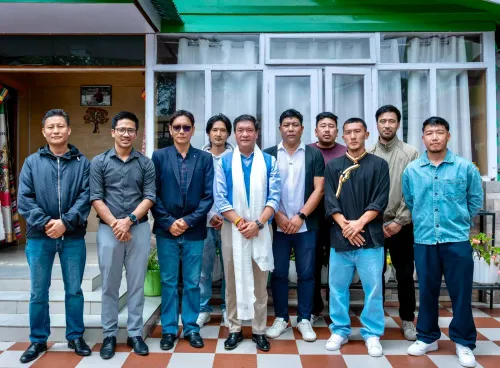
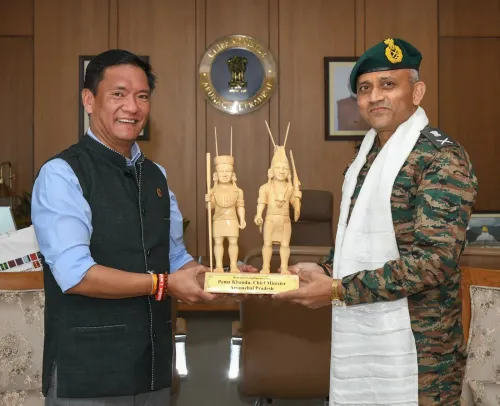
CM Pema Khandu: Army scouts 6 Arunachal talents in Tawang
Synopsis
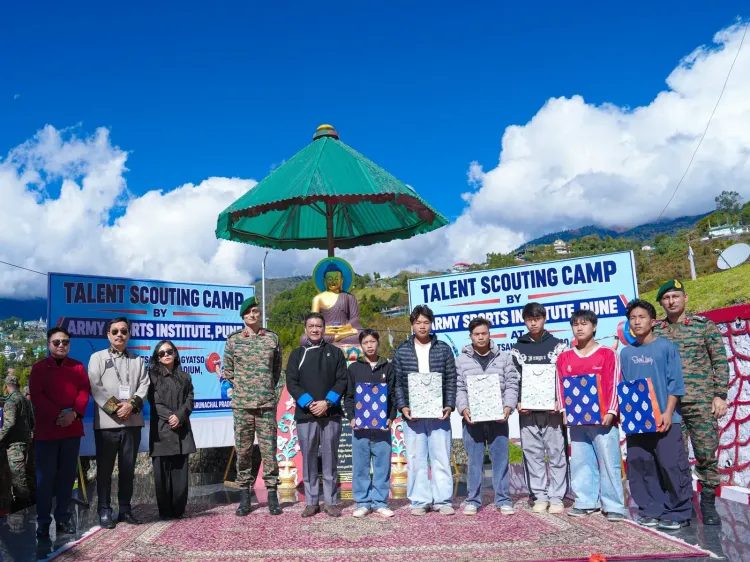
The Army Sports Institute conducted a three-day talent scouting camp in Tawang, selecting six Arunachal Pradesh youths — four in archery, one in weightlifting, one in athletics — for free education and specialised training. CM Pema Khandu pledged to make it an annual event.
Key Takeaways
Six athletes from Arunachal Pradesh selected at an ASI Pune talent scouting camp in Tawang, 27–29 October 2026 .
Over 70 students from across the state participated in the three-day camp.
Selections span three disciplines : four in archery, one in weightlifting, one in athletics.
All six will receive free education and specialised sports training at ASI, Pune.
CM Pema Khandu announced the camp will become an annual event in partnership with the Indian Army.
The initiative is part of the Indian Army's broader youth outreach strategy in northeast border districts.
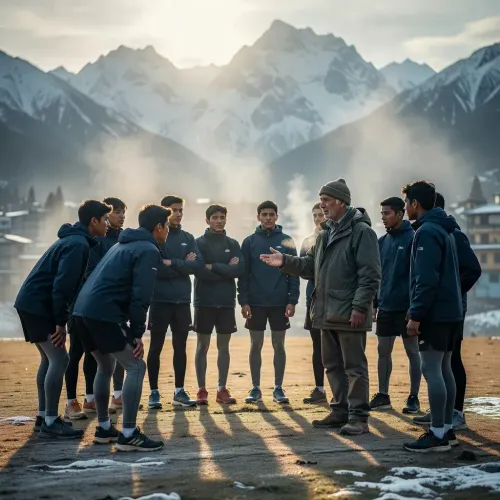
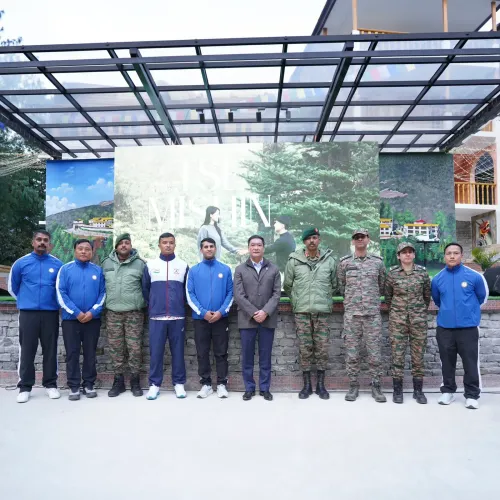
Six young athletes from Arunachal Pradesh are heading to Pune — and it began with three days of talent scouting in one of India's most strategically significant border towns. Arunachal Pradesh Chief Minister Pema Khandu on Sunday, 1 November 2026, announced that the Army Sports Institute (ASI) had selected six promising youngsters from a pool of over 70 students during a camp held in Tawang from 27 to 29 October 2026.
Six selected from 70: Archery leads the haul
Of the six selected athletes, four were chosen in archery, one in weightlifting, and one in athletics. All six will now receive free education and specialised sports training at ASI, Pune — the Indian Army's flagship athlete development institution that has produced competitors across multiple disciplines over the decades.
The breadth of the selection — three different sports, drawn from over 70 participants across Arunachal Pradesh — signals a deliberate effort to map the state's raw sporting talent rather than scout within a single discipline.
Tawang as the venue: more than geography
Tawang, perched near the Line of Actual Control, is among the most sensitive frontier districts in India's northeast. The Indian Army maintains a substantial presence here, and organising a civilian youth sports camp in this location is consistent with the military's long-standing outreach strategy — using education and skill development to build deeper ties with remote border communities.
Similar Army-led sports initiatives have been conducted in other northeastern states over the past decade, but the Tawang edition adds particular symbolic weight given the district's geopolitical profile.
CM Khandu's pledge: an annual event across every corner
Chief Minister Khandu did not stop at congratulating the six. He announced that the talent scouting camp would be made an annual event, with a commitment to work alongside the Indian Army to 'discover and nurture more sporting talent from every corner of Arunachal Pradesh.' The language of geographic inclusion — 'every corner' — suggests the next editions may move beyond Tawang to other districts, including those equally remote but less visited by mainstream sports infrastructure.
For a state whose athletes have historically faced barriers of distance, limited coaching, and sparse competitive exposure, a pipeline directly into ASI represents a rare, structured pathway to national and potentially international competition.
What the ASI selection means for the six
The Army Sports Institute, Pune, operates under the Indian Army and offers residential training with academic schooling — a model that removes financial and logistical barriers for families in remote districts. Entry via talent scouting, rather than competitive trial circuits in urban centres, is precisely the kind of intervention that experts have argued is necessary to unlock India's sporting potential in underrepresented geographies.
Whether any of the six athletes eventually progress to national championships or international representation will be the real test of this pipeline — but the door has opened.
Point of View
CM Khandu is converting a one-off army initiative into a state-level talent pipeline — a move that could pressure other frontier states to pursue similar institutional tie-ups. The archery-heavy selection is telling: it echoes the Northeast's historic strength in the discipline and could feed into India's Olympic archery programme if ASI's development model proves effective.
NationPress
1 Nov 2026
Frequently Asked Questions
What is the Army Sports Institute (ASI) in Pune?
The Army Sports Institute in Pune is a residential training institution run by the Indian Army that develops athletes across disciplines such as archery, weightlifting, and athletics, providing both sports coaching and academic education.
How many students were selected at the Tawang talent scouting camp?
Six students were selected out of over 70 participants — four in archery, one in weightlifting, and one in athletics — during the three-day camp held in Tawang from 27 to 29 October 2026.
What will the six selected Arunachal students receive at ASI Pune?
All six selected athletes will receive free education along with specialised sports training in their respective disciplines at the Army Sports Institute, Pune.
Will the Army talent scouting camp in Arunachal Pradesh be held every year?
Yes. Chief Minister Pema Khandu announced that the talent scouting camp will be made an annual event, with the state government working alongside the Indian Army to expand outreach to more districts across Arunachal Pradesh.
Why was Tawang chosen for the Army sports scouting camp?
Tawang is a key frontier district in Arunachal Pradesh near the Line of Actual Control where the Indian Army has a strong presence. Sports and education outreach camps in such border areas are part of the Army's long-standing community engagement strategy in the northeast.