Flash floods hit Arunachal's Keyi Panyor: 3 missing, 20 homes damaged, Assam on high alert

Synopsis
A 48-hour rainfall deluge has sent flash floods tearing through Arunachal Pradesh's Keyi Panyor district, leaving three people missing and 20 homes damaged — and now a flood wave is racing downstream toward Assam's most vulnerable districts. With the Ranganadi Dam releasing water and the Brahmaputra expected to swell within 48 hours, the northeast is bracing for a crisis that could stretch from Dhemaji to Dhubri.
Key Takeaways
At least 3 people are missing and approximately 20 houses were damaged after flash floods struck Keyi Panyor district, Arunachal Pradesh on 24 June .
Yazali received 72.8 mm of rainfall in 24 hours, with the heaviest burst between 6 am and 9 am IST on 24 June .
NEEPCO has begun releasing water from the Ranganadi Dam and suspended power generation as a precautionary measure.
Assam has issued a high alert ; a flood wave is expected to reach Dhemaji, Lakhimpur, Biswanath and Sonitpur first, then Dhubri within 1-2 days .
SDRF teams are deployed in Arunachal Pradesh; NDRF personnel are en route.
Assam's emergency agencies are on standby.
Assam CM Himanta Biswa Sarma has directed Chief Secretary Ravi Kota to keep all authorities on maximum alert.
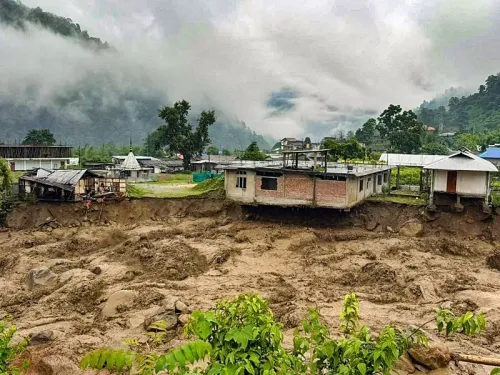
Flash floods triggered by relentless rainfall over 48 hours struck Arunachal Pradesh's Keyi Panyor district on Wednesday, 24 June, leaving at least three people missing and damaging approximately 20 houses and residential units, according to officials. The Assam government has simultaneously issued a high alert, anticipating significant downstream impacts across several of its districts as river discharge surges in the upper catchment areas.
What Happened in Keyi Panyor
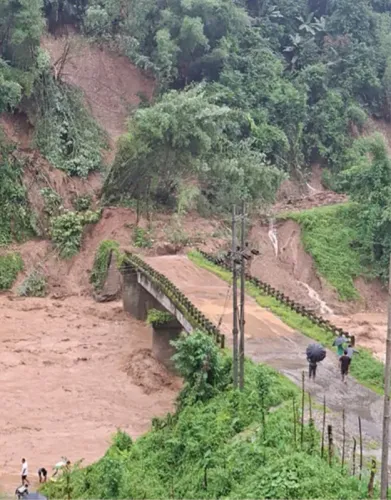
The three missing persons were last seen in the NEEPCO project colony near Poosa, under the Yazali circle of Keyi Panyor, after flash floods swept through the area. A retaining wall collapsed under the pressure of intense rainfall, while floodwaters inundated multiple low-lying residential localities in the same circle.
Landslides were triggered at several points along a national highway, disrupting vehicular movement and leaving commuters stranded. Yazali recorded 72.8 mm of rainfall in the preceding 24 hours, with a concentrated burst between 6 am and 9 am IST on 24 June, according to data from the Regional Meteorological Centre (RMC), Guwahati, and the Meteorological Centre, Itanagar. Satellite and radar imagery confirmed torrential precipitation that morning, resulting in a sharp rise in river discharge in upper catchment zones.
Rescue and Relief Operations Under Way
The Additional Deputy Commissioner, Deputy Superintendent of Police, and Circle Officer have rushed to the affected sites to assess damage and coordinate rescue efforts. A State Disaster Response Force (SDRF) team has already been deployed, while National Disaster Response Force (NDRF) personnel are en route to support relief operations.
The government-owned North Eastern Electric Power Corporation (NEEPCO) has begun releasing water from the Ranganadi Dam as a precautionary measure, and power generation at the project has been temporarily suspended. Flash floods have also been reported in the Panyor Lower Hydroelectric Project area — formerly the Ranganadi Hydroelectric Project — where authorities opened one spillway gate to manage the sudden surge in inflows.
Assam Braces for Downstream Flood Wave
The Assam government is closely monitoring reports of extremely heavy rainfall and flash floods in Arunachal Pradesh's Lower Subansiri district, which are expected to generate a downstream flood wave. Authorities anticipate a substantial rise in water levels and flow velocity across the Brahmaputra and its tributaries.
The flood wave is expected to first impact the districts of Dhemaji, Lakhimpur, Biswanath, and Sonitpur, before moving further downstream and eventually reaching Dhubri within one to two days.
On the directions of Assam Chief Minister Himanta Biswa Sarma, Chief Secretary Ravi Kota has instructed all concerned authorities to remain on maximum alert and ensure full preparedness. District administrations and line departments in potentially affected areas have been directed to maintain close surveillance and take timely preventive and response measures. Teams of the SDRF, NDRF, and other emergency response agencies are being kept ready for rapid deployment.
Advisories Issued to Residents
Disaster management authorities in Arunachal Pradesh have advised residents in vulnerable areas and along riverbanks to remain alert and avoid unnecessary movement. In Assam, residents of low-lying and flood-prone areas have been urged to relocate to safer locations when directed by local authorities. Citizens have also been cautioned against venturing into inundated zones and warned to avoid travelling by country boats or small vessels on the Brahmaputra and its tributaries, as river currents are expected to strengthen considerably.
The Assam government has stated it is maintaining constant coordination with all agencies and district administrations, and will continue to issue public safety advisories as the situation evolves. This comes amid a broader pattern of intensifying monsoon-season flooding across the northeastern region, which has historically faced some of India's most severe annual flood impacts.
Point of View
But the real test is whether that early warning translates into evacuations before the flood wave hits Dhemaji and Lakhimpur. The Ranganadi Dam release adds a man-made dimension to a natural disaster — dam-induced flooding has compounded monsoon losses in the Brahmaputra basin before, and accountability for those decisions rarely follows the floodwaters downstream. Until the Northeast gets a robust, basin-wide flood forecasting and dam-discharge protocol with mandatory public notification, these cascading crises will keep repeating.
NationPress
22 Sept 2026
Frequently Asked Questions
What caused the flash floods in Arunachal Pradesh's Keyi Panyor district?
Incessant rainfall over 48 hours triggered flash floods in Keyi Panyor district on 24 June, with Yazali recording 72.8 mm of rain in a single day. The concentrated downpour caused a retaining wall to collapse, inundated low-lying residential areas, and triggered landslides along a national highway.
How many people are missing and how much damage has occurred?
At least three people are reported missing after flash floods swept through the NEEPCO project colony near Poosa in the Yazali circle. Around 20 houses and residential units have been damaged, and vehicular movement on a national highway has been disrupted by landslides.
Why is Assam on high alert if the floods are in Arunachal Pradesh?
Heavy rainfall and flash floods in Arunachal Pradesh's upper catchment areas cause a surge in river discharge that flows downstream into Assam via the Brahmaputra and its tributaries. Authorities anticipate the flood wave will first hit Dhemaji, Lakhimpur, Biswanath, and Sonitpur districts before reaching Dhubri within one to two days.
What is the status of the Ranganadi Dam and NEEPCO project?
The North Eastern Electric Power Corporation (NEEPCO) has begun releasing water from the Ranganadi Dam as a precautionary measure in response to the sudden increase in inflows. Power generation at the project has been temporarily suspended, and one spillway gate has been opened to manage excess water.
What should residents in Assam's flood-prone areas do?
Residents of low-lying and flood-prone areas in Assam have been advised to move to safer locations when directed by local authorities. Authorities have also warned people not to venture into inundated zones or travel by country boats and small vessels on the Brahmaputra and its tributaries, as river currents are expected to strengthen significantly over the next 24-48 hours.